

More news on this day
Cyprus is intensifying efforts to reposition the Famagusta region as a year-round Mediterranean destination, using high-profile international trade events and targeted campaigns to push the coastal district beyond its traditional image as a summer-only hotspot.
Get the latest news straight to your inbox!
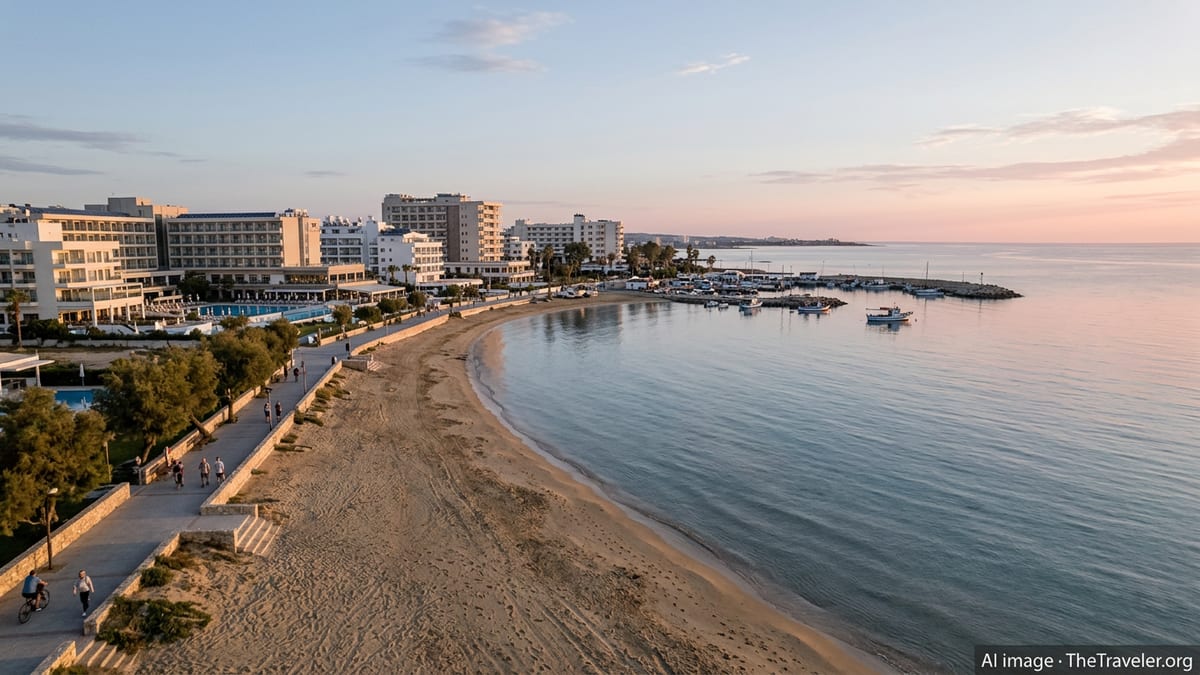
Trade Fair Push Puts Famagusta in the Global Shop Window
Recent participation in leading tourism exhibitions has placed Famagusta more prominently on the global travel map, as Cyprus refines its pitch to tour operators and travel media. According to published coverage of the country’s 2026 exhibition schedule, the Deputy Ministry of Tourism plans dozens of appearances at international trade shows, with Famagusta consistently highlighted in material promoting Cyprus’s beach, culture and maritime tourism offering.
Publicly available information shows that events in key source markets such as Germany, the United Kingdom and central and eastern Europe are being used to showcase Famagusta’s mix of long sandy beaches, resort towns like Ayia Napa and Protaras, and nearby countryside villages. Destination branding for the region increasingly stresses that mild winters and upgraded infrastructure make it suitable for off-season escapes, sports training camps and thematic breaks.
Industry-focused catalogues and official exhibition lists indicate that Cyprus is investing in larger national stands, co-branded with regional tourism boards, to give destinations such as Famagusta more visibility on crowded trade-show floors. Promotional material typically combines imagery of the district’s coastline with references to cycling routes, diving sites and cultural excursions designed to extend visitor stays beyond the peak summer months.
Strategy Targets Longer Season and New Market Segments
Efforts to lift Famagusta’s profile at trade events are closely aligned with Cyprus’s wider strategy to extend the tourism season and diversify its visitor base. Statements and data published by tourism authorities for 2025 and 2026 place particular emphasis on attracting travellers outside the traditional July to September peak, including older visitors, remote workers and niche-interest groups.
Reports on the Famagusta Tourism Board’s 2026 plans describe a multi-market approach, with delegations attending exhibitions in Belgrade and Berlin and joining roadshows in Poland. These activities are designed to reinforce air connectivity and secure more shoulder-season packages from tour operators in German-speaking markets and central Europe, which are viewed as critical to stabilising arrivals across the calendar year.
Sector commentary notes that the region’s hotel sector, long oriented toward summer beach holidays, is gradually reshaping its offer to suit this push. More properties are advertising wellness facilities, heated pools and conference spaces, while coastal walking trails, cycling routes and nearby nature reserves are being incorporated into winter and spring itineraries sold at trade fairs.
Digital Campaigns and Familiarisation Trips Bolster Trade Presence
The trade-show agenda is being reinforced by digital marketing and familiarisation trips that put Famagusta directly in front of travel professionals and consumers. A landmark online campaign promoting the wider Famagusta province in foreign markets during 2024 was widely described in local business media as a record-breaking effort in terms of reach and engagement, helping to justify an even more ambitious follow-up in 2025.
Reports indicate that the campaign was funded through a partnership between the regional tourism company, local hotel associations, municipalities in Ayia Napa and Paralimni-Deryneia, the Deputy Ministry of Tourism and Hermes Airports. This coalition is now using trade events to maintain momentum, driving traffic to digital platforms where Famagusta is presented as suitable for short breaks and interest-based trips throughout the year.
At the same time, publicly available information on ministry promotion tools shows increased reliance on familiarisation trips that invite travel agents, tour planners and content creators to experience Cyprus on the ground. Famagusta features prominently in these itineraries, with coastal excursions, boat trips, cycling experiences and visits to nearby villages intended to give participants year-round product ideas they can later package and sell.
Events, Sea Tourism and Themed Experiences Underpin Year-Round Appeal
Beyond trade-show halls, the programming of events and festivals is emerging as another pillar of Famagusta’s year-round positioning. Sector publications on sea tourism note that new initiatives are being designed to spotlight the free Famagusta area as a regional hub for maritime activities, with plans for international sea tourism festivals and conferences that can draw visitors and professionals outside the high summer season.
Local tourism reports also refer to a growing emphasis on themed experiences such as wine, sports and agrotourism across Cyprus, trends that Famagusta stakeholders aim to tap into. Proximity to inland villages, wineries and rural guesthouses allows the coastal district to be marketed at trade shows as a convenient base for excursions that combine beach time with countryside exploration in spring and autumn.
In parallel, scheduled fairs and cultural happenings in the wider region, including gastronomy and wine-related events, are being aligned with airline capacity and tour-operator programming. This calendar-based approach is frequently highlighted in promotional material at trade exhibitions as evidence that Famagusta can offer reasons to visit in shoulder months, not just during peak summer heat.
Record Tourism Numbers Raise Stakes for Famagusta
The renewed focus on Famagusta’s global profile comes against the backdrop of record tourism arrivals for Cyprus as a whole. According to widely reported official figures, the country welcomed about 4.5 million visitors in 2025, the highest annual total on record, with revenue figures also showing strong performance. Analysts note that such numbers intensify the need to spread demand more evenly across regions and seasons.
Policy commentary linked to these results underlines a shift toward what officials describe in public speeches as a more mature phase for Cyprus tourism, with a stronger emphasis on resilience and sustainability. For Famagusta, that translates into a push to move beyond a narrow summer-sun image and position itself at trade fairs as a destination where coastal resorts, nature, culture and sports infrastructure can support travel in almost every month of the year.
As 2026 progresses, the success of this approach is likely to be measured not only by peak-season occupancy, but by how many tour operators build Famagusta into off-season brochures and how frequently it features in itineraries promoted at major trade events. The region’s heightened presence at international exhibitions suggests that Cyprus intends to keep Famagusta at the forefront of its efforts to sustain tourism growth while smoothing out seasonal spikes.