

More news on this day
As the Middle East edges through another volatile phase, Cyprus is confronting uncomfortable questions about how well it can protect both residents and the millions of tourists who treat the island as a safe Mediterranean escape, with civil defence shelters and alert systems struggling to keep pace with growing regional risk.
Get the latest news straight to your inbox!
Rising Regional Tensions Put Cyprus in the Spotlight
Cyprus sits just west of the Levant and within range of regional military activity, a position underscored by the current confrontation involving Israel, Iran and armed groups across the eastern Mediterranean. The island hosts key Western military infrastructure and has emerged as a logistics hub for humanitarian operations linked to the Gaza war, placing it closer to the strategic front line than its holiday imagery suggests.
The 2026 drone strikes targeting the British sovereign base areas of Akrotiri and Dhekelia highlighted that Cyprus is not merely an observer to the unfolding crisis. The attacks, described in publicly available reports as part of the broader 2026 Iran war, prompted localised shelter-in-place advisories for communities near the bases and renewed scrutiny of how prepared the wider island would be in the event of a more serious incident.
At the same time, Cyprus continues to market itself as a refuge from the turmoil in the region, replicating its role during previous conflicts in Lebanon and Gaza. Travel coverage in recent years has depicted the island as a haven for evacuees and short-break tourists seeking distance from the violence, even as new risk assessments point to the island’s own vulnerabilities.
Limited Shelter Capacity Leaves Large Gaps
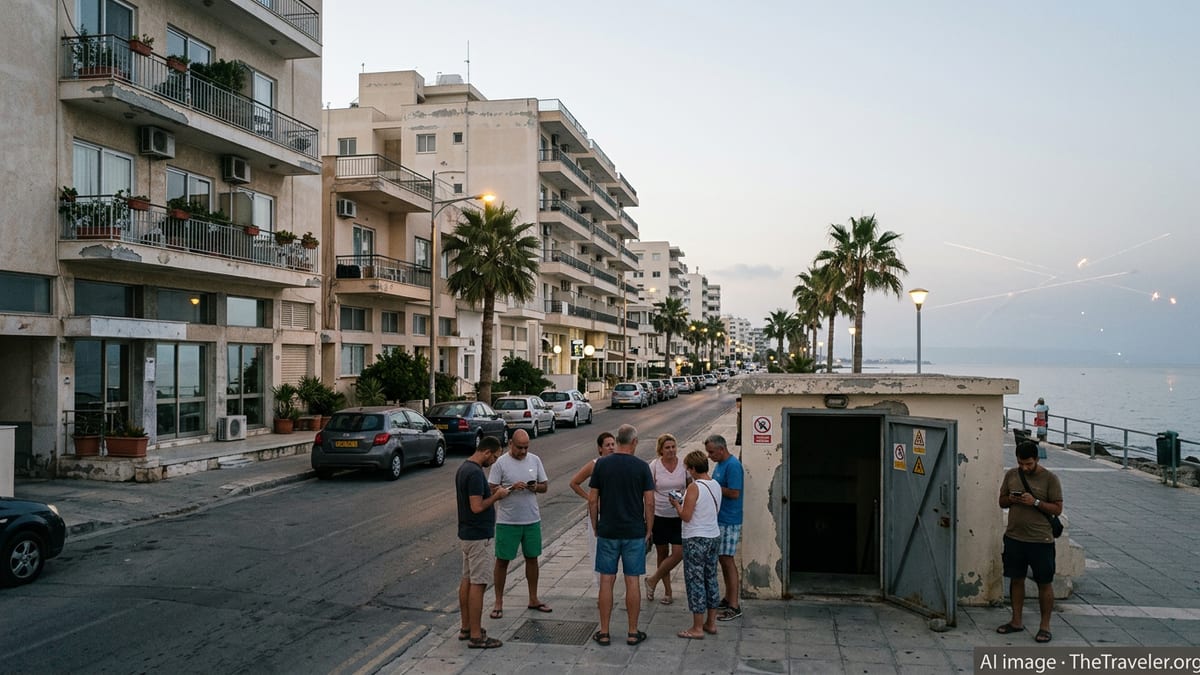
Against this backdrop, the scale and condition of Cyprus’s civil defence shelters have become a central concern. Recent reporting in local media indicates there are roughly 2,500 designated shelters across the island. Current capacity is described as sufficient for only about 45 percent of the population, meaning that more than half of residents would be left without access to formal protection if large-scale sheltering were suddenly required.
Earlier figures cited by national outlets suggested that the network, then estimated at around 2,200 shelters, could accommodate around 250,000 people, roughly 30 percent of the population. Although authorities have spoken of plans to expand coverage toward 45 percent in the near term and higher over the longer term, the pace of that expansion has not yet matched the speed with which regional tensions have evolved.
Concerns extend beyond headline capacity. Reports from parliamentary debates and local press coverage point to cases where older shelters have been repurposed, locked, or integrated into residential and commercial properties, raising questions about how quickly they could be accessed in an emergency. Civil defence officials have launched fresh inspections and pledged to re-evaluate the entire network, but those efforts remain in progress.
Tourism Boom Meets Civil Protection Shortfalls
The strain is particularly visible in Cyprus’s tourist centres, where seasonal populations surge well beyond the permanent resident base. Paphos, Ayia Napa, Limassol and Larnaca regularly host large numbers of visitors from the United Kingdom, Israel and other European markets, attracted by short flight times from conflict-affected areas and Cyprus’s reputation for stability.
Industry groups have already warned that prolonged conflict in Gaza and wider Middle East unrest could weigh on arrivals, booking patterns and investor confidence. Hoteliers have expressed concern in past seasons about cancellations tied to regional instability, even when the island itself remains physically untouched. The perception of security plays a crucial role in destination choice, and gaps in visible civil protection, including shelter access, can amplify traveller anxiety.
In many resort districts, there is limited public information on where the nearest shelters are located, whether they are open, and who is allowed to use them. Visitors staying in short-term rentals, smaller guesthouses or private villas may be even less likely to receive guidance about what to do if sirens sound or alerts are issued. This information deficit risks leaving tourists dependent on ad hoc instructions from accommodation providers or social media during a crisis.
Travel advisers note that Cyprus continues to be rated more stable than many neighbouring states, and no broad “do not travel” warnings have been issued by major European markets specifically because of shelter capacity. However, as airspace, shipping lanes and regional military postures shift, scrutiny of how the island protects transient populations is expected to intensify.
Apps, Sirens and SMS: Digital Safety Net Still Evolving
In an effort to close some of the most urgent gaps, Cyprus has rolled out a series of digital tools and public guidance. The SafeCY mobile application, activated in 2025 according to media reports, provides maps showing the nearest bunkers and basic instructions on how to behave in an attack. The app is intended for both residents and visitors, although awareness among short-stay tourists appears uneven.
More recently, the government has introduced a nationwide SMS alert system designed to push urgent safety messages directly to mobile phones. Community organisations such as Caritas Cyprus have circulated plain-language explanations of how sirens work, what different tones mean and how people should respond if they are caught outdoors when an alert is issued. These measures are presented as part of a broader drive to improve emergency preparedness amid heightened security concerns.
Despite these advances, the systems depend on reliable telecommunications, updated contact databases and clear multilingual messaging. Observers note that tourists who arrive with roaming disabled or who rely solely on hotel Wi-Fi may not immediately receive alerts. Questions also remain about whether smaller accommodation providers and informal rental hosts consistently pass on official safety guidance to their guests.
Balancing Haven Narrative with Hard Security Realities
Cyprus’s strategic role has grown in parallel with its tourism profile. The island has been central to maritime plans for delivering humanitarian aid to Gaza, serves as a staging point for evacuations from nearby conflict zones, and hosts critical British air and naval assets that can be drawn into wider operations. This combination of humanitarian hub and military platform complicates the narrative of Cyprus as simply an idyllic summer escape.
Commentary from regional analysts and civil society organisations argues that the shelter deficit is symptomatic of a broader lag in civilian protection planning, particularly in urban and coastal areas where high-rise development has outpaced legacy civil defence infrastructure. The lingering memory of the 1974 invasion and more recent warnings from non-state actors about potential strikes on the island have sharpened calls for faster investment in hardened facilities.
For now, Cyprus continues to walk a tightrope between projecting calm to tourists and confronting the practical demands of security in a volatile neighbourhood. The island’s challenge is not only to expand the number and quality of shelters, but also to ensure that residents, foreign workers and short-term visitors know where to go and what to do if the conflict on its eastern horizon suddenly feels much closer.