

More news on this day
The United States has sharply escalated its travel warning for Cyprus in 2026, urging Americans to reconsider trips to the “island of love” as the Iran war and regional tensions spill into the eastern Mediterranean, raising fears that the popular holiday hub could be drawn deeper into a widening conflict.
Get the latest news straight to your inbox!
US Advisory Jumps as War in Iran Reaches the Eastern Mediterranean
On March 3, 2026, the US State Department raised its travel advisory for Cyprus to Level 3, “Reconsider travel,” citing the threat of armed conflict and a deteriorating regional security environment. The move brought the holiday island into the same risk category as several other Middle Eastern states affected by the Iran war, a profound shift for a destination long marketed for sun, sea and stability.
Alongside the higher advisory, Washington authorized the voluntary departure of non-emergency US government personnel and their families from Cyprus. Officials pointed to the country’s proximity to conflict zones and the presence of foreign military installations as key factors in the decision, even as they stressed that Cyprus itself is not an active battlefield.
The updated guidance reflects a broader tightening of US travel advice across the region, as drone and missile strikes linked to the Iran war reverberate across the eastern Mediterranean. Cyprus, lying less than 200 kilometers from Lebanon and Syria, is now viewed by US risk assessors as vulnerable to spillover incidents and rapid changes in the threat landscape.
For American travelers, the Level 3 rating does not impose a ban, but it signals that holidays and non-essential visits carry significantly higher security considerations than in previous years. The State Department is urging anyone who travels despite the warning to enroll in its Smart Traveler Enrollment Program and to prepare independent exit plans in case commercial links are disrupted.
Drone Strike on British Base Highlights Cyprus’s Strategic Exposure
The shift in US posture comes days after a drone attack on the British Royal Air Force base at Akrotiri on Cyprus’s southern coast, the first time the Iran war has directly hit European Union soil. The strike damaged infrastructure at the sprawling base, which has been used for surveillance and support operations tied to the conflict, but did not cause mass casualties.
The attack underscored Cyprus’s unique role as a frontline logistics and intelligence hub for Western militaries operating in the Middle East. In recent weeks, the United Kingdom has reinforced Akrotiri with additional fighter jets, while France has dispatched a frigate to waters off Cyprus to bolster air and missile defenses and signal support for the island’s security.
Regional analysts say these deployments are intended to deter further strikes and reassure local authorities, but they also highlight the heightened military profile of a country better known for beach resorts and archaeological sites. The presence of high-value military targets on Cypriot soil increases the risk that foreign bases could be targeted again, even if civilians and tourist areas are not the intended focus.
For visitors, that strategic exposure translates into practical concerns. Airspace closures, temporary flight diversions and heightened security procedures at airports and around coastal installations have already been reported, with travel industry insiders warning that further disruptions are likely if the conflict escalates.
Authorities Insist Cyprus Remains Safe as Tourism Braces for Impact
Cypriot officials have scrambled to contain the fallout for a tourism sector that welcomed a record 4.53 million visitors in 2025. The deputy tourism minister has repeatedly described Cyprus as a safe destination, arguing that day-to-day life continues largely as normal and that resorts and cultural sites remain open and operational across the government-controlled south.
Local authorities stress that the US decision is a precaution rooted in regional calculations rather than evidence of imminent threats on the ground. Diplomats in Nicosia have characterized the revised advisory as part of routine risk reviews tied to the Iran war, insisting there is no specific intelligence suggesting that tourists in Cyprus are being directly targeted.
Even so, travel businesses are already seeing the consequences. Tour operators report a pick-up in cancellations and deferrals from US and northern European markets, particularly among families and older travelers. Some airlines are reviewing capacity to Larnaca and Paphos for the summer 2026 season, though no major carrier has yet announced a complete suspension of services.
Industry groups warn that if the higher advisory persists into the peak summer months, the damage could extend beyond hotels and restaurants to the wider Cypriot economy, which depends heavily on foreign visitors. They are calling for coordinated messaging from the European Union and key source markets to emphasize that Cyprus’s tourism areas are functioning, even as governments maintain more cautious risk language.
Mixed Global Guidance Leaves Travelers Wrestling With Risk
The US Level 3 advisory has not been uniformly echoed by other Western governments, leaving potential visitors to navigate a patchwork of guidance. The United Kingdom continues to allow travel but warns that regional escalation poses significant security risks and could trigger sudden flight cancellations and other disruptions. Australia and other countries have issued similar cautions about possible airspace restrictions linked to the Iran conflict.
These nuanced advisories fall short of telling tourists to stay away entirely, but they do mark a departure from the largely benign safety assessments Cyprus enjoyed until late 2025. Governments now routinely highlight the island’s proximity to conflict zones and the possibility of demonstrations or security incidents tied to developments in the wider region.
Security experts say the divergence between Washington’s tougher stance and more measured European messaging reflects different tolerances for risk and different legal obligations toward citizens abroad. While some capitals believe robust contingency planning can mitigate dangers, the US has opted to emphasize worst-case scenarios, including the possibility that it may have limited ability to assist citizens quickly in a major crisis.
For travelers trying to decide whether to proceed with 2026 bookings, the result is an unusually complex risk calculus. Many are weighing the appeal of off-season bargains and relatively uncrowded beaches against the psychological weight of sirens, military overflights and news alerts from a conflict that remains just over the horizon, but no longer feels distant.
What Travelers Should Know Before Booking Cyprus in 2026
Travel planners say anyone considering a trip to Cyprus this year needs to approach it less like a carefree beach break and more like a dynamic, higher-risk journey. Flexible cancellation policies, comprehensive travel insurance that covers war-related disruption and the ability to change flights or routes at short notice are now central concerns for would-be visitors.
Practical preparedness is also being emphasized. Travelers are being advised to monitor official travel advice regularly in the weeks before departure, to keep abreast of local news once on the island and to avoid areas near foreign military bases or sensitive government facilities where security incidents are more likely. Keeping travel documents and essentials ready in case of rapid departure is increasingly seen as prudent rather than alarmist.
At the same time, tourism officials in Cyprus are seeking to reassure visitors by highlighting robust local policing, civil defense planning and close coordination with European partners. They argue that the island’s experience managing past crises, from financial shocks to regional conflicts, has produced strong resilience in its tourism infrastructure and service sector.
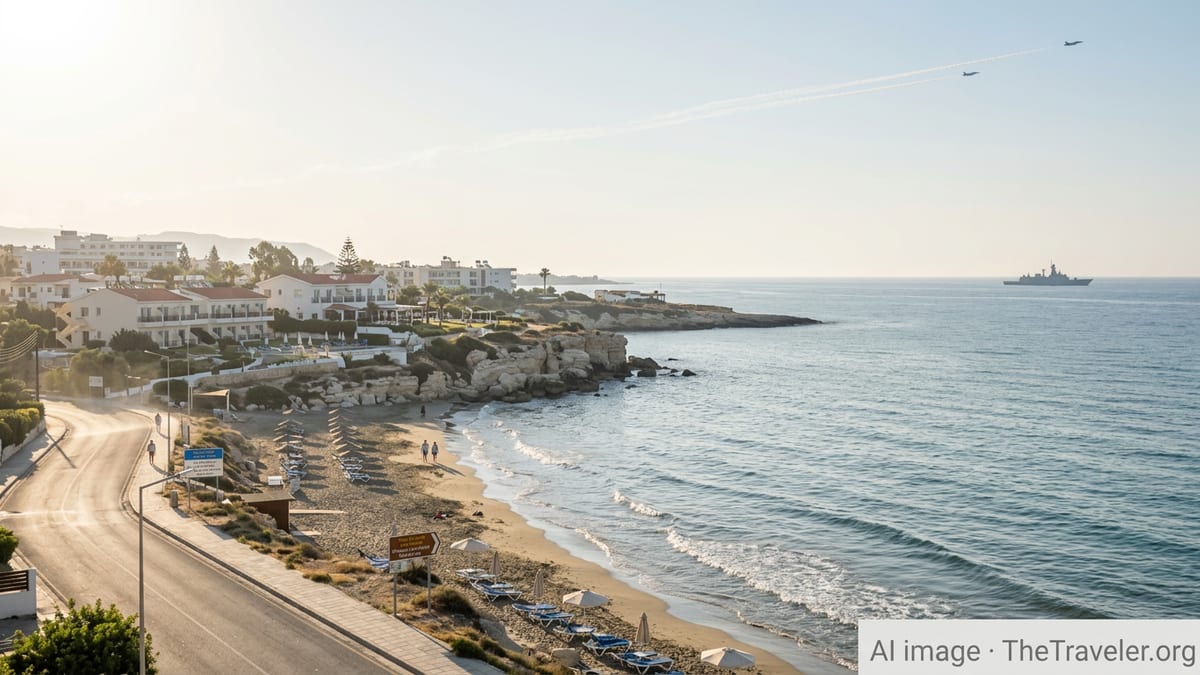
Whether that message can offset the weight of a US Level 3 advisory remains uncertain. For now, the “island of love” finds itself recast as a frontline state in the tourism imagination, a place where postcard-perfect beaches coexist with radar domes and frigates on the horizon, and where every new development in the Iran war could ripple quickly across hotel booking sheets for 2026.