

More news on this day
Vietnam’s tourism industry is entering 2026 on a historic high, with record international arrivals, aggressive new infrastructure projects and a clear surge of demand converging on Da Nang and the mountaintop resort of Ba Na Hills, positioning the central coast as one of Southeast Asia’s most dynamic travel hubs.
Get the latest news straight to your inbox!
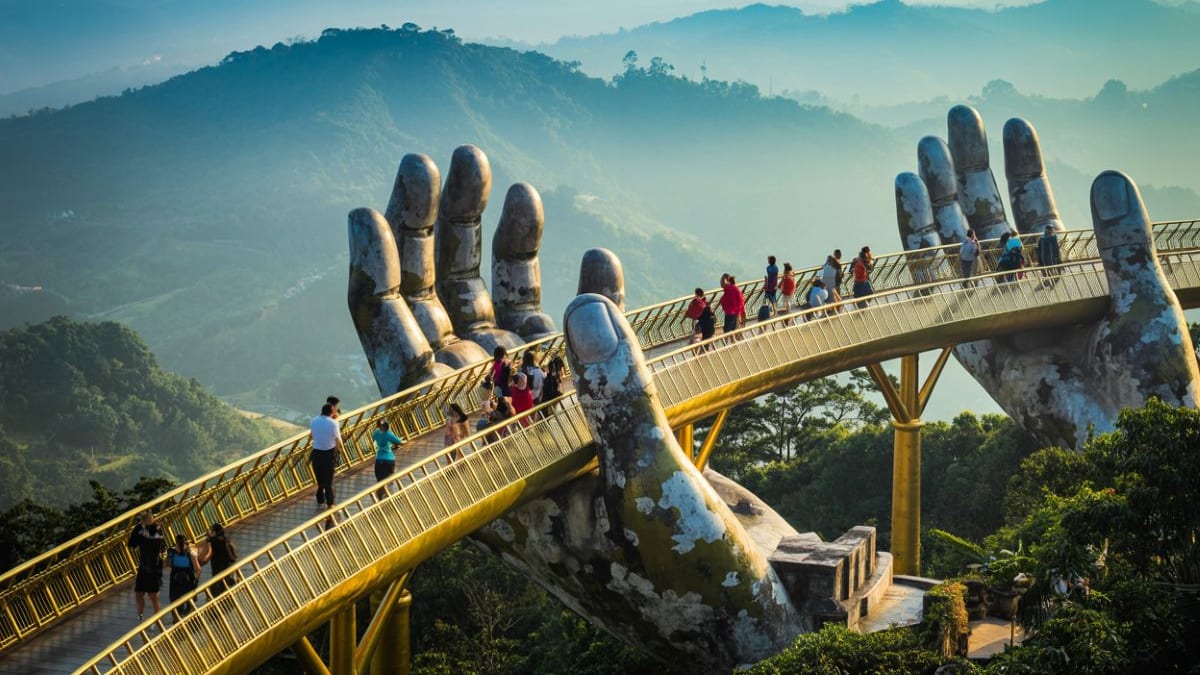
Image by Latest International / Global Travel News, Breaking World Travel News
Record Visitor Numbers Put Vietnam in the Regional Lead
Publicly available data show Vietnam closed 2025 with more than 21 million international arrivals, surpassing pre-pandemic benchmarks and outpacing several regional competitors. After welcoming about 17.6 million foreign visitors in 2024, growth accelerated through 2025 as relaxed visa rules, increased flight capacity and strong interest from Asian source markets lifted the country’s profile.
Statistics compiled by national tourism bodies and local outlets indicate that Vietnam received more than 6 million international visitors in the first quarter of 2025 alone, an increase of nearly 30 percent year on year. Monthly arrivals regularly exceeded 1.7 million through midyear, suggesting that the sector’s recovery had shifted into a sustained expansion phase by early 2026.
Vietnam’s performance has drawn attention within Southeast Asia because it combines rapid volume growth with a deliberate push into higher-value segments such as golf, wellness and MICE travel. Conference presentations and sector outlook reports for 2025 and 2026 frequently cite Vietnam as a bright spot in ASEAN tourism, with Da Nang highlighted among the destinations capturing a rising share of international demand.
This momentum sets the backdrop for 2026, when Vietnam is targeting another increase in foreign arrivals and aiming to consolidate its role as a primary gateway to mainland Southeast Asia for travelers from North Asia, Australia and Europe.
Da Nang Emerges as Vietnam’s Central Coast Powerhouse
Da Nang has been one of the clearest beneficiaries of Vietnam’s broader tourism rebound. City-level figures reported for the first quarter of 2025 show total visitor numbers climbing to around 2.54 million, up 19 percent year on year, with international arrivals increasing more than 40 percent. Tourism revenue for the Tet 2025 holiday period rose close to 20 percent compared with the previous year, underlining the city’s growing draw.
Local economic and tourism bulletins describe Da Nang as a premier beach and festival city, with long stretches of coastline, easy access to Hoi An and Hue, and a year-round calendar of cultural and sporting events. In early 2026, municipal announcements have promoted new wellness, wedding and cruise-focused products, all aimed at extending visitor stays and lifting average spending.
Da Nang’s appeal is also being supported by broader national infrastructure changes. The expansion of airports across Vietnam and the planned opening of Long Thanh International Airport near Ho Chi Minh City, now expected around 2026, are projected to improve overall connectivity and create more routing options for long-haul travelers entering the country and transferring to central Vietnam.
Within Southeast Asia, Da Nang is increasingly positioned as a mid-haul playground for travelers from South Korea, China and other North Asian markets, while remaining competitive for Australian and European visitors seeking beach and cultural experiences within a single itinerary.
Ba Na Hills and the Golden Bridge Drive Social Media Buzz
High above Da Nang, the hilltop complex of Ba Na Hills has evolved from a cool-climate retreat into one of Vietnam’s most visible tourism symbols. The entertainment park, operated under the Sun World brand, blends European-style architecture, gardens and rides with panoramic views over the central coast, and it now functions as a core component of the Da Nang travel experience.
The Golden Bridge at Ba Na Hills, a pedestrian bridge apparently supported by two massive stone hands, has played a central role in this rise. Since opening in 2018, the structure has been featured extensively by international media and photo-led travel platforms, earning multiple global tourism awards and becoming a dominant visual motif in online searches for Vietnam.
Updated 2025 and 2026 travel guides highlight ongoing investments at Ba Na Hills, including refreshed flower festivals, expanded family attractions and enhanced transport capacity on the cable car system. These developments are designed to handle growing crowds while maintaining the park’s appeal as a day trip from Da Nang for both domestic and international visitors.
The combined effect has been to turn Da Nang and Ba Na Hills into a single, highly marketable destination cluster. For many overseas travelers, images of the Golden Bridge now serve as an entry point into planning an entire central Vietnam journey that also includes Hoi An’s ancient town and the imperial heritage sites of Hue.
New Policies and Connectivity Underpin the 2026 Surge
Vietnam’s tourism boom heading into 2026 is not only driven by scenery and social media exposure. Policy shifts and connectivity upgrades have also played an important role. In 2023 and 2024, the government expanded its electronic visa system and lengthened permitted stays for several key markets. In late 2025, additional land and air border checkpoints were brought into the e-visa network, simplifying multi-country itineraries across mainland Southeast Asia.
International aviation data show a steady rebuilding of direct routes linking Da Nang with major cities in South Korea, China, Thailand, Singapore and Malaysia, complemented by seasonal charter flights from markets such as India and Eastern Europe. Airlines have signaled interest in further capacity growth through 2026 if demand holds at current levels.
Inside Vietnam, Da Nang is benefiting from its strategic position on the country’s north–south corridor. Improved highways connect the city with Hue to the north and Hoi An to the south, supporting packaged coastal circuits. Industry outlook reports suggest that rising investment in port facilities and cruise tourism will add another layer of international access for the central region over the coming years.
Regional comparisons indicate that while neighboring destinations such as Bangkok, Bali and Phuket continue to attract higher total volumes, Da Nang and Ba Na Hills are narrowing the gap in terms of growth rate and social media visibility, strengthening Vietnam’s overall profile in the competitive Southeast Asian travel landscape.
What Travelers Should Know for Planning 2026 Trips
For visitors considering Da Nang and Ba Na Hills in 2026, the main practical implication of Vietnam’s boom is crowd management and advance planning. Reports from the 2024 and 2025 high seasons describe very busy weekends and public holidays at major attractions, especially during Tet, summer school breaks and Golden Week-style holidays in key Asian source markets.
Travel advisories and operator updates recommend early booking of accommodation along My Khe and Non Nuoc beaches, with growing demand also spilling over into neighboring Hoi An. Day-trip itineraries to Ba Na Hills often begin before dawn to avoid congestion on the cable car and to capture clearer views before afternoon cloud cover.
At the same time, Da Nang’s tourism department and private investors are promoting a wider spread of activities, from wellness resorts and golf courses to food tours and night-time river cruises. This diversification is intended to distribute visitor flows more evenly across the day and across the city, making the boom more sustainable while giving travelers additional reasons to stay longer.
With Vietnam’s international arrivals already at record levels and further gains expected in 2026, Da Nang and Ba Na Hills are set to remain at the center of the country’s tourism story, symbolizing both the opportunities and the pressures that come with leading Southeast Asia’s latest travel surge.