

More news on this day
Air travelers across Texas encountered significant disruptions as major airports in Dallas and Houston reported over a dozen flight cancellations and hundreds of delays involving PSA Airlines, Southwest, Spirit and several other carriers, according to flight-tracking and airline performance data compiled in recent days.
Get the latest news straight to your inbox!
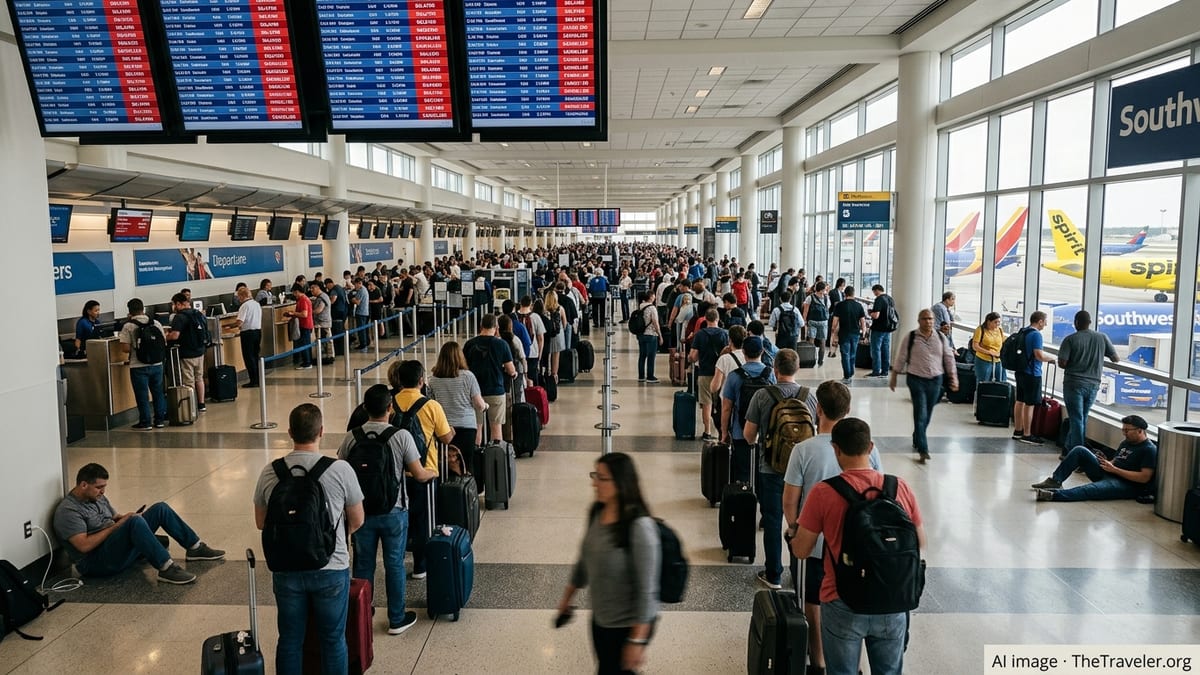
Widespread Delays at Major North Texas and Houston Hubs
Recent tracking of US domestic operations shows that passengers flying through Dallas Fort Worth International Airport, Dallas Love Field, George Bush Intercontinental Airport in Houston and Houston Hobby Airport have experienced a wave of schedule disruptions, with hundreds of flights arriving or departing behind schedule and more than a dozen cancellations recorded across multiple days. Publicly available information from airline performance dashboards and crowd-sourced flight status reports indicates that these impacts have been concentrated among large domestic carriers and their regional partners serving Texas’ busiest hubs.
Operational data shared by aviation watchers and travelers points to a pattern in which delays frequently cascade throughout the day, turning relatively minor schedule adjustments into missed connections, long waits on airport concourses and extended time on aircraft waiting for takeoff or gate availability. Travelers connecting through Dallas and Houston have reported missed onward flights and rebookings that stretched journeys by many hours, particularly on peak travel days.
While the total number of disrupted flights represents a small portion of all movements at these large hub airports, the scale is enough to significantly affect passenger experience. With Dallas Fort Worth and Houston Bush each handling tens of millions of passengers annually and Dallas Love Field and Houston Hobby functioning as high-frequency bases for point to point routes, even modest percentages of delayed operations can generate noticeable congestion at check in, security and boarding areas.
PSA Airlines, Southwest and Spirit Among Affected Carriers
Regional operator PSA Airlines, which flies under the American Eagle brand, appears among the carriers with notable cancellation percentages in recent performance snapshots shared by industry observers. Data circulated by aviation enthusiasts and airline customers for mid March 2026 shows PSA recording a double digit share of cancelled operations on at least one busy day, suggesting that regional connectivity through hubs such as Dallas Fort Worth has been particularly vulnerable when schedules come under strain.
Southwest Airlines, the dominant carrier at Dallas Love Field and a major operator at Houston Hobby, has also featured prominently in traveler accounts of disruptions. Crowdsourced records and passenger reports describe days with clusters of Southwest delays and cancellations, reflecting the sensitivity of the airline’s high frequency network to weather, staffing and air traffic management issues. Some customers have highlighted full flights and limited spare capacity, which can make same day reaccommodation challenging once irregular operations begin.
Spirit Airlines, active at both Dallas Fort Worth and Houston Bush, is likewise cited in recent discussions of disruption statistics. A mix of weather related schedule adjustments, crew availability constraints and knock on operational challenges has led to delayed departures and late evening arrivals, affecting budget conscious travelers who rely on the carrier’s limited daily frequencies on certain routes. With fewer alternative departures on some city pairs, disruptions on Spirit can result in extended overnight stays or complex rebookings through other hubs.
Other large US carriers serving Texas, including American, United and Delta and their affiliated regional operators, have also recorded delays through these airports, though the prominence of PSA, Southwest and Spirit in recent public conversations reflects both their relative scale and the visibility of their schedules among frequent flyers.
Weather, Staffing and System Strain Drive Irregular Operations
Multiple factors appear to be contributing to the pattern of disruptions affecting Dallas and Houston. Recent weeks have seen active weather across parts of the United States, including storm systems that produced heavy precipitation, strong winds and turbulence risks, leading to air traffic control initiatives such as ground delays, reroutes and holding patterns. Historical storm analyses and event reviews for Texas and neighboring states show that both winter weather and severe thunderstorms routinely trigger large numbers of delays and cancellations at these hubs.
In addition to weather, staffing pressures within both airlines and federal aviation services have been a recurring theme in publicly available commentary. Traveler accounts from Houston Bush and Houston Hobby in particular describe lengthy security wait times and bottlenecks at checkpoints, raising the prospect that resource constraints at busy times of day can amplify the impact of even modest schedule disruptions. When lines at security and check in lengthen, late arriving passengers may miss boarding cutoffs even when flights are operating close to schedule.
Operational data discussed on airline specific forums suggests that crew availability has also played a role in some of the most significant delays. Crew scheduling rules, rest requirements and aircraft repositioning constraints can combine with earlier disruptions to leave flights without legally available pilots or flight attendants at planned departure times. In these cases, airlines may be forced to delay or cancel flights even after weather has improved, prolonging the period of irregular operations for passengers.
Passenger Experience: Long Lines, Missed Connections and Overnight Stays
For travelers on the ground, the recent disruptions have translated into an array of practical challenges. Reports from passengers moving through Houston’s airports describe security lines stretching through concourses and into baggage claim areas during peak disruption periods, with estimated waits exceeding two hours in some instances. Similar accounts from Dallas Fort Worth reference crowded gate areas, long standby lists and extended periods between updates on departure times.
At the individual trip level, hundreds of delays and targeted cancellations can mean missed connections and unplanned overnight stays. With major carriers focusing on preserving core bank structures at their hubs, flights with lower load factors or more flexible rebooking options may be cut first, shifting passengers onto remaining departures that are already heavily booked. Travelers on PSA, Southwest and Spirit have described negotiating limited seat availability when trying to rebook, sometimes opting to drive to alternative Texas airports rather than wait for the next available flight.
Disruptions can be particularly difficult for travelers with tight schedules, such as business passengers, families with young children or individuals connecting to international long haul services. For these groups, extended waits in terminals, arrival after midnight or the need to retrieve and recheck baggage following misconnects can add considerable stress and cost. Publicly shared experiences indicate that some travelers have resorted to same day car rentals or intercity ground transportation to complete their journeys when confidence in near term flight options was low.
What Travelers Can Do When Flying Through Dallas and Houston
Travel industry guidance and recent traveler experiences suggest several strategies for passengers planning to connect through Dallas and Houston while conditions remain volatile. Booking earlier departures in the day can reduce exposure to knock on delays that accumulate over successive cycles, while allowing more time to rebook if a flight is cancelled or heavily delayed. Passengers with onward connections may also consider building in longer layovers to provide a buffer against schedule slippage.
Monitoring flight status through airline apps and flight tracking tools before leaving for the airport can help travelers adjust plans in real time, especially when widespread delays are emerging. For those flying on carriers such as PSA Airlines, Southwest and Spirit, where network structure and aircraft utilization can magnify the impact of a single disruption, being prepared with alternative routing ideas and knowledge of nearby airports within driving distance may improve rebooking options.
Travelers are also encouraged by consumer advocates to familiarize themselves with airline policies on rebooking, meal vouchers and overnight accommodations during irregular operations. While US regulations differ from some international regimes, published coverage notes that carriers often provide more flexibility during widespread disruptions than during routine individual delays. Understanding these options in advance can help passengers navigate conversations at customer service counters more effectively when problems arise.