

More news on this day
Travelers across the United States faced another day of uneven air service as Dallas Love Field recorded more than 100 delays and a cluster of cancellations, disrupting Southwest, Delta and JSX operations on key routes to Atlanta, Orlando, Houston and other major cities.
Get the latest news straight to your inbox!
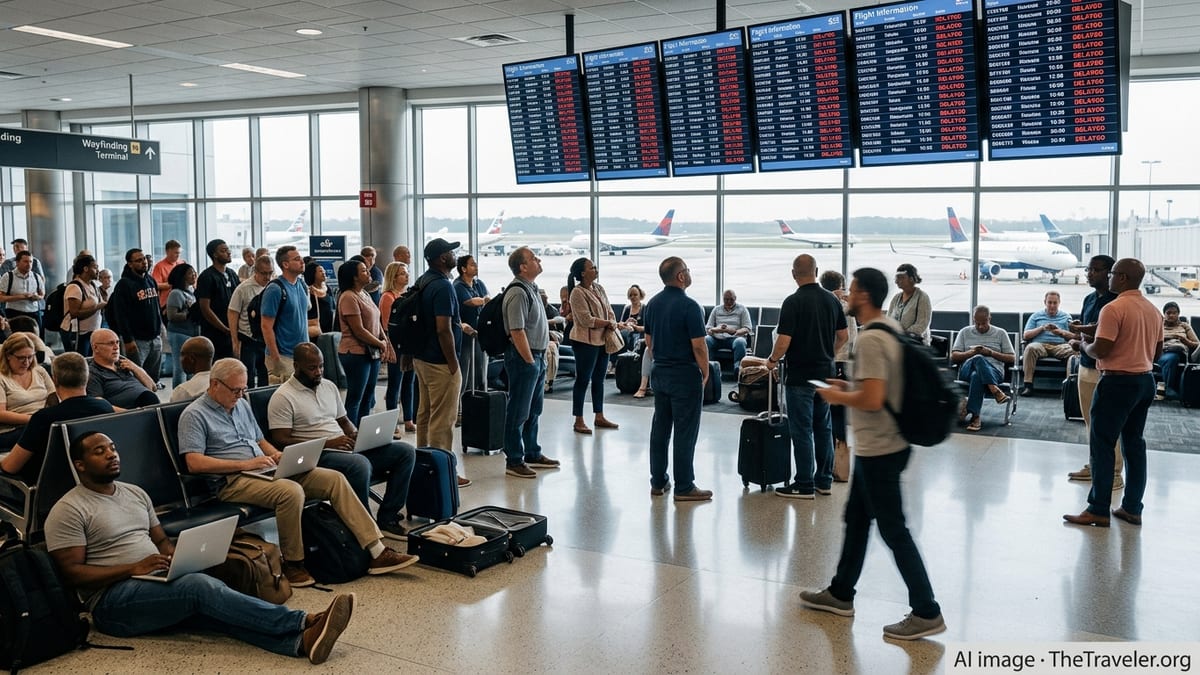
Dallas Love Field Emerges as a Fresh Disruption Hotspot
Publicly available flight tracking tallies for early April indicate that Dallas Love Field logged 108 delayed departures and 12 canceled flights over a single operating day, placing the close‑in Dallas airport among the more affected mid‑size hubs in the national network. While the numbers are modest when compared with the heaviest disruptions seen at Chicago or New York, they still represent a sizable share of Love Field’s tightly scheduled daily operations.
The imbalance between delays and cancellations suggests that most flights eventually departed, but often well behind schedule. That pattern has become increasingly common as airlines attempt to preserve their schedules by holding aircraft and crews in place rather than dropping flights outright, a strategy that can still leave passengers facing missed connections and late‑night arrivals.
Love Field’s role as a key base for Southwest Airlines, along with a smaller presence from Delta Air Lines and public charter operator JSX, means that disruption at the airport has an outsized impact on a handful of important domestic corridors. Even relatively brief ground holds or arrival metering periods can quickly back up departures, particularly during the morning and late‑afternoon peaks.
Southwest, Delta and JSX Routes Feel the Strain
Operational data reviewed from spring 2026 shows that Southwest, Love Field’s dominant carrier, bore the brunt of the disruption as it worked to keep a dense schedule of short‑haul flights moving through the airport. Delayed departures on Southwest metal were recorded on routes linking Dallas with Atlanta, Orlando, Houston Hobby and several other high‑demand leisure and business markets, adding fresh pressure to a network already coping with nationwide congestion.
Delta’s limited but strategically important flights from Love Field into its Atlanta hub also saw knock‑on effects. Even small delays on the Dallas to Atlanta leg can complicate passengers’ onward connections to cities across the Southeast and East Coast, particularly during periods when storms or volume constraints are already affecting hub performance.
JSX, which markets semi‑private public charter services from Love Field to regional destinations, was not immune either. With smaller fleets and thinner schedules, disruptions for operators like JSX can be especially challenging to absorb, since there are fewer spare aircraft and crews to redeploy when a rotation falls behind schedule or a flight is canceled outright.
Weather, Congestion and a Fragile Spring Travel System
The Love Field disruptions came against a wider backdrop of strained U.S. air travel in early April, as unsettled spring weather plagued several major hubs. Recent national tallies compiled from flight tracking platforms show thousands of delays and several hundred cancellations in a single day, with airports in Atlanta, Chicago, Houston, Los Angeles and San Francisco among those recording elevated disruption levels.
Reports indicate that a mix of thunderstorms, low cloud ceilings and gusty surface winds over parts of Texas and the Southeast contributed to spacing requirements between aircraft, reducing arrival and departure capacity for stretches of the day. When these limitations occur at multiple hubs at once, even brief slowdowns can cascade across the network, affecting flights that never pass directly through the worst weather.
Analyses published in recent days also point to ongoing operational constraints, including tight crew scheduling, maintenance backlogs and high gate utilization at busy airports. While airlines have invested in technology and schedule adjustments since previous meltdowns, the data from early April suggests that the system remains vulnerable when weather and volume spikes collide.
National Impact Reaches Beyond North Texas
Although the Dallas Love Field figures are small in absolute terms compared with the heaviest national disruption days, they form part of a broader pattern that has left travelers across the United States facing elevated odds of delay. In recent national snapshots, flight status dashboards have recorded more than 3,000 delays and several hundred cancellations within a 24‑hour period, touching airports from Boston and Chicago to New Orleans and Houston.
In that context, the 108 delays and 12 cancellations at Love Field function as one node in a crowded web of bottlenecks. A late‑running departure from Dallas to Atlanta can feed into a missed connection on a transcontinental or transatlantic route, while a scrubbed Love Field to Houston leg can strand business travelers and energy‑sector workers moving between key Texas markets.
Travel industry observers note that the concentration of delays at certain hubs can have disproportionate effects on passengers who rely on those airports as their primary gateways. For North Texas travelers who prefer Love Field’s proximity to downtown Dallas over the larger Dallas Fort Worth International Airport, the recent figures underscore how even secondary airports are deeply enmeshed in the same fragile national system.
What Travelers Are Experiencing on the Ground
For passengers moving through Dallas Love Field during the disruption window, the statistics translated into longer lines at check in, crowded gate areas and tighter connections. A delayed departure to Atlanta, Orlando or Houston can compress layover times to well under an hour, forcing passengers to sprint between gates or accept an involuntary rebooking onto later flights.
Travel forums monitored this week describe a mix of minor inconveniences and more serious itinerary overhauls, including families arriving after midnight at vacation destinations and business travelers losing full workdays to rolling delays. Even when airlines ultimately complete most flights, extended holds for aircraft and crews can make the experience for passengers nearly indistinguishable from more dramatic cancellation events.
Travel planners and aviation analysts continue to recommend conservative connection times, especially for itineraries touching weather‑sensitive hubs in the South and Midwest during the spring storm season. For North Texas passengers, the latest data from Love Field serves as a reminder that leaving extra time, building flexibility into schedules and monitoring flight status closely remain essential strategies in a system where relatively small disruptions can quickly ripple across the country.