

More news on this day
Travelers across the United States faced a fresh wave of disruption after Dallas Love Field recorded 108 delayed departures and arrivals and 12 canceled flights, unsettling schedules for Southwest Airlines, Delta Air Lines and JSX on key routes to Atlanta, Orlando, Houston and other cities.
Get the latest news straight to your inbox!
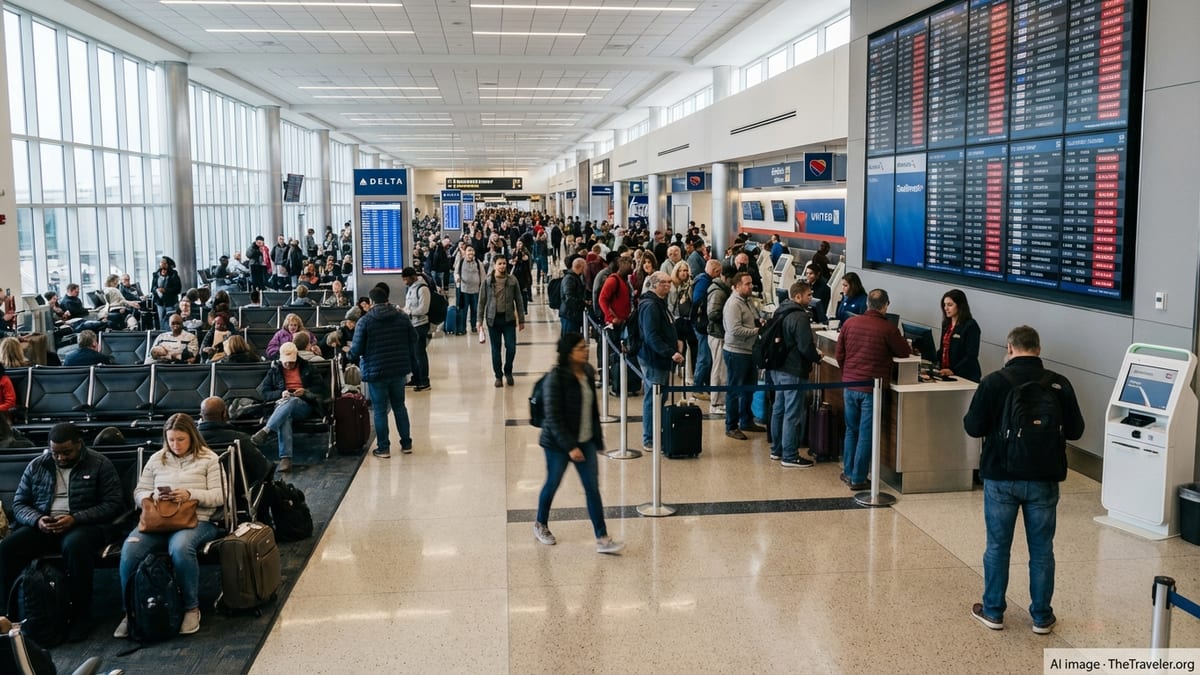
Heavy Day of Disruptions at Dallas Love Field
Publicly available flight tracking data and independent aviation coverage indicate that Dallas Love Field, the city’s close‑in airport and primary base for Southwest Airlines, has recently endured one of its more difficult operational days of 2026, with 108 delays and 12 cancellations logged in a single day. The disruption level was well above Love Field’s typical performance, where periods of irregular operations usually translate into dozens rather than more than a hundred delayed services.
Reports describe rolling knock‑on delays that built through the day as early‑morning and mid‑day flights departed behind schedule. Because many Love Field services are short‑haul and high‑frequency, aircraft and crews cycle repeatedly through the airport, magnifying the impact when the operation falls behind. By mid‑afternoon, the backlog translated into missed connection windows at downline airports, aircraft out of position and growing queues at service desks.
According to aviation industry analysis, Love Field’s compact size leaves little slack when conditions deteriorate. With the airport’s 20 commercial gates heavily utilized by Southwest and a smaller presence from Delta and JSX, gate swaps and last‑minute retiming can quickly reach their limits, especially when weather or air traffic control constraints restrict the pace of arrivals and departures.
Southwest, Delta and JSX Bear the Brunt
Southwest Airlines, which dominates Dallas Love Field, absorbed most of the disruption. Industry trackers show the carrier accounting for the majority of the 108 delayed flights, along with several of the 12 cancellations. For a network that relies on quick turnarounds and dense schedules across Texas and the broader South and Midwest, a single rough day at its Dallas stronghold can reverberate across multiple regions.
Delta Air Lines, which maintains a limited but strategically important schedule linking Love Field to Atlanta and other hubs, also experienced disruptions tied to the Dallas slowdown. Even a handful of delayed or canceled Delta departures can cause difficulties for passengers counting on timely connections at Hartsfield‑Jackson Atlanta International Airport, one of the world’s busiest transfer points.
JSX, the public‑charter carrier that operates from private terminals with scheduled service, was not immune either. Operational data and schedule monitoring suggest that JSX flights touching Love Field saw schedule changes and delays, particularly on routes linking Dallas with Houston‑area airports and select leisure destinations. While JSX’s smaller scale can sometimes insulate it from systemwide congestion, dependence on shared airspace and runway capacity leaves it exposed when bottlenecks form over North Texas.
Ripple Effects Across Atlanta, Orlando, Houston and Beyond
The problems in Dallas did not stay local. Aviation and travel reports show that Love Field’s 108 delays and 12 cancellations contributed to a wider pattern of disruption across the U.S. air network, which has seen elevated delay and cancellation counts in early April. Recent nationwide tallies published by travel news outlets describe thousands of delayed flights and hundreds of cancellations across major hubs, with Dallas, Chicago, Houston, Atlanta and Orlando all featuring prominently.
On the East Coast and in the Southeast, Hartsfield‑Jackson Atlanta International Airport and Orlando International Airport registered notable delay volumes on the same day that Love Field struggled. As Southwest and Delta worked to recover their Dallas operations, late‑running inbound aircraft from Texas translated into missed departure slots and retimed services in Atlanta and Orlando, compounding weather‑ and volume‑related congestion already affecting those airports.
In Texas, the disruption radiated between Dallas and Houston. Data from recent operational summaries point to Houston’s George Bush Intercontinental Airport and William P. Hobby Airport recording significant delays as late Dallas departures cascaded through afternoon and evening schedules. Passengers on point‑to‑point routes, as well as those continuing onward to other domestic or international destinations, reported extended tarmac waits and rebooked itineraries.
The web of affected routes extended into secondary markets as well, including cities in the Midwest and Mountain West that depend on Dallas, Atlanta or Houston as connecting gateways. Travel analysts note that when a dense short‑haul node such as Love Field experiences a spike in delays and cancellations, the resulting capacity squeeze can linger into subsequent days as carriers reposition aircraft and crews.
Weather, Infrastructure and System Strain
The latest Dallas disruption comes against a backdrop of broader stress on the U.S. aviation system in 2026. In recent weeks, Texas airports have collectively logged hundreds of flight delays in single‑day events, with Dallas‑Fort Worth International, Houston Bush Intercontinental and Austin‑Bergstrom all recording elevated disruption numbers. Coverage from travel and legal advisories has highlighted severe weather, air traffic control staffing constraints and infrastructure issues as recurring drivers.
North Texas in particular has been affected by storms and intermittent equipment problems at air traffic facilities over the past year. Previous regional outages and ground stops have periodically brought operations at both Dallas Love Field and Dallas‑Fort Worth International to a crawl, demonstrating how closely the two airports’ fortunes are linked when radar, communications or staffing challenges arise.
At the national level, the current episode adds to a series of high‑profile disruption waves involving multiple carriers. Recent analyses by travel publications describe Southwest as one of the hardest‑hit airlines in the 2026 disruption cycle, while also noting significant impact on American, United, Delta and several regional operators. For passengers, this means that even if their immediate flight is operated by an airline with a relatively strong on‑time record, knock‑on effects from partner or feeder operations can still cause delays.
What Travelers Can Expect in the Coming Days
For travelers booked through Dallas Love Field on Southwest, Delta or JSX, publicly available guidance from airlines and consumer advocates suggests preparing for residual disruptions even after the worst of a delay spike appears to pass. Aircraft and crews may remain out of position for several rotations, and evening cancellations can compress capacity on the following morning’s departures.
Industry experts generally recommend that passengers closely monitor airline apps and airport information screens, particularly for flights touching known congestion points such as Dallas, Houston, Atlanta and Orlando. Where schedules allow, opting for earlier departures may offer more room to rebook later in the day if problems arise. Travelers with time‑sensitive connections are also encouraged to consider longer layovers than usual when routing through heavily affected hubs.
While the 108 delays and 12 cancellations at Dallas Love Field represent a sharp disruption for a single day, they align with a broader pattern of volatility across the U.S. air travel system in early 2026. As carriers adjust schedules, invest in infrastructure and negotiate evolving air traffic control constraints, passengers using Love Field and its key partner airports may face periodic bouts of turbulence on the ground as well as in the air.