

More news on this day
New and expanded services linking Dammam with London, Mumbai and Bangkok are rapidly elevating Saudi Arabia’s Eastern Province as a strategic gateway for Gulf travel, prompting global hotel groups to prepare for a sharp rise in demand.
Get the latest news straight to your inbox!
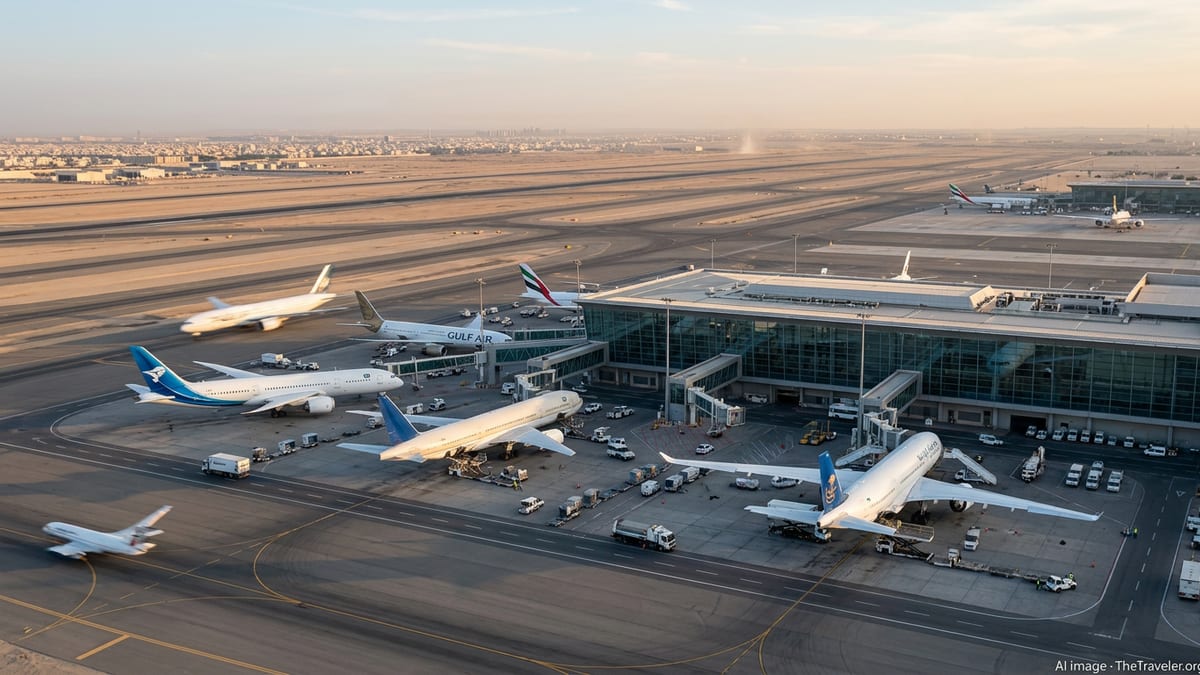
Dammam Steps Into the Gulf Aviation Spotlight
Dammam’s King Fahd International Airport has traditionally played a secondary role to Riyadh and Jeddah, but recent route decisions by Gulf carriers are pushing it toward the center of regional aviation. Publicly available schedules show Saudia now operating three weekly nonstop flights between Dammam and London Heathrow, turning what was long an unserved long haul city pair into a direct corridor for business and leisure travelers. Industry data cited in trade coverage indicates Dammam was previously one of the largest Middle Eastern cities without nonstop service to London, underscoring the scale of the shift.
The changing role of Dammam is also visible in how neighboring airlines are using the airport. Reports on ongoing Middle East airspace disruptions describe Gulf Air temporarily routing passengers via Dammam to reach London, Mumbai and Bangkok, creating an improvised mini hub for the Bahraini carrier. While these routings are framed as interim measures, they are introducing new passenger flows through the Eastern Province and familiarizing international travelers with Dammam as a viable transfer point.
Alongside these developments, network maps and schedule updates from Emirates and Qatar Airways reinforce the strategic importance of the Dammam–Dubai and Dammam–Doha corridors to connect onwards to London, Mumbai and Bangkok. Even when nonstop services are limited, frequent short hops from Dammam into major Gulf hubs give travelers competitive one stop options, putting the city more firmly on the global travel map.
The combined effect is a rapid increase in connectivity that is likely to outlast any temporary disruption. As more passengers begin or end long haul journeys in Dammam, or use it as an alternate gateway when other airports face constraints, the surrounding hospitality market is preparing for a structural rise in demand.
London, Mumbai and Bangkok See New Competitive Pressures
London is emerging as the most visible beneficiary of Dammam’s upgraded links. Saudia’s direct Dammam–Heathrow service adds to the already dense Saudi Arabia–United Kingdom market, which aviation analytics cited in specialist coverage describe as one of the fastest growing long haul corridors out of the Gulf. With Gulf Air simultaneously growing its London footprint via a new Bahrain–Gatwick route, travelers in the Eastern Province gain more choices not only in schedules, but also in which London airport best matches their onward connections.
For South Asia, Mumbai is the primary focus. Emirates has long marketed Dammam as a key spoke in its Dubai hub, with published schedules listing frequent departures from Dammam that connect onto London and major Indian cities such as Mumbai. Qatar Airways adopts a similar pattern via Doha, based on its global network maps that highlight Doha–Mumbai and Doha–Bangkok as core routes. For travelers starting in Dammam, these dense connections effectively shorten travel times to India’s financial capital and to Thailand’s main international gateway.
Bangkok sits at the leisure end of this new triangle. Travel forums and airline communication around recent disruptions show strong demand from Gulf travelers for rerouting options that maintain access to Thailand, often via Dammam–Doha or Dammam–Dubai combinations. The strength of Bangkok’s appeal for holiday and medical tourism means any extra capacity or improved reliability from Gulf carriers is quickly absorbed, increasing both point to point and connecting traffic routed through the Eastern Province.
Collectively, this reshaped network signals more intense competition on fares and schedules between Gulf hubs for passengers traveling to London, Mumbai and Bangkok. Dammam’s upgraded status adds another variable, encouraging airlines to test new timings, aircraft types and fare products that may, in turn, influence when and how hotel demand materializes in each destination.
Accor, Hilton and Global Chains Position for Eastern Province Growth
Hotel groups have been tracking the aviation buildup around Dammam closely, particularly within the context of Saudi Arabia’s tourism and economic diversification plans. Accor has already assembled one of the largest portfolios in the Kingdom, with brands such as Novotel, Ibis and Pullman established across major cities and additional openings flagged for secondary markets. Public development pipelines reference the Eastern Province as a priority growth area, aligning with enhanced air links through King Fahd International Airport.
Hilton, meanwhile, has announced multi year expansion targets in Saudi Arabia, including new properties under its Hilton, DoubleTree by Hilton and Hampton brands. Industry briefings describe plans for significant room additions across the country, with coastal and industrial hubs like Dammam and nearby Al Khobar singled out for their mix of corporate and leisure demand. Improved international access via London, Mumbai and Bangkok is expected to deepen that mix, attracting more expatriate project workers, conference delegates and visiting friends and relatives traffic.
These moves dovetail with broader regional hospitality investment. Other international groups, including Marriott International and IHG Hotels and Resorts, have also detailed pipelines in the Kingdom that place greater emphasis on the Eastern Province. The expectation across the sector is that each new long haul or high frequency route into Dammam will lift occupancy and average daily rates, particularly for upper midscale and upscale properties that cater to international travelers and airline crew.
As a result, new signings are increasingly designed with aviation driven demand in mind: hotels near key business districts with fast highway links to the airport, properties connected to mixed use developments appealing to both locals and transit guests, and brands calibrated for short stays before or after long flights. The pipeline reflects a belief that Dammam’s role as a travel node will continue to strengthen.
Impact on London, Mumbai and Bangkok Hotel Markets
The ripple effects are also being felt in destination markets, where hotel operators monitor Gulf carrier schedules as a leading indicator of demand. In London, the combination of Saudia’s Dammam–Heathrow service and Gulf Air’s increased presence through Gatwick is expected to support higher arrivals from Saudi Arabia and Bahrain. Market commentary from consultancies frequently notes that Gulf travelers account for some of the strongest per guest spending in the city, particularly in luxury and extended stay segments.
In Mumbai, additional one stop connectivity via Dammam, Dubai or Doha is likely to deepen ties with Saudi Arabia’s energy sector, given the Eastern Province’s role in oil and gas. This can translate into steadier weekday occupancy for business hotels in key commercial districts. Hoteliers in Mumbai have long treated Gulf carriers’ schedules as a barometer for corporate and medical tourism flows, and the reinforcement of Dammam’s position in those networks supports that pattern.
Bangkok’s hospitality market is even more tightly coupled with Gulf airline capacity. Thai tourism analysts often point out the importance of Middle Eastern visitors for both city stays and onward trips to resort destinations such as Phuket or Koh Samui. With Dammam now feeding additional traffic into Bangkok bound services via major Gulf hubs and temporary routings by Gulf Air, hotel operators are preparing for more arrivals from Saudi Arabia’s Eastern Province in peak travel seasons, particularly during cooler months when outbound Gulf tourism typically spikes.
Across all three cities, revenue managers are expected to respond by refining pricing around school holidays, Ramadan, Eid, and major shopping and events periods that attract Gulf visitors. The result may be more pronounced seasonal peaks linked to the travel patterns emerging from Dammam’s expanding catchment area.
What Travelers Can Expect as Networks and Hotels Scale Up
For passengers, the growing importance of Dammam brings more options and some short term complexity. Those based in Saudi Arabia’s Eastern Province gain direct or one stop links to major global cities without needing to route through Riyadh or Jeddah, while international travelers may find Dammam appearing more frequently in itinerary suggestions, especially when other Gulf airports face congestion or operational constraints.
On the ground, travelers can expect a broader selection of hotel brands at different price points as new Accor, Hilton and rival properties open or complete renovations. This is likely to include more internationally branded limited service hotels near business zones, alongside full service properties positioned for conferences and government related events. Airport area development, while still emerging, is expected to accelerate if current traffic trends persist.
In destination cities such as London, Mumbai and Bangkok, the influence of Dammam linked routes will be less visible to the average guest, but the impact will be reflected in occupancy levels and in how hotels target Gulf travelers with tailored services and language capabilities. For frequent flyers from the Eastern Province, loyalty partnerships between airlines and hotel chains will play a growing role in shaping where they stay and which routes they choose.
As airlines continue to adjust networks and hotel groups deploy capital toward the Eastern Province, Dammam’s evolution from regional airport to significant Gulf gateway appears set to continue, with implications for how and where travelers move between Europe, the Middle East and Asia.