

More news on this day
Romanian airline Dan Air is strengthening air links between Syria and Europe with new and reconfigured services to Aleppo, underscoring how a once-isolated market is gradually reconnecting to international air travel.
Get the latest news straight to your inbox!
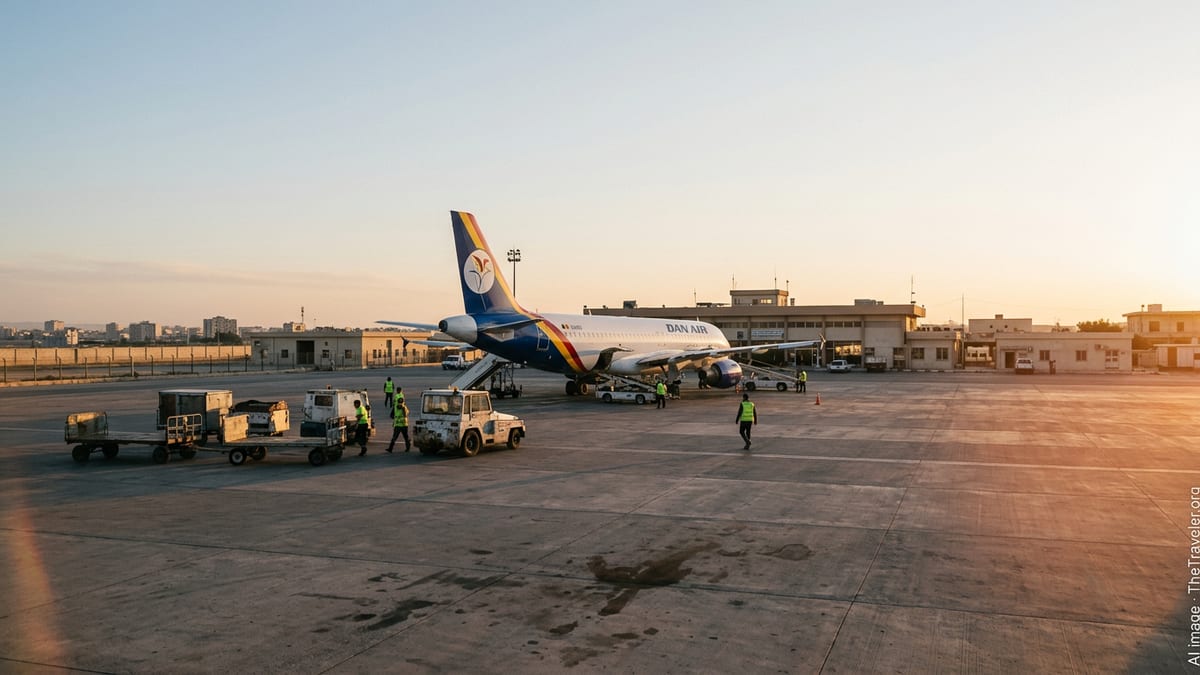
Dan Air Shifts Syria Operations Toward Aleppo
Recent updates to Dan Air’s network show a growing emphasis on Aleppo as a key Syrian gateway for European travelers. Publicly available information indicates that the Romanian carrier, which pioneered direct European Union commercial services to Syria, is now routing a larger share of its Syria schedule through Aleppo International Airport.
According to published coverage from aviation outlets, the airline has temporarily transferred flights that previously served Damascus to Aleppo due to the continued closure of Damascus airspace, while maintaining its broader ambition to connect Syrian cities directly with European hubs. This operational pivot highlights Aleppo’s emerging role as a practical alternative for maintaining connectivity during ongoing regional disruptions.
Reports on Dan Air’s planning suggest that the airline aims to maintain continuity for passengers rather than suspend Syria services entirely. By consolidating operations at Aleppo, the carrier is preserving a direct bridge between Syria and the European Union at a time when many global airlines remain absent from the market.
New Bucharest–Aleppo Route Builds on Earlier Damascus Launch
A series of announcements in late 2025 detailed Dan Air’s intention to introduce regular non-stop flights between Bucharest and Aleppo. Aviation industry reports state that the route was initially scheduled to launch in December 2025, following the success of the carrier’s earlier Bucharest–Damascus operation, which began in June 2025 and marked the first direct commercial link between Syria and the European Union in more than a decade.
Trade publications and airline association statements describe Dan Air as the first EU-based carrier to offer scheduled direct services not only to Damascus but also to Aleppo. This dual presence positions the airline as a central player in restoring Syria’s long-haul and regional connectivity, particularly for passengers who previously relied on complex itineraries via hubs in Turkey, the Gulf, or Jordan.
Some schedule adjustments have been reported, with launch dates for Aleppo services revised in response to regulatory requirements within the European Union. Nonetheless, network data and recent coverage indicate that Dan Air continues to plan for a sustained Bucharest–Aleppo link, reflecting confidence in demand from both the Syrian diaspora and business travelers.
Strategic Importance for Syrian Diaspora and Trade
Direct flights between Aleppo and European cities are especially significant for Syrian communities dispersed across the continent. For many travelers, a single-connection or non-stop itinerary can dramatically reduce travel time and simplify journeys that previously involved multiple stopovers and overland segments across borders.
Analysts cited in aviation and regional business coverage have highlighted that improved air access supports not only family visits and humanitarian travel, but also small-scale trade and professional exchanges. Aleppo has long been one of Syria’s major commercial centers, and renewed air links from European gateways such as Bucharest can facilitate the movement of goods, technical specialists, and service providers.
Reports indicate that Dan Air’s fare structure and onboard service are designed to appeal to cost-conscious travelers while still offering a predictable schedule. This combination is seen as particularly important in a market where many passengers are self-financing complex itineraries and have limited alternative options.
Aleppo’s Growing Role in a Changing Regional Aviation Map
The renewed focus on Aleppo is part of a broader reshaping of air traffic in the Eastern Mediterranean. Over the past year, several regional and international carriers have announced or restarted services to Aleppo, framing the city as a viable northern gateway into Syria as security conditions and airspace considerations evolve.
Public information from airline press rooms and aviation news services shows that carriers based in the Gulf and Turkey have either resumed or expanded flights to Aleppo, adding new one-stop connections from Europe, Asia, and Africa. Dan Air’s move to operate direct services from an EU capital positions the Romanian carrier within this wider trend of cautiously expanding access.
At the same time, analysts note that the operational environment remains sensitive. Airspace closures, infrastructure constraints, and regulatory requirements continue to shape how and when airlines can serve Syrian airports. In this context, Aleppo’s ability to host international services offers both a logistical alternative to Damascus and a symbol of the country’s gradual re-engagement with global aviation networks.
Implications for Future Syria–Europe Connectivity
Dan Air’s evolving Aleppo strategy may serve as a test case for how European airlines can navigate regulatory expectations while responding to latent demand for travel to Syria. Industry observers suggest that consistent performance on routes like Bucharest–Aleppo could encourage additional capacity, new European origin cities, or cooperative arrangements with other carriers over time.
However, the pace of expansion is likely to remain measured. Many European airlines continue to avoid Syrian destinations because of risk assessments, sanctions frameworks, and commercial considerations. For the moment, Dan Air’s operations stand out as an exception, creating a modest but meaningful bridge between Syria and the European Union.
For travelers, the emergence of direct flights to Aleppo translates into shorter journeys and a clearer sense of schedule reliability, albeit within a still-fragile market. For Aleppo and Syria’s wider economy, each incremental route helps rebuild the connective tissue of tourism, trade, and personal mobility that underpins long-term recovery.