

More news on this day
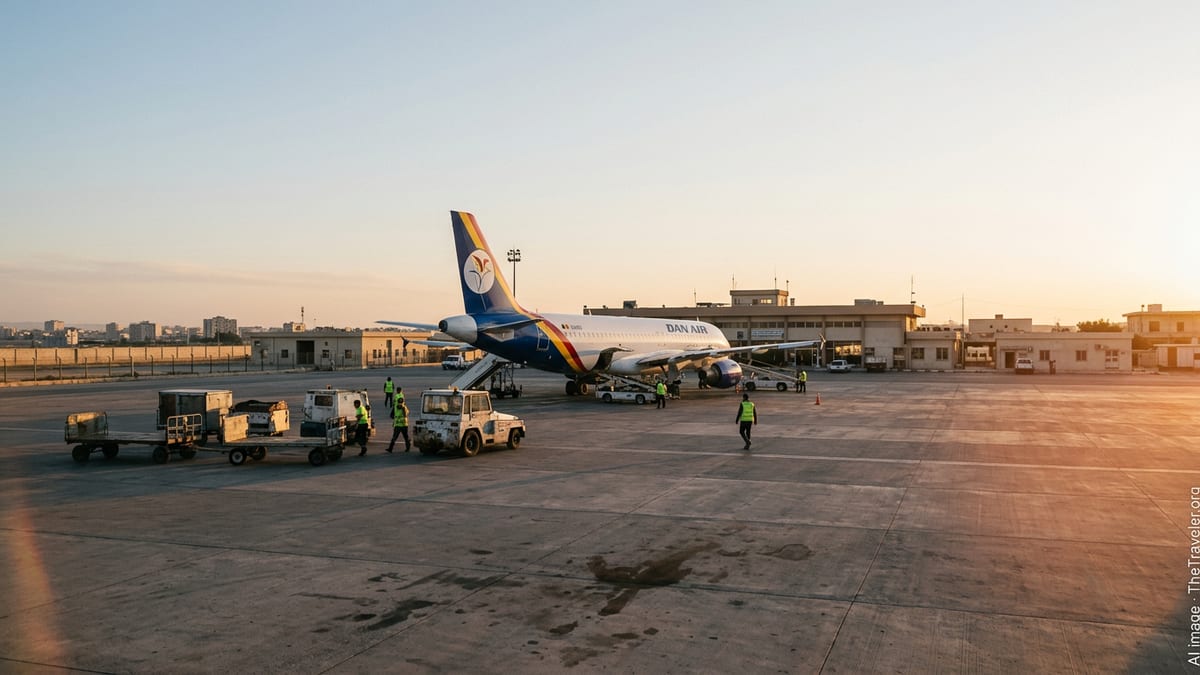
Romanian airline Dan Air is drawing fresh attention to Syria’s aviation restart by shifting its fledgling Syria network from Damascus to Aleppo, creating one of the clearest new direct links between Europe and northern Syria since the civil conflict began.
Get the latest news straight to your inbox!
From First EU Flights to Syria to a New Focus on Aleppo
Dan Air, a Romanian carrier that began scheduled operations in 2023, has positioned itself as a pioneer in reconnecting Syria with European air travel. Publicly available information indicates that the airline became the first from the European Union to operate regular passenger services to Syria when it launched direct flights from Bucharest to Damascus, breaking a gap of more than a decade in such links.
Building on that move, the company later announced plans to add Aleppo to its network, marketing the city as a second Syrian gateway for passengers originating in Romania and other parts of Europe. Industry coverage described the Aleppo route as part of a gradual expansion in the carrier’s Middle East footprint, intended to serve both diaspora travelers and limited business traffic.
Although some initial launch dates for the Bucharest–Aleppo route were revised or postponed in late 2025, recent aviation reports show that Dan Air has now effectively re-centered its Syria operations on Aleppo, reflecting both changing security assessments and the evolving status of Syria’s airports.
Aleppo Airport Reopens as Northern Syria’s Main International Gateway
Aleppo International Airport has undergone repeated closures and reopenings in recent years due to conflict and damage to infrastructure. Local and regional coverage in 2025 and early 2026 described periods when the airport was taken offline, as well as more recent announcements confirming that it is once again open to air traffic, with specific emphasis on routes that can use northern Syrian air corridors.
The latest updates from aviation and regional news outlets indicate that Aleppo has re-emerged as a primary international gateway for northern Syria, especially at times when Damascus International Airport has been either closed or heavily restricted because of security conditions. This shift has encouraged airlines that are already operating into Syria, or planning to do so, to consider Aleppo as a practical alternative.
Reports also highlight that Aleppo’s reopening coincides with a broader return of international carriers to Syria, including regional airlines from the Gulf and Turkey that have resumed or launched routes to both Damascus and Aleppo. The resulting network is still limited compared with pre-war levels, but it represents a significant improvement for residents and the sizeable Syrian diaspora seeking more direct journeys.
Dan Air Temporarily Moves Syria Operations from Damascus to Aleppo
In new information published in mid-March 2026, aviation industry outlets report that Dan Air has decided to temporarily shift its Syria flights from Damascus to Aleppo. The change follows continued closures and disruptions affecting Damascus International Airport and its airspace, which have prompted rerouting and operational adjustments across multiple carriers.
According to these reports, Dan Air’s Syria services, which link Bucharest with the country, will now operate into Aleppo instead of Damascus for the duration of the Damascus closure. Timetables show that these flights preserve a direct connection between Romania and Syria, effectively turning Aleppo into the carrier’s primary Syrian destination in the near term.
The decision underscores how flexible routing has become central to maintaining air links to Syria. For passengers, the shift means that tickets originally purchased to Damascus may now involve arrival in Aleppo, with ground transport arrangements needed onward to other cities. For the airline, the adjustment allows continuity of service while aligning with the latest assessments about viable air corridors and airport readiness.
What Direct Aleppo Flights Mean for Syria–Europe Mobility
The emergence of direct flights between Aleppo and an EU capital carries broader significance for mobility between Syria and Europe. Years of civil conflict left most journeys fragmented, often requiring multiple connections via regional hubs such as Amman, Istanbul, Beirut, or Gulf airports. Dan Air’s services, combined with the gradual return of other international carriers, are helping to shorten travel times and reduce the logistical complexity for Syrians visiting family, pursuing studies, or managing business ties abroad.
Recent analyses of European policy toward Syria note that many economic sanctions on the country’s core sectors, including parts of transport and banking, have been eased or restructured. This regulatory shift has made it more feasible for European airlines and financial institutions to support limited commercial activities, including air services, while targeted measures remain in place against individuals and entities associated with past human rights violations.
The direct Bucharest–Aleppo link also has symbolic weight. For many in the Syrian diaspora living in Romania and neighboring countries, a single-flight option to northern Syria is seen as a step toward normalization of travel patterns, even if broader political and reconstruction challenges persist. Observers caution that demand remains highly sensitive to security developments and regulatory changes, but describe the route as a concrete example of how connectivity can gradually rebuild.
Operational Challenges and Future Prospects for the Route
Operating direct flights into Syria still involves a complex risk and compliance environment. Airlines must continuously evaluate airspace safety, airport infrastructure, insurance coverage, and alignment with evolving European and international regulations. Public documents and specialist reporting on Dan Air’s earlier timetable changes for Aleppo highlight how quickly launch plans can be modified when regulatory guidance shifts.
Capacity on Dan Air’s Syria routes also remains modest by design, reflecting both the niche nature of the market and the need to calibrate schedules to underlying demand. Travel industry observers suggest that the Bucharest–Aleppo service is likely to focus primarily on point-to-point traffic, such as Syrians living in Romania and nearby EU states, along with humanitarian workers, aid-related personnel, and a small number of business travelers.
Looking ahead, analysts note that the future of direct European flights to Aleppo will depend on the stability of northern Syrian airspace, the continued operational status of the airport, and the stance of European regulators. If conditions remain relatively stable, Dan Air’s presence could encourage other smaller European carriers to explore similar services, further knitting Syria back into the continent’s air network. If not, the current arrangements may remain fragile, subject to sudden suspensions or rerouting as security and political realities on the ground evolve.