

Siem Reap is a destination that rarely fits into the “one tick-box trip” category. After a day or two at Angkor, most travelers start looking outward, searching for waterfalls, jungle temples and floating villages they have heard about from friends and social media. Some of these day trips deserve every accolade; others are over-commercialized, rushed or ethically questionable.
Sorting the truly rewarding excursions from the merely famous can save you time, money and disappointment. This guide focuses on the trips from Siem Reap that genuinely live up to the hype, how to do them well, and where a little planning makes a big difference.
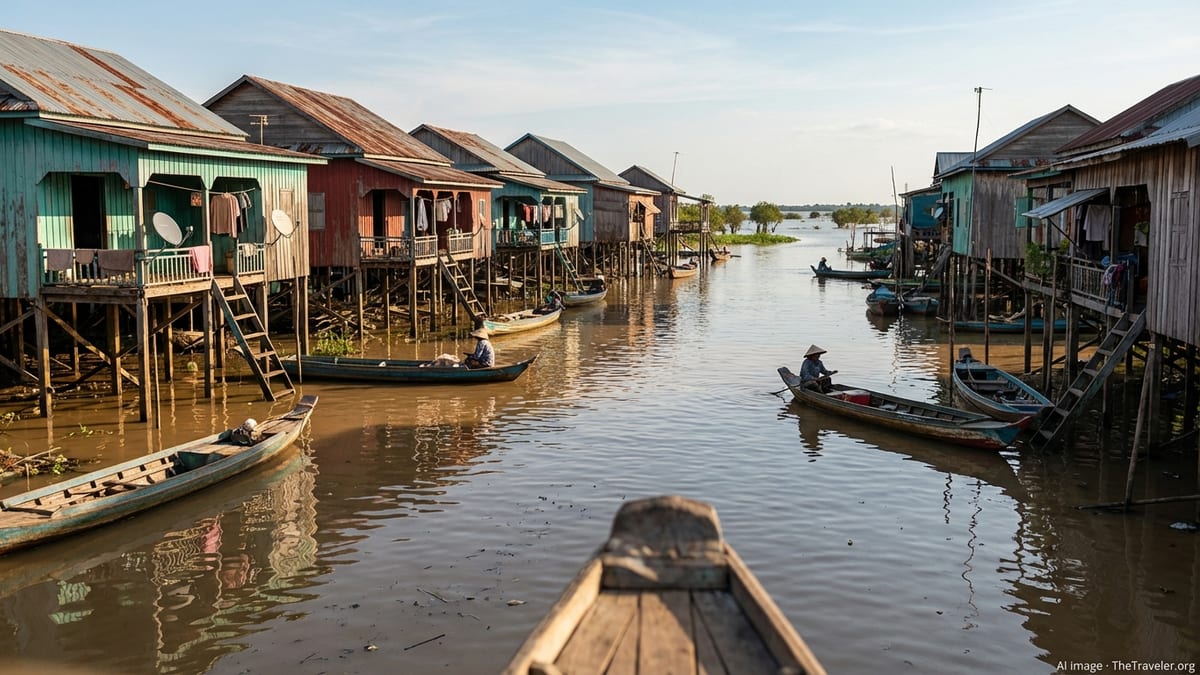
How to Choose Day Trips from Siem Reap That Are Worth Your Time
In the years before the pandemic, Siem Reap’s surroundings saw a rapid growth in organized day tours, from remote temple safaris to countryside cycling and Tonle Sap cruises. Since Cambodia fully reopened, many of these options have returned with updated routes, new road conditions and changing crowd patterns. Rather than chasing every recommendation you hear, it pays to focus on trips that combine manageable travel time, strong cultural or natural highlights and, where possible, genuine benefits to local communities.
The most satisfying day trips from Siem Reap fall into a few clear categories. There are the big-ticket sights that once felt “off the beaten path” but now see regular traffic, such as Phnom Kulen and Beng Mealea. There are quieter, community-based destinations like Banteay Chhmar and more low-key Tonle Sap villages, which are actively trying to avoid the mistakes of overtourism. Finally, there are soft adventure options such as countryside cycling and farm visits that give you a different perspective on Siem Reap beyond the temples. The sections that follow look at each category in turn, with practical notes on what makes them live up to the hype.
Waterfalls, Sacred Peaks and Jungle Temples
The combination of Phnom Kulen and Beng Mealea has become one of the signature day trips from Siem Reap. Mountain scenery, a sacred river, a reclining Buddha and a semi-collapsed temple swallowed by forest make for a powerful contrast with Angkor’s grand formal complexes. The route is popular enough to support quality tours and improved roads, yet still feels wild in places if you time your visit well.
Phnom Kulen National Park
Phnom Kulen lies roughly 45 to 50 kilometers north of Siem Reap, usually a 1.5 to 2 hour drive depending on traffic and road conditions. The plateau is more than just a cool escape from the city heat. It is a major pilgrimage site for Cambodians, recognized for its reclining Buddha, riverbed carvings and waterfalls, and designated as a national park with protected forest. Recent tour itineraries commonly pair Kulen with Beng Mealea or a floating village, reflecting the mountain’s status as a must-see addition to Angkor rather than a fringe side trip.
What lives up to the hype here is not just the scenery but the variety. You can walk along the river where thousands of lingas are carved into the sandstone riverbed, visit the hilltop pagoda with its large reclining Buddha and swim at the lower waterfall when conditions are safe. The falls are at their most dramatic from roughly July to October, when rains are strongest. In the dry season the water flow can be modest but pools remain appealing after a hot temple day. The spiritual dimension is just as striking: you will often see locals lighting incense and families picnicking in the shade, a reminder that this is a sacred landscape first and a tourist site second.
To get the best of Kulen, consider an early morning departure to avoid heat and busier mid-morning crowds. Wear footwear that can handle steep, sometimes slippery paths around the falls, and be prepared for a modest entrance fee on top of any tour cost, as the road up is privately managed. Travelers looking for a more reflective experience may want to prioritize the river of lingas and the pagoda over the swimming area, which can be lively on weekends and public holidays.
Beng Mealea Temple
About 65 to 70 kilometers from Siem Reap, Beng Mealea is one of the most atmospheric temples accessible as a day trip. Surrounded by forest and left in a state of picturesque disrepair, it offers the kind of Indiana Jones tableau many people secretly hope for at Angkor but rarely find among the restored main complexes. Today, upgraded roads mean you can reach it in about 1.5 hours by car, often as part of a combination tour with Kulen or a floating village.
Beng Mealea’s hype largely stems from its mood: collapsed galleries, wall carvings reclaimed by roots and moss, and wooden walkways that guide visitors through the ruins without completely sanitizing the setting. It feels wild without being unsafe. While visitor numbers have climbed steadily, the site remains far less crowded than Angkor Wat or Ta Prohm at peak times. Late morning and early afternoon can still be reasonably calm, especially compared with sunrise at the main temples.
For photography and a sense of immersion, plan at least 90 minutes on site. The official paths are easy enough for most visitors, but some guides still offer short, more adventurous detours across fallen stones for those who are steady on their feet. The temple’s orientation and tree cover mean soft, diffused light much of the day, ideal for capturing reliefs and vegetation. If you are short on time and want only one major day trip beyond Angkor, the pairing of Beng Mealea with Phnom Kulen stands out as a combination that fully justifies its strong reputation.
The Tonle Sap Floating Villages: Which Ones Are Worth It
Among all day trips from Siem Reap, the Tonle Sap lake’s floating and stilted villages may generate the most divided opinions. Some travelers come back calling them a highlight of their time in Cambodia. Others are uncomfortable with intrusive boat tours that feel like “poverty sightseeing” and complain about hard-sell tactics and environmental concerns. Choosing the right village and the right season is essential if you want this experience to live up to the stories that drew you there.
The main options accessible as a half day or day trip from Siem Reap are Chong Kneas, Kampong Phluk, Kampong Khleang and the smaller, less-known Mechrey. Each offers its own balance of accessibility, tourism pressure and authenticity. In recent seasons, more travelers have shifted away from Chong Kneas, where mass tourism and persistent ethical concerns have been widely reported, and toward villages where community-based operators have a stronger presence.
Kampong Phluk: Accessible and Atmospheric in the Wet Season
Located a little over 30 kilometers from Siem Reap, Kampong Phluk is one of the most popular Tonle Sap excursions. Travel time is usually around 45 minutes by tuk-tuk or car to the pier, followed by a boat ride along the river and through stilted houses to the open lake. Many reviews from the past two years note that conditions and experiences vary sharply between wet and dry seasons, so expectations matter.
In the rainy months, typically from about June to November depending on annual patterns, Kampong Phluk’s houses appear to float above high water, and boats can often access flooded forest areas where trees rise out of the lake. This is the period when the village most closely matches the image that draws people there: a working fishing community adapting to the Tonle Sap’s dramatic seasonal rise. Sunset cruises on clear days can be striking, with the lake taking on metallic hues as the boats spread out.
In the dry months, water levels can drop so far that boats navigate along narrow channels or stop before reaching what visitors expect to be lakefront scenery. Wooden stilts tower above dusty paths, revealing the full height of the structures but softening the illusion of a “floating” village. Some travelers appreciate this insight into the extreme seasonal changes; others find it underwhelming. If you go in the dry season, choose an operator that is honest about conditions and focuses on explaining local life rather than just selling a sunset photo.
Kampong Khleang: Big on Scale, Lower on Tourist Volume
Around 50 kilometers southeast of Siem Reap, Kampong Khleang is further and less visited than Kampong Phluk but often cited by responsible tourism advocates as the better choice for travelers willing to spend a little more time. This is a large permanent settlement with a population in the thousands, and the stilt houses stretch in long rows along the riverbanks, giving a powerful sense of scale.
What makes Kampong Khleang live up to the hype is its combination of immersion and relative calm. There is tourism here, but far fewer large boats cycle through than at Kampong Phluk. In the wet season, tall houses partly disappear into the water and boats glide directly under walkways and between homes. In the dry season, the structures stand on spindly legs above fields and dusty tracks, revealing the full extent of their engineering. Either way, you see a living community oriented entirely around the lake’s pulse.
Visitors who want their money to reach locals should look for tours that use community-owned boats and include time in the village market. A full day that combines Kampong Khleang with a countryside stop, such as a sticky rice village or handicraft workshop, tends to be more satisfying than a hurried half-day sunset cruise. Those prone to motion sickness may appreciate that the ride here, while longer, often uses slightly larger and more stable boats than some of the smaller channels nearer Siem Reap.
Mechrey: A Quieter Alternative for Birdlife and Low-Key Tourism
Mechrey, about 25 kilometers southwest of Siem Reap, receives far fewer visitors than the larger Tonle Sap villages. It serves as a gateway to a wildlife sanctuary and is known among independent travelers for being quieter and less commercialized. Boats here tend to be smaller, and there is more focus on observing local life and birdlife than on organized souvenir stops.
For travelers looking to escape the crowds and enjoy a slower, more contemplative experience on the lake, Mechrey often exceeds expectations. In the wet season, the village floats among trees and flooded grasslands, and the surrounding area can be rich in bird species. While you should not expect the kind of set-piece sunset barge scenes marketed elsewhere, you are more likely to encounter a handful of other boats rather than dozens.
This is a good option for photographers and nature-minded visitors, and for those who feel uneasy about mass-tourism dynamics in other villages. Because infrastructure here is lighter, it is especially important to travel with an operator who respects local guidelines, minimizes plastic use and gives clear instructions about where it is appropriate to take photographs and where it is not.
Chong Kneas: Famous Name, Mixed Reputation
Chong Kneas is the closest Tonle Sap village to Siem Reap and historically the default lake trip sold to first-time visitors. In recent years, however, it has developed a reputation as the most heavily touristed and commercially aggressive option, with frequent complaints about hard-sell stops and uncomfortable interactions that reduce village life to a spectacle.
Some travelers still report enjoying Chong Kneas, especially when they hire a private boat and set clear expectations about avoiding certain stops. The proximity to Siem Reap makes it an easy choice if you have very limited time. However, for visitors who want an experience that feels less performative and more grounded, shifting focus to Kampong Khleang, Kampong Phluk or Mechrey is often a better way to see the Tonle Sap.
If you do consider Chong Kneas, treat it as a short water excursion rather than a deep cultural visit. Clarify the route and inclusions in advance, ignore animal photo props and staged “orphanage” visits, and favor operators who can explain how your ticket price is shared with local boat owners.
Community-Based Temples and Rural Culture
Not all day trips from Siem Reap need to center on headline attractions. Some of the most rewarding, and arguably most future-proof, excursions are built around community-based tourism in rural areas. These projects are often designed with local participation from the start, aiming to distribute income fairly while preserving temples and crafts that receive far less attention than Angkor.
Two standouts within ambitious day-trip range are Banteay Chhmar to the northwest and the Angkor Silk Farm and countryside villages closer to town. Both appeal to travelers who enjoy slower travel, conversation and context at least as much as big photo moments.
Banteay Chhmar: A Remote Temple That Rewards the Effort
Located in Banteay Meanchey province, roughly 160 kilometers from Siem Reap, Banteay Chhmar is best known as a multi-temple complex with haunting face towers and bas-reliefs that recall Bayon, but without the crowds. Travel time is about 2.5 to 3 hours each way, which pushes it to the outer limit of what many travelers consider a day trip. Nonetheless, organized excursions and even day packages with high tea in the temple are offered by local community-based tourism groups.
The appeal here is partly archaeological and partly experiential. The temples remain comparatively unrestored, with collapsed walls, forest creepers and long reliefs depicting battles and daily life. Visitors can typically wander with only a handful of other guests in sight, even in high season. The community-based tourism office in the nearby village coordinates guides, meals and homestays, ensuring that a significant share of visitor spending goes directly to local families.
If you have a strong interest in Khmer history and are willing to accept a long road journey, Banteay Chhmar more than lives up to its quiet hype as “Bayon without the tour buses.” Those with more limited time may prefer to treat it as an overnight trip, but determined travelers can experience the main temple, a village walk and a hosted meal within a long yet rewarding day.
Angkor Silk Farm and Artisans Angkor
For a shorter and gentler foray into rural Siem Reap, the Angkor Silk Farm in Puok district and the Artisans Angkor workshops in town provide insight into the region’s craft traditions. The silk farm, about 20 minutes’ drive from central Siem Reap, offers free guided tours that walk visitors through each step of sericulture, from mulberry cultivation to spinning and weaving. In recent years, interest in responsible shopping has pushed more travelers to seek out such visits, both to understand pricing and to ensure that purchases support sustainable livelihoods.
Artisans Angkor operates as a social enterprise, training rural youth in stone carving, lacquer work, silk and other skills. A half-day itinerary combining the town workshop, silk farm and a local market or village stop can be particularly rewarding on a lighter day between temple visits. The hype here is modest yet well earned: conversations with artisans, the chance to see intricate techniques up close and the opportunity to buy directly from producers make this feel more substantial than a standard souvenir stop.
These visits are also accessible for families and those with limited mobility. Walking distances are short, surfaces are mostly flat, and guides can tailor explanations for children or craft enthusiasts. This makes the craft-focused day trip a good option if you are traveling with mixed ages or energy levels.
Cycling and Countryside Experiences
Just beyond Siem Reap’s built-up edges, a patchwork of rice fields, palm trees and small villages offers a softer side to the region that many visitors miss entirely. While not a single “sight” in the way of a temple or waterfall, the countryside itself has developed a reputation as one of the most rewarding day-trip experiences, especially by bicycle. A growing number of local and international operators now offer morning, full-day and sunset rides that blend light exercise with cultural stops.
What consistently wins praise is the combination of accessibility and authenticity. Within 20 to 30 minutes of pedaling from town, you can be riding along red-dirt tracks past ox carts, stilted houses and lotus ponds. Because most routes avoid major roads, you experience rural life at a human pace, pausing for seasonal activities such as rice planting, palm sugar boiling or fish smoking depending on the time of year.
Half-Day and Full-Day Cycling Tours
Well-established cycling outfits in Siem Reap typically structure their countryside tours with small group sizes, van support and quality mountain bikes. Half-day routes may cover 20 to 25 kilometers with frequent stops, making them accessible to anyone with basic fitness, while full-day options can stretch to 40 kilometers or more for more active travelers. Terrain is mostly flat, but dust and heat can be challenging at certain times of year, so early morning starts are recommended.
The highlights are less about singular landmarks and more about small moments: a stop at a family-run rice noodle workshop, tasting freshly pressed palm sugar, pausing at a village market or chatting with schoolchildren outside a classroom. Compared with a tuk-tuk tour, cycling allows for quiet stretches where you hear only birds and the whir of wheels. Many visitors report that these rides give them their clearest sense of contemporary Cambodian life beyond the tourist bubble.
To make sure the experience lives up to expectations, choose a reputable operator that prioritizes safety, provides helmets, manages group sizes and works with local hosts in villages. Dry-season rides from November to February are generally more comfortable, while wet-season rides can be beautiful but muddier, with unpredictable showers and vivid green landscapes.
Cooking Classes and Farm Visits
Cycling can also be combined with cooking classes or farm visits that start or end in the countryside. Several Siem Reap cooking schools now source ingredients from nearby villages or their own gardens, giving guests a chance to see herbs, vegetables and rice paddies before learning to prepare classic dishes such as fish amok, green mango salad or lok lak.
For travelers who prefer less physical activity, it is possible to join a tuk-tuk transfer directly to a rural cooking school or farm. These experiences typically include a market visit, a walk through gardens and a hands-on cooking session under the guidance of Khmer chefs. The result is a relaxed day that mixes food, culture and scenery without the pressure of ticking off multiple sights.
While less “Instagram famous” than mountain waterfalls or floating villages, these culinary and countryside days often leave the strongest personal impressions. They are particularly satisfying for return visitors who have already seen Angkor’s main temples and want deeper engagement with daily life.
Small-Scale Wildlife and Nature Encounters
Siem Reap is not a classic wildlife destination, and any promises of dramatic jungle animal sightings in a single day trip should be treated skeptically. However, there are a handful of smaller-scale nature experiences that, handled responsibly, can offer meaningful contact with Cambodia’s biodiversity and conservation efforts. These tend to complement, rather than replace, the more cultural or temple-focused day trips described above.
Banteay Srei and the Butterfly Centre
Many visitors already plan a half-day visit to Banteay Srei, the intricately carved pink sandstone temple about 25 kilometers northeast of Angkor. Extending this excursion with a stop at the nearby butterfly centre can turn a short sight-seeing run into a more rounded day out. The centre functions as a large enclosed garden showcasing native Cambodian butterfly species and supports local livelihoods through sustainable butterfly farming.
The experience is gentle yet engaging, especially for families. Short guided introductions explain the life cycle of butterflies and the challenges of conserving habitats in a rapidly developing region. While the site is small compared with large zoos, patient visitors can see a surprising variety of species, particularly in cooler months when insect activity is higher. Combining Banteay Srei’s famously detailed stonework with a living display of fragility and color creates a satisfying thematic contrast.
Timing Banteay Srei in the early morning or late afternoon for softer light, then slotting the butterfly centre visit in the late morning, often works well. Both sites can be comfortably visited within a single day with additional stops at landmine museums or rural viewpoints if you wish.
Birding on the Tonle Sap and Beyond
Serious birders will usually base themselves near specialized sanctuaries reachable from Siem Reap only through dedicated multi-day trips. For casual travelers, however, certain Tonle Sap excursions, particularly around quieter villages like Mechrey, can deliver satisfying views of waterbirds, raptors and wetland species in just a few hours.
Boat trips that depart earlier in the morning, before the main flows of tourist traffic and heat, offer the best chance to see birds such as herons, egrets and kingfishers. Operators with a conservation focus may provide basic binoculars and field guides, and some work in partnership with local or international NGOs engaged in wetland protection. These tours are not pure birding expeditions, but they can add a rich natural dimension to a village visit that might otherwise feel purely human-focused.
As always, the key is to avoid operators who chase or disturb wildlife for close photos. A good guide will keep respectful distance, cut engine noise when appropriate and explain how seasonal water-level changes affect both people and animal habitats on the lake.
The Takeaway
Not every hyped day trip from Siem Reap is created equal. The best ones share a few traits: they respect local communities, they are honest about what you will and will not see in a given season, and they leave room for unhurried encounters rather than relentless box-ticking. Phnom Kulen and Beng Mealea justify their popularity with a mix of nature and evocative ruins. Certain Tonle Sap villages, especially Kampong Khleang and Mechrey, offer powerful insight into life on a changing lake when visited respectfully. Community-based projects like Banteay Chhmar and craft-focused visits such as Angkor Silk Farm reward travelers who look beyond headline names.
If you have three to four full days in Siem Reap, consider dedicating one to Angkor’s core temples, one to the Kulen and Beng Mealea combination, one to the Tonle Sap and one to either community-based or countryside experiences. That balance gives you a cross-section of landscapes and stories, from royal capitals and sacred mountains to floodplain villages and rice paddies. With realistic expectations, careful choice of operators and a willingness to slow down, the day trips around Siem Reap can live up to the most enthusiastic recommendations, and in many cases quietly exceed them.
FAQ
Q1. How many days should I allocate for day trips from Siem Reap beyond Angkor Wat?
Most travelers find that two to three full days of day trips beyond the main Angkor temples provide a good balance. One day is often devoted to Phnom Kulen and Beng Mealea, another to a Tonle Sap village such as Kampong Khleang or Kampong Phluk, and a third to countryside cycling, Banteay Srei with the butterfly centre, or a community-based temple like Banteay Chhmar if you are comfortable with longer drives.
Q2. Which Tonle Sap floating village offers the most authentic experience right now?
Conditions and tourism patterns change, but Kampong Khleang and Mechrey are widely regarded as offering a more low-key and community-oriented experience than the heavily touristed Chong Kneas. Kampong Phluk sits somewhere in between, with easier access and a mix of working village life and structured tourism, particularly in the wet season when water levels are high.
Q3. Is Phnom Kulen worth visiting if I have already seen the main Angkor temples?
Yes, Phnom Kulen offers a very different experience from Angkor’s formal temple complexes. The mountain combines waterfalls, forest, a sacred river with carved lingas and an important pilgrimage site with a large reclining Buddha. It adds both natural scenery and spiritual context to what you have seen at Angkor and pairs particularly well with Beng Mealea on a single day trip.
Q4. When is the best time of year to visit the floating villages from Siem Reap?
The floating and stilted villages are at their most photogenic from roughly July to November, when monsoon rains raise the Tonle Sap and houses appear to float above the water. During this period, boats can access flooded forest areas and wider channels. In the dry months, typically late December through April, water levels drop sharply, exposing long stilts and narrow waterways. The experience can still be interesting, but it looks very different from classic rainy-season images.
Q5. Are day trips to Banteay Chhmar from Siem Reap realistic, or should I stay overnight?
Banteay Chhmar is realistic as a long day trip, with road transfers of about 2.5 to 3 hours each way, but many travelers prefer to stay overnight in a community-run homestay to avoid rushing. An overnight visit allows more time to explore multiple temple sites, enjoy village life in the late afternoon and early morning and support the local community-based tourism program more substantially.
Q6. Do I need to book day trips in advance, or can I arrange them after arriving in Siem Reap?
You can arrange most popular day trips such as Phnom Kulen, Beng Mealea and Tonle Sap village visits after arrival, either through your hotel or local agencies. However, booking at least a day ahead is wise during peak seasons from December to February, and for specialized experiences such as small-group cycling tours, bird-focused excursions or community-based trips to Banteay Chhmar to ensure availability and secure responsible operators.
Q7. What should I consider when choosing a Tonle Sap tour to avoid unethical practices?
Look for tours that use locally owned boats, clearly explain how your payment is shared with village residents, avoid visits to staged orphanages or wildlife photo props and keep group sizes small. Operators that provide context about lake ecology, seasonal changes and community challenges tend to be more responsible. If possible, choose early or late departures that minimize crowding and environmental impact.
Q8. Are countryside cycling tours from Siem Reap suitable for beginners or children?
Most countryside cycling tours are designed for beginners with basic fitness. Routes are largely flat, distances on half-day tours are modest and frequent stops break up the riding. Reputable operators provide helmets, fit bikes properly and offer van support. Many also welcome older children and teenagers, though very young children may be better suited to child seats on family-focused tours or tuk-tuk countryside trips.
Q9. How do wet and dry seasons affect Phnom Kulen and Beng Mealea day trips?
At Phnom Kulen, waterfalls are fuller and more dramatic in the wet season, but paths can be muddy and slippery. In the dry months, swimming is still possible but water flow is reduced. Beng Mealea is accessible year-round; in the wet season the surrounding forest is lush, while in the dry season the ruins are drier and less slippery, often making exploration a bit easier. Heat is a factor in both periods, so early departures are advisable.
Q10. Can I easily combine multiple highlights, such as a waterfall, a temple and a floating village, in one day?
Combination tours that include Phnom Kulen, Beng Mealea and a Tonle Sap village do exist, but they make for very long and packed days with limited time in each place. For a more rewarding experience, it is usually better to pair two major elements, such as Kulen and Beng Mealea or a Tonle Sap village and countryside visits, and leave more space to linger, swim, photograph and talk with guides without feeling rushed.