

More news on this day
Rising concern over crowded airspace and runway hazards is reshaping aviation safety debates after a deadly midair collision near Washington, D.C., and renewed scrutiny of risk at Toronto Pearson, prompting fresh global warnings about how close modern air travel may be edging to its safety margins.
Deadly Washington Collision Exposes Gaps Over the U.S. Capital
The skies over the U.S. capital are under intense examination after last year’s collision between an American Airlines jet and an Army Black Hawk helicopter near Washington, D.C., killed 67 people, the deadliest crash on American soil since 2001. Investigators say the two aircraft met in a stretch of airspace where a long-standing helicopter corridor crossed an approach path to Ronald Reagan Washington National Airport, creating a convergence of traffic that had been flagged as dangerous for years.
In a public hearing in late January, National Transportation Safety Board members detailed a chain of misjudgments and missed opportunities leading up to the January 29 accident. Among the concerns were irregular safety reviews around Reagan National, heavy reliance on pilots to visually avoid one another in complex traffic, and previous near misses in the same area that did not lead to structural changes in how the airspace was managed.
Regulators have since moved to redraw that map of the sky. Temporary restrictions that separated helicopter operations from airline traffic around Reagan National have now been made permanent, ending the practice of sharing key segments of approach and departure airspace. New rules also bar controllers from using visual separation for mixed traffic in the zone and require all military aircraft to continuously broadcast position data, an attempt to give towers and radar facilities a clearer real-time picture of what is happening above the Potomac River corridor.
For Washington-area travelers, the changes are largely invisible apart from occasional shifts in routing and delays when traffic must be metered more conservatively. For safety investigators, however, the case has become a stark example of how high-density urban airspace, helicopter corridors, and pressure to keep flights moving can combine to overwhelm existing protections if underlying risks are not confronted early.
Toronto Pearson’s Runway Incursions Keep Canada on Alert
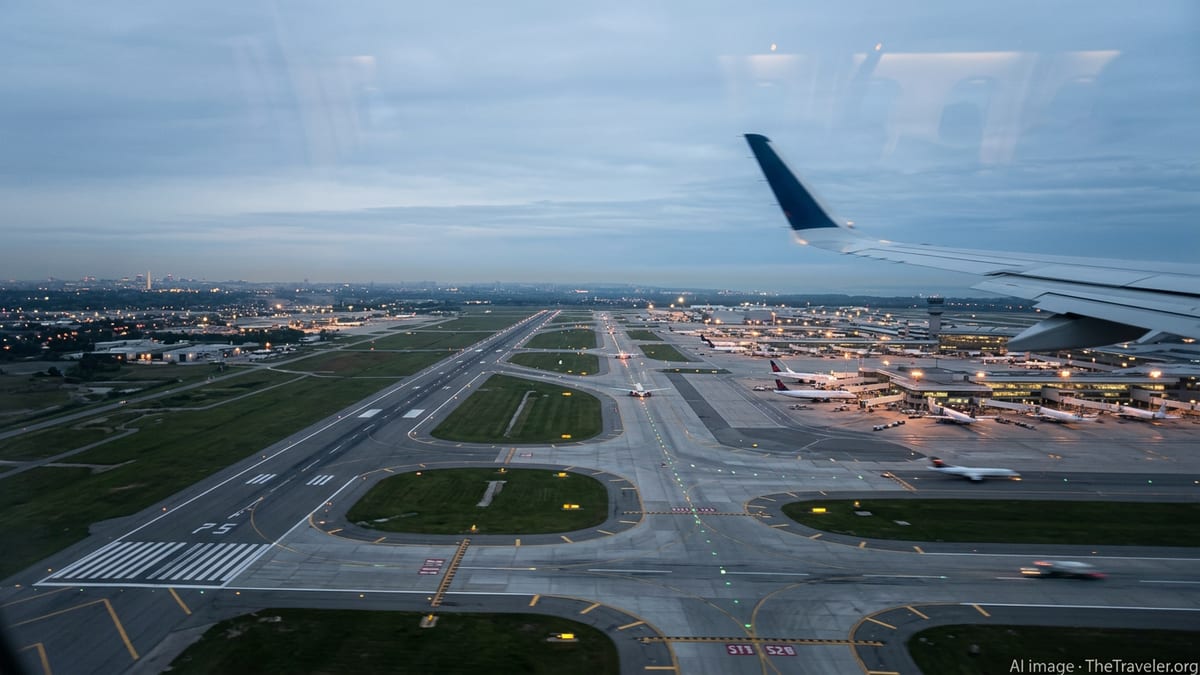
While Washington grapples with the aftermath of a catastrophic collision, Toronto Pearson International Airport remains under close scrutiny for a different class of hazard: runway incursions and ground movement risks at one of North America’s busiest hubs. A series of incursions and close calls over the past several years has led Canada’s Transportation Safety Board to single out the airport in multiple investigations and in annual safety reviews.
In one widely discussed case, an airport maintenance vehicle crossed a runway holding position at Pearson as an arriving airliner was on short final, a lapse in attention that created an immediate risk of collision. Investigators concluded that even experienced ground crews can be vulnerable to distraction and workload, particularly during complex maintenance operations near live runways, and that signage, markings, and procedural safeguards must anticipate human error rather than merely respond to it.
The Greater Toronto Airports Authority has since elevated runway incursions to a central theme in its safety risk profile, grouping them with other airside hazards such as aircraft cutoffs and vehicle collisions. Officials describe an expanding toolkit that includes enhanced driver training, more stringent access controls for maneuvering areas, and closer integration between airfield operations, air traffic services, and airport security to ensure ground movements are monitored and coordinated in real time.
Toronto’s experience mirrors concerns highlighted in Canadian national reporting, which notes that high-intensity operations on intersecting and parallel runways can magnify small missteps into serious events. With Pearson serving as a major transatlantic and transborder gateway, regulators view its performance as an important bellwether for how well airports are managing ground risk in an era of rising traffic and tighter schedules.
Global Data Show Runway and Airspace Risks Persist
The incidents in Washington and Toronto are playing out against a broader backdrop of persistent runway and airspace hazards that continue to dominate accident statistics worldwide. In a safety report released on March 9, the International Air Transport Association said that runway excursions and related events remained among the most common types of accidents in 2025, underscoring that the critical phases of takeoff and landing still present outsized risk despite major gains in overall safety.
Industry groups and regulators have been working through joint action plans, such as the Global Action Plan for the Prevention of Runway Excursions and a companion initiative focused on incursions, to encourage standard practices in everything from cockpit procedures and air traffic phraseology to airport layout and lighting. The emphasis is on bringing pilots, controllers, airport authorities, and navigation service providers into closer alignment so that each layer of defense supports the others rather than operating in isolation.
At the strategic level, the International Civil Aviation Organization has endorsed a new Global Aviation Safety Plan that calls for member states to strengthen oversight, invest in data-driven safety management systems, and confront emerging risks. Among the issues drawing particular concern are interference with satellite navigation signals, the proliferation of drones near controlled airspace, and the challenges of maintaining rigorous standards as traffic rebounds in regions where regulatory resources are stretched.
Even in countries with mature aviation systems, regulators are signaling that complacency is the enemy. The United States Federal Aviation Administration has launched an audit of runway incursion risk at the 45 busiest airports in the country, pointing to an average of several incursions a day nationwide. Safety officials argue that while most of these incidents end without damage or injury, they are valuable early warnings of system stress that must not be ignored.
New Technology and Procedures Aim to Restore Confidence
In response to the drumbeat of incidents, airports and air navigation providers are accelerating the rollout of technology designed to catch conflicts before they become catastrophes. Surface movement radar and alerting systems that warn controllers when an aircraft or vehicle crosses a hold line or lines up on the wrong runway are being refined and installed at more major airports, often tailored to local layouts so that alerts trigger only when they indicate genuine risk.
Some facilities are experimenting with tower tools that integrate ground radar, surveillance of nearby taxiways, and flight plan data into a single display, helping controllers visualize where each aircraft is and where it is expected to go. In parallel, airlines are updating cockpit procedures and training scenarios to emphasize taxi discipline, readback accuracy, and assertive communication when pilots suspect something is amiss on the ground or in the air.
Washington’s accident has also energized research into advanced airspace management for complex urban regions. Recently published work on contingency landing planning, for example, uses detailed models of dense arrival and departure flows, helicopter routes, and restricted zones in the Washington area to explore how automated tools could help crews and controllers identify safe diversion options without adding to overall traffic risk. Although such concepts are still largely in the experimental phase, they suggest a path toward more resilient responses when something goes wrong.
For travelers, the near-term impact of these initiatives may appear mostly in the form of occasional delays, longer taxi times, or seemingly conservative decisions to abort landings and reposition for another approach. Aviation authorities argue that such measures are evidence of a system choosing safety margins over schedule, a tradeoff they say is essential if the industry is to learn from incidents without waiting for the next tragedy.
Aviation’s Safety Record Under Pressure as Traffic Grows
Despite the unsettling headlines, commercial air travel remains statistically the safest way to cross long distances, with fatal accidents extremely rare compared with the vast number of flights each year. Yet the Washington collision and Toronto’s runway risks are reminders that the system’s impressive record is the product of constant vigilance and adaptation rather than an inherent guarantee.
Global passenger traffic is projected to continue rising through the decade, driven by growing middle classes, expanded low cost networks, and pent up demand in regions that were slower to recover from the pandemic. That growth will press airports such as Reagan National and Toronto Pearson to handle more movements within finite footprints and constrained airspace, increasing the importance of proactive safety management.
Industry leaders stress that maintaining public confidence will require visible and sustained action: transparent investigations, swift implementation of recommendations, and steady investment in infrastructure, training, and oversight. The alternative, they warn, is a slow erosion of safety margins that could leave the sector more vulnerable when the next unexpected event occurs.
For now, the Washington and Toronto cases serve as a shared cautionary tale. They highlight how local decisions about routes, staffing, and ground procedures can have global resonance, feeding into a wider debate about how aviation can preserve its hard won safety reputation in an era of crowded skies and shifting risks.