

More news on this day
A magnitude 5.2 earthquake recorded near the small coastal community of Leni in Italy’s Aeolian Islands has drawn fresh attention to the country’s complex seismic landscape, as specialists point to the tremor’s unusual depth as a reminder that risk extends far beyond the most famous fault lines.
Get the latest news straight to your inbox!
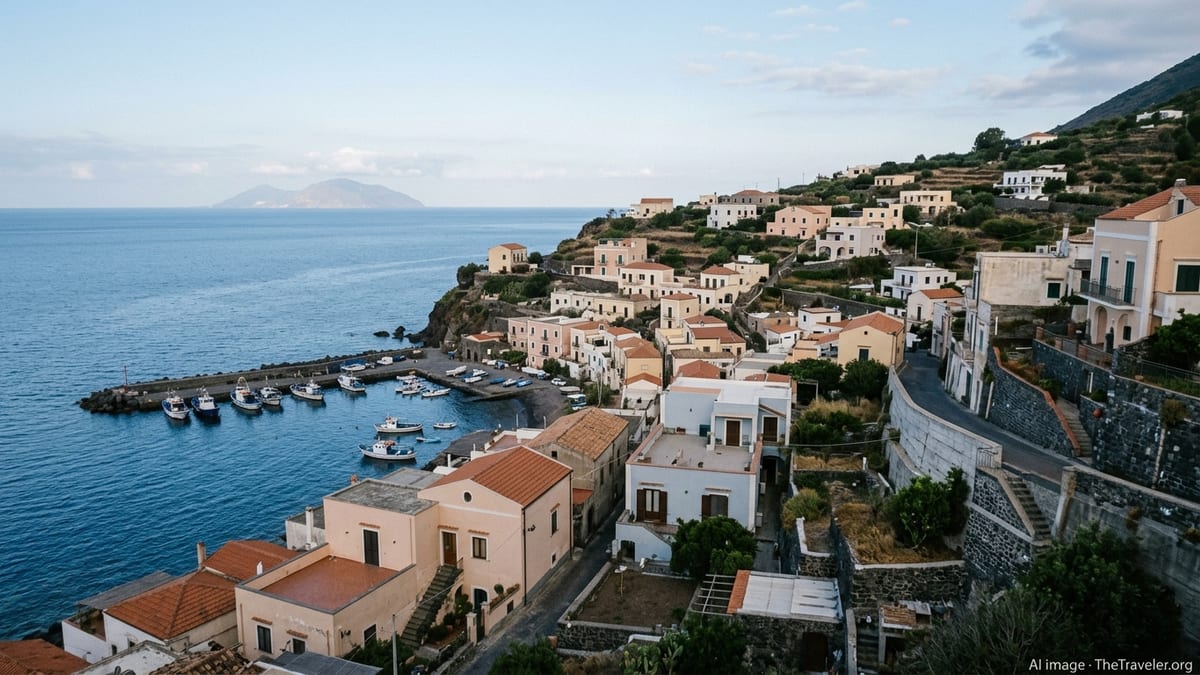
Deep Tremor Shakes Quiet Corner of the Aeolian Islands
The latest tremor, centered offshore near Leni on the island of Salina, was registered at magnitude 5.2 and identified as a relatively deep event compared with many of the shallow quakes that typically cause the most damage in Italy. Publicly available seismological data place the hypocenter well beneath the Tyrrhenian seabed, in a zone where the African plate is slowly diving beneath the Eurasian plate.
Reports from regional monitoring centers indicate that shaking was felt across parts of the Aeolian archipelago and sections of the Sicilian coast, though with varying intensity depending on distance from the epicenter and local ground conditions. Early assessments circulating in Italian media describe the event as moderate in strength but notable for its depth and location in a volcanically active sector.
Although initial information suggests only limited disturbance on shore, the tremor has unsettled residents in communities that already live with the dual presence of active volcanoes and frequent small earthquakes. For many, the event has reinforced the perception that the Aeolian Islands, often seen primarily as a tourist idyll, remain firmly embedded in one of Europe’s most restless seismic environments.
Why Depth Matters in Italy’s Seismic Hazard
Deep earthquakes in Italy’s Tyrrhenian region are generally linked to complex subduction processes, where one tectonic plate sinks into the mantle beneath another. Compared with shallow, crustal earthquakes, deeper tremors often spread shaking over wider areas but can produce less intense damage at the surface when magnitudes are moderate, as in the case of a 5.2 event.
Seismologists routinely point out that Italy’s hazard profile cannot be understood solely through surface faults visible on land. The network of offshore structures, subduction interfaces and volcanic systems around Sicily and the southern Tyrrhenian Sea collectively shapes the pattern of seismicity. A deep tremor near Leni therefore fits into a broader picture of persistent but varied seismic activity, rather than representing an isolated anomaly.
However, the interplay between depth and local geology can still yield sharp differences in impact from town to town. Even when a hypocenter is many tens of kilometers below the surface, energy can be amplified in soft basins, reclaimed shoreline or densely built historic centers, which is one reason Italian risk assessments pay close attention to microzonation studies as well as magnitude values.
Echoes of Past Disasters Across Italian Seismic Zones
The Leni-area event has revived public discussion of how it compares to some of Italy’s more destructive earthquakes in recent decades. While significantly smaller than catastrophic shocks in central Italy and the southern Apennines, a magnitude 5.2 is in the range that has previously caused localized damage when closer to the surface and near vulnerable building stock.
Italy’s historical record includes numerous examples in which moderate to strong earthquakes have produced severe consequences due to older masonry construction, hillside settlements and liquefaction-prone coastal plains. Publicly available information from past events shows that the difference between a frightening but mostly harmless tremor and a deadly disaster often lies in where, not just how strongly, the earth moves.
In volcanic archipelagos such as the Aeolian Islands, seismic events also intersect with ongoing concerns about submarine slopes, small landslides and potential impacts on ports or coastal infrastructure. While there are no early indications of major secondary effects tied to the Leni-area quake, the incident has encouraged renewed scrutiny of how even moderate events could affect ferry routes, marinas and cliff-side accommodations that are central to local tourism.
Preparedness Under Review as Communities Assess Risk
In the hours after the tremor, attention across Italian broadcast and online outlets shifted from basic details such as magnitude and depth to questions about readiness in peripheral islands and rural coastal towns. Commentators have pointed to the importance of clearly marked evacuation paths, public education on earthquake behavior and accessible information on what to do in case of stronger shaking or secondary hazards.
Experts who contribute to risk-reduction campaigns frequently stress that Italy’s seismic risk is not confined to a few well-known provinces. From the Alps to Sicily, a patchwork of fault systems and volcanic complexes means that regions with modest day-to-day activity can still experience significant shocks. The deep tremor near Leni serves as a fresh case study in how even a mid-level event can test alarm systems, communication channels and community awareness.
For local administrations and civil protection planners, episodes like this often prompt reviews of building inventories, especially for schools, small hospitals and harbor facilities that may predate modern seismic codes. Publicly accessible policy documents highlight ongoing efforts to reinforce or replace vulnerable structures in high-risk areas, though the pace of retrofitting varies widely between regions and municipalities.
Implications for Tourism in the Aeolian Islands
The Aeolian Islands rely heavily on seasonal tourism drawn by volcanic landscapes, clear waters and traditional villages. News of an offshore quake near Leni therefore immediately raises questions about visitor perceptions, bookings and overall confidence in the safety of these destinations. Travel industry observers generally note that isolated moderate earthquakes rarely produce long-term declines, but clusters of events or widely shared images of damage can influence behavior.
In this case, early accounts have largely focused on the scientific and geographical dimensions of the tremor rather than scenes of destruction, which may help limit negative fallout for the upcoming season. Travel advisories and public information channels currently emphasize standard seismic awareness rather than specific restrictions, encouraging visitors to stay informed but not to cancel plans solely on the basis of a single event.
The incident does, however, underscore the importance for hotels, guesthouses and tour operators to maintain clear safety guidance for guests, including instructions on where to assemble during shaking and how to follow local announcements. For a region that markets itself on raw natural beauty and proximity to active geology, visible preparedness can become part of the narrative, reassuring travelers that life alongside restless earth is managed with knowledge and planning rather than complacency.