

More news on this day
Passengers transiting through Türkiye have faced mounting disruption after a cluster of cancellations and more than 100 delays at Istanbul Airport interrupted services on Turkish Airlines and several Gulf and regional carriers serving major hubs such as Bahrain, Dubai, Riyadh, and Jeddah.
Get the latest news straight to your inbox!
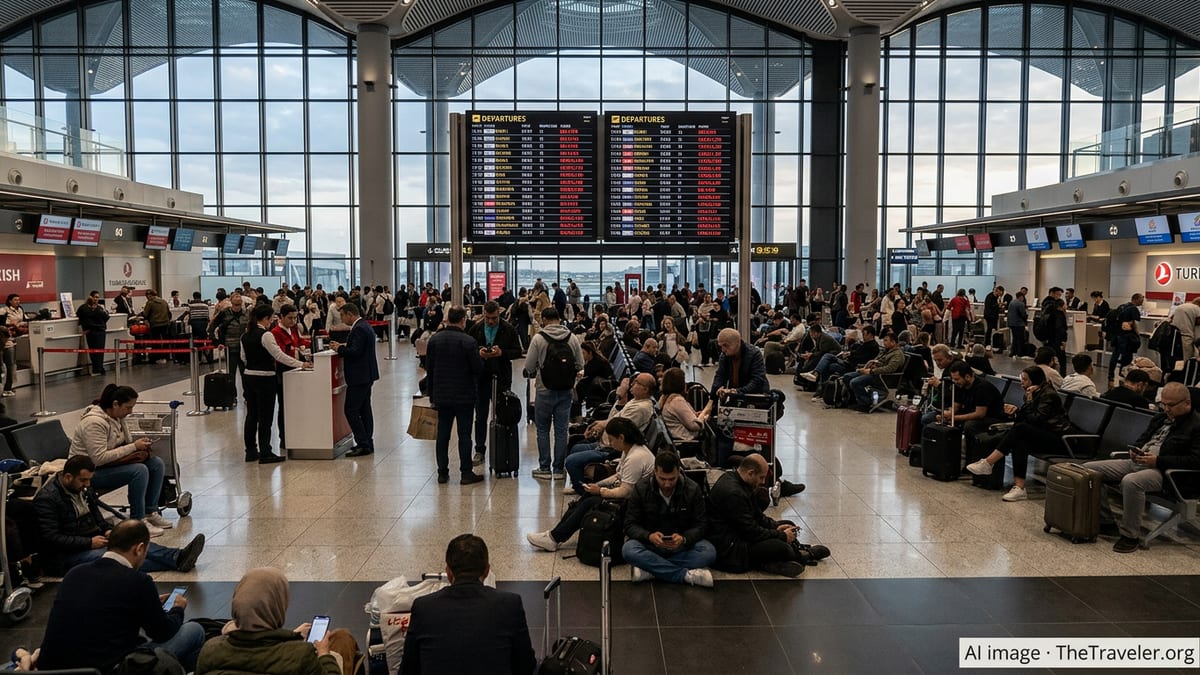
Wave of Disruptions Hits Istanbul Hub
Recent operational data and media coverage indicate that Istanbul Airport has experienced a fresh round of irregular operations, with at least seven flights cancelled and around 100 delayed across a single day of peak disruption. The problems have reverberated across the network of airlines that use the airport as a connector between Europe, the Middle East, and Asia, stranding passengers on long-haul itineraries and short regional hops alike.
Publicly available tracking information shows that Turkish Airlines bore the brunt of schedule changes, with knock-on effects on regional and partner carriers. Flights serving key Gulf destinations, including Bahrain, Dubai, Riyadh, and Jeddah, were among those affected, along with services to and from other Middle Eastern and CIS cities. Passengers reported waiting in crowded gate areas as rolling delay notices appeared on departure boards.
Coverage in regional and international travel outlets links the Istanbul disruption to a wider pattern of schedule volatility on routes between Türkiye and the Gulf in early March 2026. While the total number of affected flights at Istanbul is relatively modest compared with the airport’s overall daily movements, the concentration on busy regional routes and banked connection waves multiplied the impact for connecting travelers.
Gulf Routes Among the Hardest Hit
Routes between Istanbul and Gulf hubs have been particularly sensitive to recent operational stress. Media reports and passenger accounts highlight suspensions and cancellations on Turkish Airlines and other carriers on services touching Bahrain, Dubai, Riyadh, Jeddah, Muscat, and additional Gulf gateways. Travelers aiming for religious journeys, family visits, and business trips reported last-minute schedule changes that disrupted carefully planned itineraries.
Low-cost and full-service airlines operating between Istanbul and Dubai and other Gulf cities have already been operating under tight constraints due to regional security concerns and shifting airspace usage. The additional impact of delays and cancellations at Istanbul has forced some carriers to consolidate flights, reroute services, or temporarily cut specific rotations. In some cases, passengers described being rebooked via alternative hubs or being offered later dates when immediate options were no longer available.
Some travelers connecting through Istanbul from Europe, the Caucasus, and Central Asia to Gulf cities have also been affected indirectly. When an Istanbul-bound feeder flight runs late or is cancelled, onward connections to Bahrain, Jeddah, or Riyadh can be missed even if those onward sectors eventually depart. This cascade effect is especially acute for evening and overnight banks, where spare capacity on later flights is limited.
Multiple Airlines Draw Passenger Frustration
Published accounts show that the latest disruption at Istanbul Airport involved a broad mix of airlines beyond flag carrier Turkish Airlines. Gulf Air, FlyDubai, Saudia, Aeroflot, and Oman Air are among the operators whose passengers reported interrupted journeys on routes intersecting Türkiye and the Gulf. Some travelers cited confusion over which airline was responsible for rebooking when trips were stitched together through codeshares or third-party tickets.
On social platforms and travel forums, stranded passengers described lining up at transfer desks for several hours, struggling to secure hotel vouchers, or relying on mobile apps that did not always reflect the latest schedule changes. Others reported more positive experiences when airlines proactively pushed updated itineraries or digital boarding passes once cancellations were confirmed, reducing the need to queue in person.
Industry-focused commentary notes that the combination of high load factors, constrained regional airspace, and aircraft utilization already near capacity has left little margin to absorb irregular operations. When seven flights are cancelled and around 100 are delayed at a major hub, spare seats on remaining services can disappear quickly, especially on high-demand Gulf routes. This can turn what would normally be a few hours’ delay into an overnight or multi-day stranding for some passengers.
Regional Security Context and Operational Strain
The disruption in Türkiye has unfolded against a backdrop of heightened regional tension and airspace adjustments in parts of the Middle East. Open-source reporting on recent security incidents affecting the wider Gulf region has documented temporary reroutings, altitude restrictions, and schedule thinning by multiple carriers, even when airports themselves remain operational. While Istanbul sits outside the core impact zone, its role as a connector into affected markets means it is exposed to secondary effects.
Travel-industry analysis suggests that airlines serving the Gulf have been continually rebalancing schedules in response to evolving risk assessments, crew duty-time constraints, and insurance considerations. These pressures can manifest as short-notice timetable changes, rolling delays while new routings are cleared, or one-off cancellations on specific dates. When such changes coincide with local issues such as aircraft maintenance, staffing bottlenecks, or weather, hub airports like Istanbul can experience concentrated disruption.
Observers point out that irregular operations on this scale remain small compared with total traffic but can feel severe to those affected. Istanbul Airport handles many tens of millions of passengers annually, and even a single day with seven cancellations and 100 delayed flights can translate into thousands of disrupted journeys when connections and missed links are taken into account.
What Travelers Are Being Advised To Do
Consumer advocates and travel specialists following the situation in Türkiye and the Gulf region emphasize that passengers should closely monitor their flight status in the days leading up to departure. Airline apps, airport information pages, and independent flight-tracking platforms have been flagged as useful tools for spotting potential issues early, particularly for flights touching Istanbul and major Gulf hubs during this volatile period.
Travel coverage notes that passengers whose flights are cancelled are generally being offered free rebooking on later dates or alternative routings, and in some cases refunds, according to each carrier’s published policies. Those facing long delays may be entitled to meals, hotel accommodation, or ground transport under local regulations and airline rules, though the exact level of support varies by jurisdiction and ticket type.
Advisers also suggest building longer layovers into itineraries that rely on Istanbul as a connection point for Gulf-bound travel, especially for time-sensitive trips such as religious pilgrimages or major events. Booking flexible fares or travel insurance that covers disruption has also been highlighted as a way to reduce financial risk if schedules shift suddenly. For now, reports indicate that flights between Türkiye and the Gulf are continuing to operate at significant scale, but with an elevated risk of last-minute changes as airlines and airports navigate a challenging regional environment.