

More news on this day
London Gatwick is experiencing another disrupted Sunday on March 29, with publicly available flight data showing a mixed picture of minor delays, a smaller number of cancellations and generally crowded terminals as airlines work to keep services running close to schedule.
Get the latest news straight to your inbox!
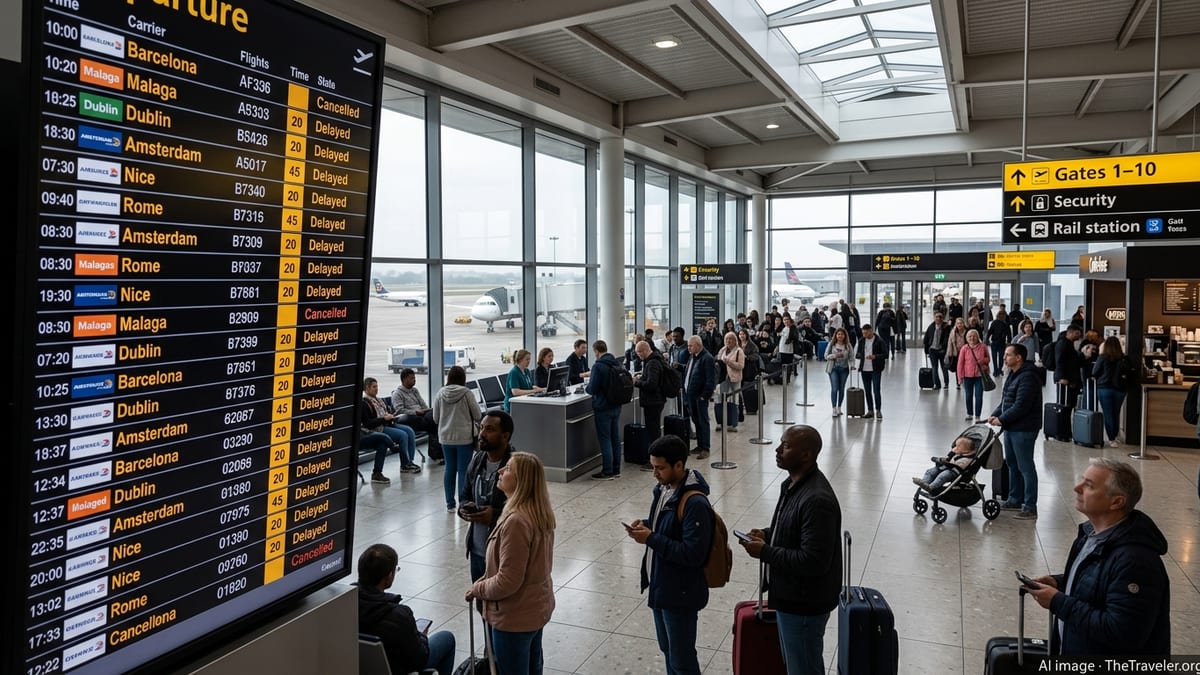
Disruption builds across morning peak
Live departure and arrival boards for London Gatwick on Sunday, March 29 indicate that disruption began to build during the morning peak, when traffic is typically heaviest for weekend leisure travel. A series of short outbound delays appeared across European routes, with some early services pushed back by around 30 minutes from their scheduled times.
Arrivals have shown a similar pattern, with a cluster of flights landing later than timetabled but still operating the full journey. The data suggests that many of these delays are within the range aviation analysts consider routine for a major hub, but the cumulative effect is noticeable for passengers making tight connections or onward rail and coach links.
Most services continue to operate rather than be cancelled outright, which keeps overall capacity high but leads to congestion around gates and in departure lounges. Travellers arriving at the airport during the busiest morning hours have been advised, in widely shared travel guidance, to monitor their flight status frequently and allow extra time for check in and security.
Based on the pattern visible in published tracking information, delays so far appear unevenly spread between airlines and destinations. Short-haul leisure routes are seeing a higher volume of minor schedule changes, while many long-haul flights are operating closer to their planned departure times.
Limited cancellations but ongoing knock on effects
While today’s disruption is dominated by delays, a smaller number of flights have been cancelled outright. Publicly available flight status feeds for March 29 show cancellations scattered across both arrivals and departures, rather than concentrated on a single route or airline, which suggests a mixture of operational reasons rather than a single underlying technical fault.
Even a relatively modest number of cancellations can create wider pressure on an airport such as Gatwick, which typically handles hundreds of movements on a Sunday. Aircraft and crew may be out of position for later rotations, and rebooking affected passengers onto alternative flights can push remaining services closer to capacity, reducing flexibility if further issues arise later in the day.
Today’s picture follows a period in which Gatwick has frequently featured in national statistics on punctuality and reliability. Previous analyses of UK airports have highlighted Gatwick’s higher average delay times in recent years, with factors such as air traffic control constraints and tight scheduling contributing to vulnerability when anything goes wrong. Those underlying pressures mean even a modest run of cancellations can ripple through the rest of the timetable.
For passengers whose flights are operating, the practical impact is often felt as longer queues at boarding gates, extended waits on the tarmac and busy customer service desks as airlines handle rebookings and queries. Travel industry coverage notes that these secondary effects can be nearly as disruptive as the initial cancellation for many travellers.
Weather, staffing and airspace constraints in the background
There is no single dominant cause being reported for today’s delays and cancellations at Gatwick, but they come against a backdrop of familiar challenges for the airport. Past episodes of disruption have frequently involved a combination of marginal weather, air traffic control capacity and airline staffing, and travel reporting suggests similar themes continue to shape operations this year.
Seasonal weather patterns around southern England can still trigger operational slowdowns in late March, particularly reduced visibility or low cloud that requires greater spacing between aircraft. When this happens, flow restrictions in surrounding airspace can quickly translate into delays on both inbound and outbound services, even if conditions on the ground appear relatively calm to passengers in the terminal.
Air traffic management capacity has also been a recurring issue for Gatwick. Previous coverage has described how staffing levels in the control tower and wider network can limit the number of movements per hour, forcing airlines to adjust schedules or accept longer turnaround times. While today’s specific staffing picture is not immediately clear from public data, the pattern of scattered delays is consistent with an operation running close to its limits.
Operational experts note that when traffic is dense and buffers are thin, minor problems such as late arriving aircraft, technical checks or slow boarding can cascade into knock on delays for the rest of the day. That appears to be reflected in today’s timetable, with a gradual build up of hold ups rather than a single dramatic failure.
Advice for passengers flying later today
Travel guidance published on Sunday morning strongly encourages passengers flying from Gatwick later today to stay as flexible and informed as possible. The most consistent recommendation is to check flight status directly with airlines before departing for the airport and again after clearing security, since departure times can change more than once as schedules are adjusted.
Passengers whose flights remain on time are still being advised to arrive early, in line with airline guidance, to allow for potential queues at bag drop and security. With delays already in the system, relatively small surges in passenger numbers at particular times of day can lead to longer waits at checkpoints, even if the underlying cause of the disruption lies outside the terminal.
Those facing cancellation are encouraged by consumer groups and travel commentators to keep records of their bookings, any rerouting offered and reasonable expenses incurred while waiting for replacement flights. Publicly accessible information on passenger rights highlights that eligibility for assistance or compensation depends on the cause of the disruption and the notice provided, but clear documentation generally helps travellers make a claim later.
Rail and coach operators serving Gatwick are also expecting some knock on demand as disrupted travellers adjust their plans. Advice shared through transport information channels suggests that anyone connecting to late evening flights should verify last train or coach times in case delays push their arrival at the airport closer to the end of the day’s ground transport services.
Broader context for Gatwick’s reliability record
Today’s pattern of disruption fits into a broader debate about resilience at Gatwick and across the wider UK aviation system. In recent years, performance statistics compiled from Civil Aviation Authority data and reported by national media have often placed Gatwick among the airports with higher average delays, particularly during peak holiday periods.
Industry commentators point to several structural factors that make Gatwick sensitive to shocks. As a busy two runway airport with a strong focus on short haul leisure traffic and tightly timed schedules, there is limited slack to absorb unexpected issues. When combined with UK and European airspace congestion, this means relatively minor disturbances can quickly grow into a noticeable wave of delays and missed slots.
At the same time, airport management and service providers have highlighted investments in infrastructure, staffing and technology aimed at improving punctuality. Reports on recent seasons suggest some progress, but also underline that external shocks such as regional weather systems, industrial action in other countries or air traffic control restrictions can still undermine gains on particularly busy days.
For travellers using Gatwick today, the wider context may matter less than the immediate question of whether their own flight is running. With March 29 shaping up as another challenging Sunday, the most practical step remains the same as on previous days of disruption: verify flight details frequently, build in extra time and be prepared for plans to change at short notice.