

More news on this day
Portland International Airport is experiencing another difficult travel day, with publicly available flight-status data showing 26 delays and 2 cancellations, affecting passengers on Icelandair, Horizon Air, Alaska Airlines and other carriers and disrupting itineraries for travelers connecting through Portland, Seattle and multiple cities across the United States.
Get the latest news straight to your inbox!
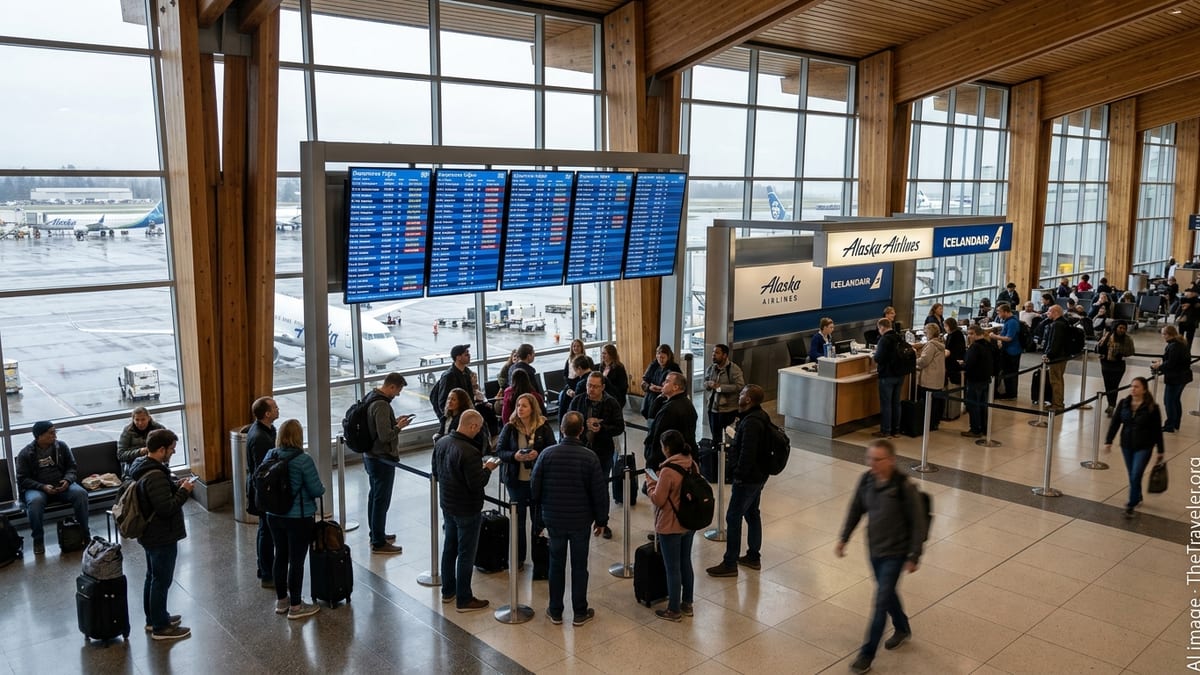
Operational Disruptions Ripple Through PDX
The latest round of disruptions at Portland International Airport comes at a time when carriers are still recalibrating schedules and staffing following an unsettled winter across North America. Flight-tracking boards on Thursday show a cluster of delayed departures and arrivals at PDX, concentrated among key hub and partner airlines that rely on the airport as a growing connection point.
According to published coverage and live status data, the 26 delayed flights range from modest schedule slips of 30 to 45 minutes to more severe delays exceeding two hours. Two flights have been removed from today’s schedule entirely, adding to rebooking pressures. While the overall number of affected flights remains a small slice of total daily operations, the knock-on effects for individual travelers can be substantial, especially for those with tight connections.
The pattern of disruption underscores how even a limited number of delayed or canceled flights can cascade across an interconnected network. When an aircraft arrives late into Portland, its subsequent departure to another city often pushes back, and that can in turn affect downline flights in places like Seattle, San Francisco, Denver or smaller regional markets.
Publicly available information indicates that the irregular operations today are not tied to a single cause. Typical factors at this time of year can include residual weather impacts in other parts of the country, congestion at major hubs, air traffic control flow programs and ongoing crew and aircraft positioning challenges.
Key Airlines and Routes Affected
Horizon Air and Alaska Airlines, which operate a large share of departures at Portland, appear prominently among the delayed flights. These carriers use PDX as an important link in their West Coast network, connecting cities such as Seattle, Spokane, Boise and other regional destinations with longer-haul services across the United States and to Mexico and Hawaii. Delays on shorter regional segments can quickly endanger onward connections for travelers heading to major hubs or beach destinations.
Some of today’s delays are occurring on routes between Portland and Seattle, one of the most heavily traveled corridors in the Pacific Northwest. When services on this trunk route run behind schedule, it can affect passengers who started their journeys in Portland and are heading east or south through Seattle, as well as those flying from other U.S. cities into Seattle and connecting on to Portland.
Icelandair, which has been rebuilding and expanding its presence in Portland as a seasonal transatlantic carrier, is also among the airlines affected by today’s operational snags. Disruptions on long-haul international services can have outsized consequences, as travelers often rely on a single daily flight to continue onward to Europe or return to the United States.
Other domestic carriers serving Portland are also seeing schedule pressure, though to a lesser extent. Publicly available data show that a handful of flights operated by additional U.S. airlines are running behind, adding to congestion at gates and on taxiways as aircraft wait for departures or for arriving gates to clear.
Knock-on Effects for Travelers Across the U.S.
Although the epicenter of today’s disruptions is Portland, the impact reaches far beyond the Pacific Northwest. Delayed departures from PDX can cause missed or rushed connections in Seattle and other hubs, affecting travelers whose journeys begin in cities like Los Angeles, Phoenix, Denver or Chicago. When one segment in a multi-leg itinerary slips behind schedule, re-accommodation can quickly become complicated.
Travelers heading to or from Seattle are especially exposed when Portland operations slow. Many itineraries in the region depend on a precise handshake between flights on the Portland to Seattle corridor and longer-haul legs to the rest of the United States. A delay of even an hour on the first flight of the day can leave passengers racing between gates or facing involuntary overnight stays if the last connection of the evening has already departed.
Publicly accessible travel forums and recent coverage highlight how quickly these kinds of interruptions can strain airport services. Customer lines at ticket counters and service desks typically grow when cancellations occur, and same-day hotel availability near the airport can tighten as stranded passengers look for last-minute rooms. For travelers with fixed arrival times, such as cruises, tours or business meetings, the stakes are higher than a simple late arrival.
The broader network effect also works in reverse. Weather or operational slowdowns elsewhere in the United States can send waves of delayed arrivals into Portland, where gate space and crew schedules must adjust on short notice. On days when PDX is already busy, those rolling disruptions can make it more difficult to restore the schedule quickly.
What Passengers Are Experiencing on the Ground
Inside the terminal, travelers are encountering the familiar hallmarks of an off-schedule day. Publicly available social media posts from recent irregular operations at Portland and Seattle indicate that passengers often face crowded gate areas, frequent overhead announcements about revised boarding times and occasional aircraft swaps as airlines search for available planes and crews.
Some travelers with delayed departures are being asked to remain near the gate as airlines monitor changing connection windows. Others with cancellations must head to customer service counters or manage their own rebookings by app, phone or kiosk. For those who began their journey early in the morning from Portland or from smaller U.S. cities, the uncertainty about making evening connections can be particularly stressful.
Airport operations teams typically respond by adjusting staffing at security checkpoints, concessions and ground handling where possible. While Portland International Airport is known for relatively efficient passenger flows, any spike in delayed flights can push common pinch points such as security lines, restrooms and seating areas closer to capacity at certain times of day.
Reports from prior disruption days also show that extended ground holds can keep aircraft parked at gates longer than scheduled, which may delay the arrival of inbound planes and slow the turnaround process. This can contribute to a feeling of congestion even if the total number of flights has not changed.
Context: A Busy Period for Portland’s Air Network
The disruptions come during a period of continued growth and change for Portland International Airport. Forecast documents and traffic data released in recent months show that PDX handled tens of millions of passengers last year, with Alaska Airlines, Horizon Air and their partners carrying a substantial share of that volume. International and long-haul services, including transatlantic flights with airlines such as Icelandair, are playing an increasingly visible role in the airport’s route map.
At the same time, airlines across North America are still fine-tuning schedules and aircraft utilization following several years of volatility. Industry reports indicate that carriers have been working to balance strong demand with aircraft availability, pilot and crew staffing, and ongoing maintenance requirements. On busy days or during adverse weather patterns, that balancing act can leave less room to absorb delays without visible impacts for travelers.
For Portland, which functions both as a local origin-and-destination airport and as a growing connecting hub, even a relatively modest count of 26 delays and 2 cancellations can highlight the sensitivity of the system. Each late departure or arrival represents dozens or hundreds of individual plans adjusted on the fly, from missed family events to rescheduled meetings and vacations shortened by a night.
As airlines and airport operators work through today’s irregular operations, publicly available data suggest that some of the delayed flights are gradually returning to the schedule with revised departure or arrival times. Travelers passing through Portland and Seattle in the coming hours will be watching those updates closely, hoping that the network steadies enough to get them to their destinations with minimal further disruption.