

More news on this day
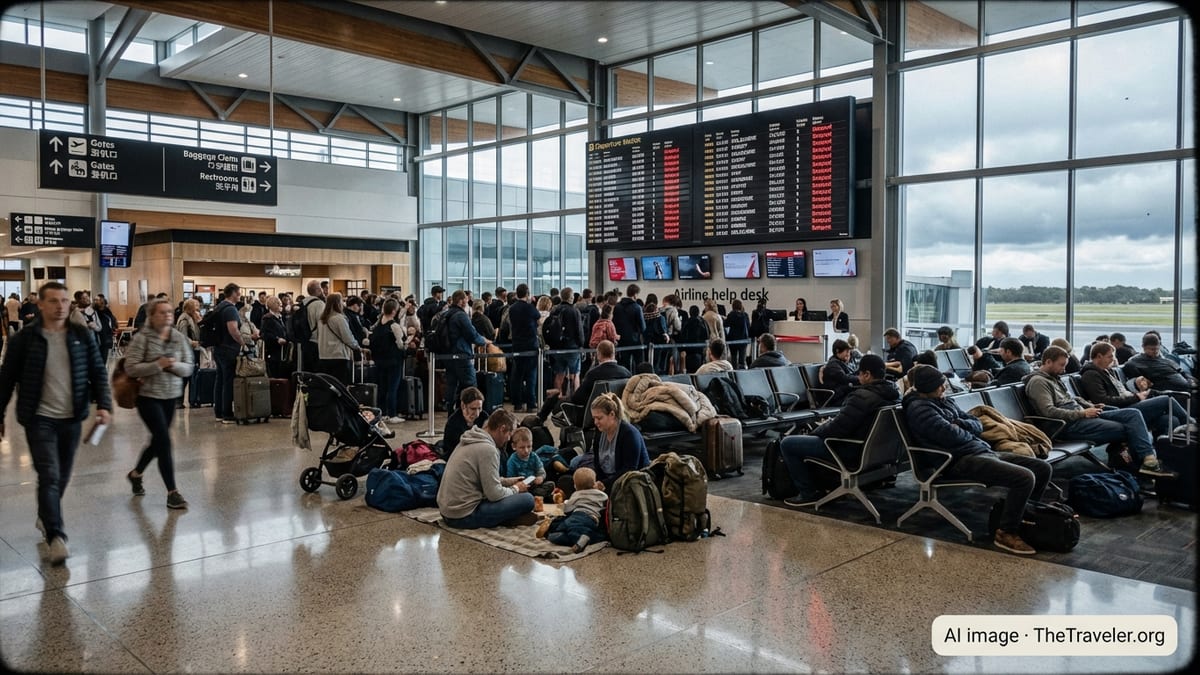
Passengers traveling through London Gatwick on Tuesday, March 31 are encountering a fresh wave of disruption, as live flight data shows dozens of delays alongside a smaller number of cancellations during one of the busiest Easter getaway periods.
Get the latest news straight to your inbox!
Busy Easter traffic magnifies disruption
Today’s disruption at London Gatwick is unfolding against a backdrop of intense Easter holiday travel, with millions of journeys taking place across the UK over the long weekend. Recent coverage has highlighted warnings of congestion on roads and rail, and Gatwick has been part of that wider picture of pressure on the transport network.
Publicly available information on recent performance shows the airport has already been handling elevated levels of delay in recent days, with previous updates pointing to more than one hundred delayed flights and a small number of cancellations on several occasions in late March. The pattern appears to be continuing into today, with departure and arrival boards showing a mix of services running on time and others pushed back by anything from 30 minutes to more than an hour.
The combination of peak-season demand and limited spare capacity on Gatwick’s single main runway means even minor operational issues can quickly ripple through the schedule. As aircraft rotate through multiple legs during the day, a late inbound service can easily turn into a late outbound departure, contributing to the build-up of delays now visible across parts of today’s timetable.
While the majority of flights are still operating, the growing list of late departures and arrivals is increasing pressure inside both terminals. Longer queues at check-in and security, as well as crowded gate areas, are being reported by travelers as airlines adjust boarding times and reassign aircraft stands.
Airlines and routes most affected so far
Low-cost and leisure-focused carriers, which account for a large share of Gatwick’s traffic, appear prominently on today’s list of delayed services. Recent reports have noted repeated disruption for airlines such as easyJet and Wizz Air UK at the airport, and today’s boards again show a number of their short-haul departures to European holiday destinations operating behind schedule.
Long-haul operators are also experiencing knock-on effects. Previous days have seen delays on services linking Gatwick with destinations in North America, the Middle East and Africa, and today’s schedule again reflects a scattering of late departures on longer routes. Publicly available tracking data indicates some widebody flights are leaving later than scheduled after arriving late into London, compressing turnaround times and complicating crew rostering.
The disruption is not confined to any single direction of travel. Morning and midday departures to Mediterranean resorts, city destinations in western and central Europe, and winter-sun locations further afield have all recorded delays, while inbound services returning to Gatwick are in some cases landing significantly later than their planned arrival times. A smaller number of outright cancellations is also visible, with some frequencies to popular destinations withdrawn from today’s schedule.
For passengers, the uneven pattern means that two flights on a similar route can face very different circumstances: one operating close to time, another heavily delayed or removed altogether. This variability is adding to uncertainty for those with onward rail connections, hotel bookings or same-day transfers to other UK airports.
Operational pressures behind today’s delays
Industry analyses over recent days have pointed to a familiar mix of underlying causes for flight disruption across the UK and wider Europe, including adverse weather, air traffic control constraints and staffing limitations in ground-handling operations. Gatwick’s own experience in late March has reflected many of these themes, with earlier updates describing delays linked to weather systems passing over northern Europe and to congestion in busy airspace corridors.
Today, the cumulative effect of these pressures is visible in the form of rolling schedule adjustments. When en route air traffic restrictions slow traffic flows into London, arriving aircraft can be forced into holding patterns, using up the buffer built into timetables. That can leave less margin for turnaround on the ground, particularly during peak departure waves that already operate close to the limits of available runway slots.
Ground operations also remain a potential pinch point. Baggage handling, ramp services and aircraft servicing work to tight timelines at any major hub, and reports over the weekend highlighted concerns about staff resources at several European airports feeding traffic into Gatwick. Any delay in unloading baggage, refuelling or completing safety checks can add to departure times, especially when weather conditions or visibility rules require additional procedures.
The wider context of planned and potential industrial action in parts of the aviation sector this Easter period is another factor being closely watched. While Gatwick has suggested that any direct impact on its operations should be limited to a small number of flights for specific carriers, the possibility of localized walkouts, work-to-rule actions or staffing shortages elsewhere in Europe can still disrupt aircraft and crew rotations feeding into today’s schedule.
Passenger experience and practical advice
For travelers at Gatwick today, the most immediate impact of the disruption is longer waiting times and uncertainty about departure or arrival times. Crowded departure lounges and queues at service desks are typical features when multiple flights run late or when a cancellation forces several plane-loads of passengers to seek rebooking at once.
Consumer organizations and recent explanatory coverage consistently advise passengers to monitor live flight status information from airlines and airport displays rather than relying solely on earlier booking confirmations. Airlines frequently update departure times and gate assignments at short notice, and boarding can sometimes be brought forward if an opportunity opens up to recover lost time.
Travel specialists also recommend allowing extra time for airport processes, particularly during school holidays and bank holiday periods such as this week. That includes factoring in possible delays on surface transport links, as engineering works and heavy road traffic have been highlighted as additional challenges for those trying to reach Gatwick from London and the wider region.
In the event of longer delays or cancellations, passengers are being reminded through recent public information campaigns of their rights under UK and European air passenger regulations. These rules set out when travelers may be eligible for assistance such as meals, accommodation or rebooking support, depending on the length of the delay and the reasons behind it.
Outlook for the rest of the day
With much of Tuesday, March 31 still to run, the operational picture at Gatwick remains fluid. Flight boards indicate that some delays are gradually reducing as airlines adjust schedules and benefit from occasional breaks in air traffic congestion, while newly affected services continue to appear as the day’s operations progress.
Historical performance data and recent trend reports suggest that late-afternoon and evening peaks can be particularly sensitive to earlier disruption, given the cumulative nature of delays and the high volume of short-haul leisure traffic concentrated into narrow time bands. That raises the possibility that today’s issues could continue into the later waves of departures and arrivals, even if no single disruptive event occurs.
Travel analysts note that Gatwick’s reliance on a single primary runway leaves little room to absorb additional shocks, such as sudden weather deterioration or technical incidents involving individual aircraft. Any such event could quickly translate into further queues for take-off and landing, extending the delays already affecting parts of today’s schedule.
Passengers due to fly from or into Gatwick later today are therefore being encouraged, through airline advisories and travel media coverage, to keep checking for updates, build in extra time where possible and have contingency plans for missed connections or late arrivals. As the Easter travel period continues, today’s disruption underlines the importance of flexibility and up-to-date information for anyone using one of the UK’s busiest airports.