

More news on this day
Passengers traveling through London Gatwick Airport on Monday, 6 April 2026 are encountering a patchy but noticeable pattern of delays and scattered cancellations, as adverse weather, regional airspace congestion and wider European operational pressures combine at the start of the working week.
Get the latest news straight to your inbox!
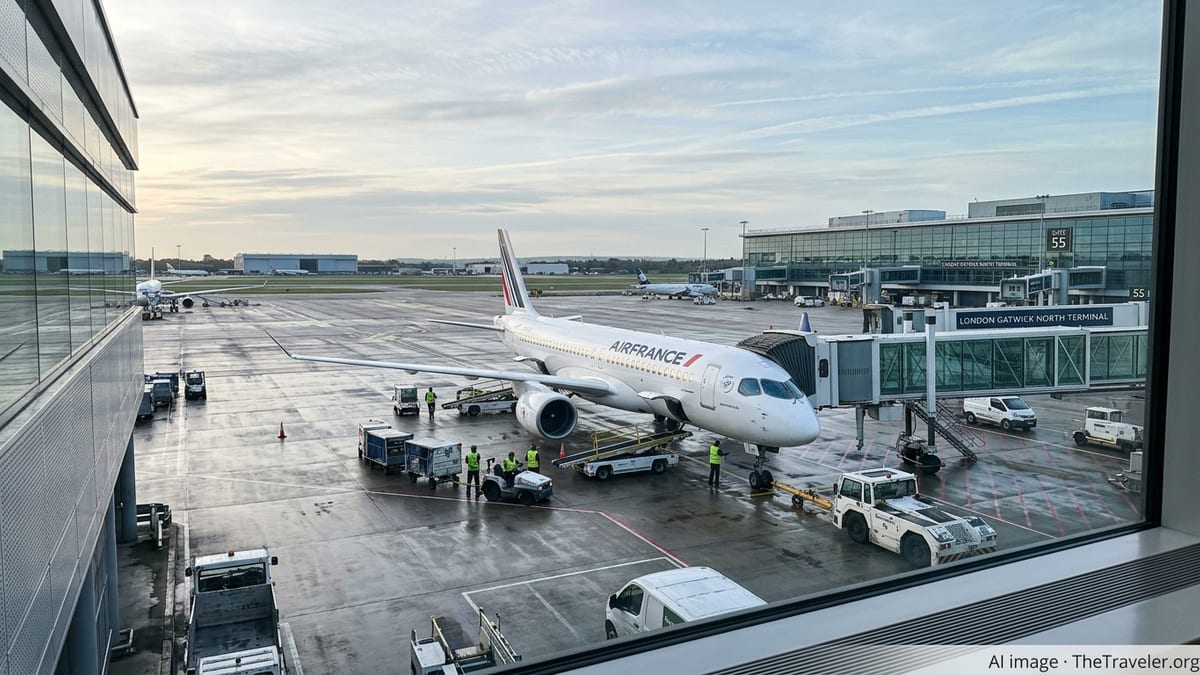
Operational Picture at Gatwick This Morning
Live departure and arrival boards for London Gatwick on 6 April show a mixed operational picture, with the majority of flights running broadly on schedule but a steady stream of services departing later than planned. Publicly available tracking data indicates clusters of departures leaving between 30 and 90 minutes behind schedule, alongside a smaller number of flights flagged as cancelled.
The disruption is not uniform across all routes. Short haul services within the United Kingdom and nearby European cities appear to shoulder much of the delay burden, where tight turnaround times and crew rotations leave little room for recovery when schedules slip. Some early morning flights that departed late are creating follow-on pressure for mid-morning and midday rotations using the same aircraft.
Arrivals into Gatwick are also seeing knock-on impacts from issues upstream in the network. Flights originating from airports in mainland Europe that experienced earlier weather or congestion problems are landing significantly behind schedule, compressing the turnaround window for their subsequent departures out of Gatwick.
Although today’s pattern falls short of a complete breakdown in operations, the rolling nature of smaller delays means passengers can encounter lengthy queues at check in, security and boarding gates when several late-running flights converge in the same time band.
Weather and European Network Strain Behind Disruptions
Today’s difficulties at Gatwick are unfolding against a backdrop of broader disruption across the European and transatlantic air network. Published coverage of Easter-period travel points to unsettled weather in parts of northern Europe, including strong winds and reduced visibility, as a key driver of missed slots and extended holding patterns at several major hubs.
These conditions have triggered ground delay programs and tighter spacing between aircraft at certain airports, which can cause services bound for Gatwick to depart late, arrive off-slot or divert to less congested airspace. Once a morning wave of flights is affected in this way, the delay pattern typically ripples outward for much of the day as airlines work to reposition crews and aircraft.
In addition, recent analysis of European operations highlights airspace congestion and rerouting linked to geopolitical restrictions as another factor that can add minutes to sector times and compress already busy schedules. Even modest increases in flight time can push services into congested arrival banks at Gatwick, where a single runway operation leaves limited flexibility to absorb extended arrival streams.
Operational commentary across the region also continues to flag staff shortages and high seasonal demand as underlying pressures. At Gatwick, where movements are concentrated on one runway and turnaround times are relatively tight, these structural constraints can turn what would otherwise be manageable weather or airspace challenges into visible passenger-facing disruption.
How Today Compares With Gatwick’s Recent Performance
Recent statistics from aviation and government data sets show that Gatwick has struggled with punctuality in the past two years compared with some other large UK airports. Annual figures compiled from Civil Aviation Authority data for 2024 indicated that average departure delays at Gatwick were among the longest in the country, reflecting the airport’s high use of a single runway and sensitivity to small timetable shocks.
Longer term capacity trends also help explain why a day like today can quickly become difficult for planners. Traffic movement reports show that flight volumes through Gatwick have largely recovered from the pandemic slump and are approaching, or in some cases exceeding, pre-2020 weekly movement levels. With little spare runway capacity and tight operating-hour restrictions, controllers and airlines have fewer options to slot in recovery flights when delays begin to accumulate.
Today’s pattern of scattered delays and modest cancellations therefore fits into a wider picture of an airport operating close to its practical limits. While investments in tools such as advanced approach spacing systems are designed to squeeze more resilience from the existing runway, any combination of weather, airspace constraints and staffing pressure can still tilt operations into a rolling-delay scenario.
For passengers on the ground, this translates into a higher probability that even minor regional disruptions elsewhere in Europe will be felt in the form of late boarding calls, gate changes and extended time spent waiting on the tarmac for a release slot.
Passenger Experience and Practical Advice
Reports from real-time flight tracking feeds and passenger forums today suggest that travelers at Gatwick are experiencing familiar patterns when delays occur: busy departure halls, long queues at customer service desks after cancellations, and uncertainty around connection times for those with onward journeys. The effect can be particularly acute for passengers connecting from Gatwick onto separate tickets, where baggage must be rechecked and minimum transfer times are longer.
Consumer-rights organizations that monitor disruptions at European airports consistently encourage travelers to take a proactive approach when delays emerge. Guidance typically includes checking in online as early as possible, monitoring airline apps and airport boards frequently for gate and schedule changes, and contacting carriers through digital channels the moment a delay or cancellation appears, rather than waiting to join physical queues.
Passengers whose flights are significantly delayed or cancelled out of Gatwick today may also have entitlements under European and United Kingdom air passenger regulations, depending on the cause of the disruption and the length of the delay on arrival. These frameworks can require airlines to provide meals, refreshments, hotel accommodation where necessary and, in some circumstances, financial compensation.
Travel analysts stress that documentation is important. Keeping boarding passes, booking confirmations and written explanations of the disruption can make it easier to submit a claim later if compensation is due, particularly when the cause of a delay is contested or involves a mix of weather and operational factors.
What Travelers Through Gatwick Should Watch For Today
With delays and a handful of cancellations continuing to show on Gatwick’s boards through the day, passengers scheduled to travel on 6 April are being advised by travel commentators and consumer advocates to build additional buffer time into their journeys. Allowing extra time for security and boarding reduces the risk of missing a flight that departs suddenly after an earlier delay window narrows.
Those with tight onward connections, especially where tickets have been purchased separately, may wish to review whether alternative routings or later departures are available, given the risk that small initial delays at Gatwick or at feeder airports in Europe could grow over the course of the afternoon and evening peaks.
Travel planning resources also highlight that disruption rarely spreads evenly across all airlines and destinations. Some carriers maintain greater spare capacity to swap aircraft and crews, while certain routes have more frequent daily services that can absorb disrupted passengers more easily. Checking how many daily flights operate on a particular route from Gatwick can help travelers understand their fallback options if they are caught up in today’s disruption.
As the Easter travel period tapers off, operational data in the coming days will show whether Gatwick’s delays and cancellations today represent a short-lived spike linked to regional weather and holiday peaks, or a sign that extended strain across European airspace is likely to shape passenger experiences for the rest of April.