

More news on this day
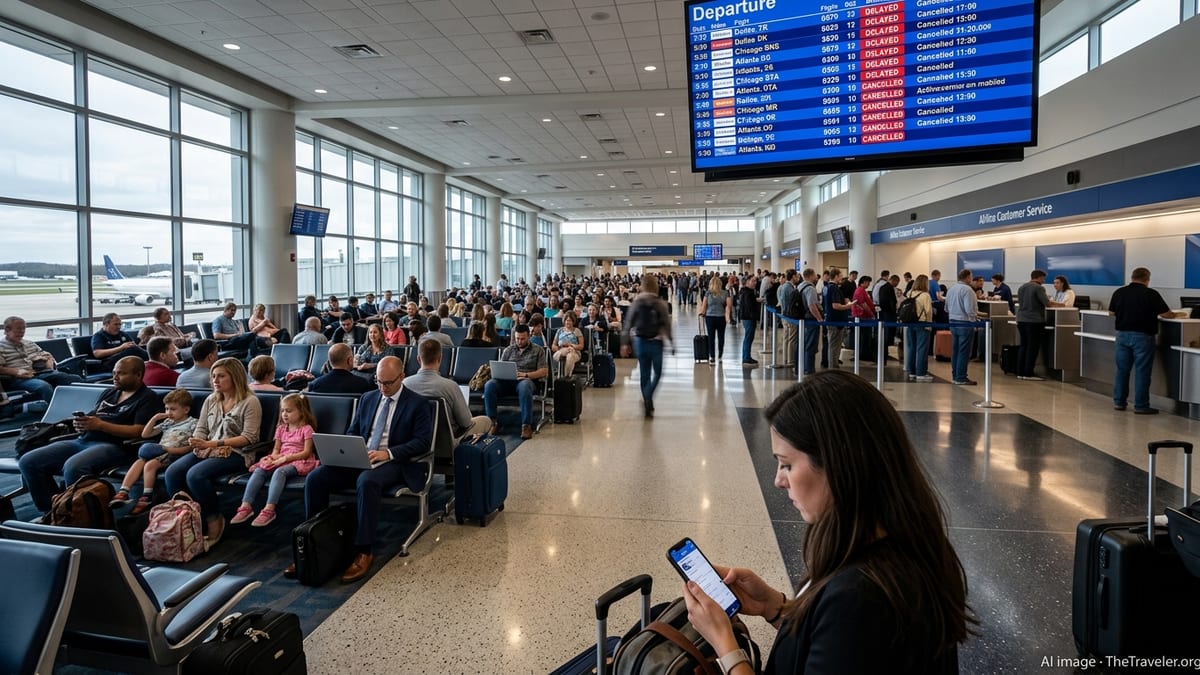
Passengers at Nashville International Airport are facing a day of mounting frustration as 57 delays and 6 cancellations ripple through the schedule, with disruptions tied to wider operational issues and adverse conditions affecting major hubs in Dallas, Chicago, Atlanta and other large U.S. cities.
Get the latest news straight to your inbox!
Knock-on Disruptions Hit Nashville Departures and Arrivals
Operational data and tracking services show a growing number of flights in and out of Nashville International Airport held at gates or pushed back on departure boards as delays compound across interconnected routes. With 57 services delayed and six cancelled, travelers connecting through key hubs are encountering missed connections, extended layovers and last-minute rebookings.
Publicly available information indicates that many of the affected services at Nashville are not isolated incidents, but part of a broader pattern of congestion across the national network. Aircraft and crews scheduled to operate out of Nashville are arriving late from other cities, leaving departure banks compressed and forcing airlines to juggle equipment and staffing.
Although Nashville itself has reported relatively normal ground conditions at times during the disruption period, the airport’s status as a connecting point for traffic from Dallas, Chicago, Atlanta and other large hubs means even minor upstream issues can quickly translate into local delays. Passengers are being urged by airlines and airport advisories to check flight status frequently and allow extra time at the terminal.
The imbalance between scheduled capacity and real-time operational constraints is also visible at the gates, where some departures are held short of boarding while airlines wait for inbound aircraft to clear maintenance or crew duty-time limits. In several cases, cancellations have been used to ease pressure on peak periods and reposition aircraft for later waves.
Major Hubs in Dallas, Chicago and Atlanta Under Strain
Reports from airline trackers, aviation forums and local media coverage indicate that pressure at large hub airports is a primary driver of the disruption now being felt in Nashville. Weather-related constraints, air traffic management programs and congested ground operations in Dallas, Chicago and Atlanta have all contributed to departure holds and arrival metering that cascade across the country.
Dallas-area airports, including Dallas Love Field and Dallas Fort Worth International, play a central role in the U.S. domestic network. When storms, high winds or technical issues reduce arrival and departure rates, flights bound for or routing through Nashville can be pushed into extended holding patterns on the ground, which then affect later rotations.
Chicago’s heavy traffic volumes, particularly at O’Hare and Midway, make it especially vulnerable to delays during periods of challenging weather or tight runway capacity. Reports from passengers and aviation watchers in recent days describe significant queues for departures, extended taxi times and aircraft waiting for takeoff clearances, all of which contribute to late arrivals into secondary markets like Nashville.
Atlanta, one of the world’s busiest hubs, has also seen periods of strain linked to thunderstorms and high traffic loads. Even when security screening and terminal operations appear to be flowing smoothly, bottlenecks on the airfield and in regional airspace can force airlines to reduce speeds, alter routings or hold departures on the ground, sending delay ripples into connecting airports throughout the Southeast.
Southwest, Republic and Other Carriers Feel the Impact
Data from aviation tracking platforms and airline schedule information show that the disruptions are affecting a mix of carriers, including major low-cost operators and regional airlines. Southwest Airlines, which maintains a sizable presence at Nashville and a strong focus on Dallas and Chicago, has seen multiple services in and out of these hubs depart behind schedule.
Republic Airways, which operates flights on behalf of several large U.S. network carriers, is also part of the picture. Because Republic’s aircraft feed into the schedules of multiple branded airlines, delays on regional routes can have an outsized effect on connection banks at big hubs such as Chicago and Atlanta, in turn impacting onward flights to cities like Nashville.
Other airlines with significant operations at Nashville, including legacy network carriers and additional low-cost competitors, are contending with similar challenges. When one carrier faces capacity constraints at a hub, air traffic control programs and runway limitations often affect all airlines operating there, regardless of their individual performance.
Publicly available coverage and passenger reports suggest that airlines are responding with a mix of reactive and proactive measures. In some cases, carriers are consolidating lightly booked flights, using larger aircraft where possible, or authorizing fee-free rebooking windows to spread demand away from the most congested periods.
Travelers Confront Long Waits, Missed Connections and Changing Plans
For passengers at Nashville International Airport, the operational complexity behind the scenes translates into long lines at customer service desks, crowded gate areas and rapidly shifting departure times on airport display boards. Travelers attempting to connect through Dallas, Chicago or Atlanta are particularly exposed to missed connections and forced overnights when delays propagate across multiple legs.
Accounts posted on social platforms and travel forums describe travelers waiting for hours on board aircraft during rolling departure estimates, only to be asked to deplane when crew-duty limits or maintenance checks intervene. Others report racing across hub terminals to reach new connections after rebookings, sometimes only to find that onward flights have themselves been delayed or cancelled.
The experience for those flying out of Nashville can vary significantly depending on routing and time of day. Early-morning departures may leave closer to schedule before network-wide impacts accumulate, while afternoon and evening services face a higher risk of knock-on delays if inbound aircraft are running late from prior segments.
Families, business travelers and visitors heading to major events across the country are all adjusting plans in response. Some choose to switch to nonstop routes that avoid the hardest-hit hubs, while others accept longer layovers in exchange for a more reliable connection window.
Practical Advice for Those Flying Through Nashville Today
Public guidance from airlines, airport advisories and consumer travel advocates collectively points to several practical steps for those navigating the current disruptions at Nashville. Checking flight status repeatedly on airline apps or airport displays is essential, as gate changes, revised departure times and equipment swaps are being made well inside the usual notification windows.
Travelers are also being encouraged to arrive at the airport earlier than usual, particularly if they are checking bags or traveling with children. Extra time at check in and security can provide a buffer against long queues that may develop when multiple delayed flights attempt to board in quick succession.
For those with tight connections in Dallas, Chicago, Atlanta or other major hubs, re-evaluating itineraries may be wise. Travel experts often recommend minimum connection times that exceed the bare legal thresholds during periods of widespread disruption, to reduce the risk of misconnecting and losing both seats and checked luggage.
Finally, keeping documentation and receipts for meals, hotels and ground transportation can help travelers pursue any available compensation or goodwill gestures later. Policies vary significantly between airlines and circumstances, but having a clear record of events can make it easier to request vouchers, refunds or schedule changes once operations begin to stabilize.