

More news on this day
Passengers traveling through Boston Logan International Airport on April 3 are facing a fresh wave of disruption, with more than 160 delays and at least 11 cancellations affecting major carriers including American, Delta, JetBlue and United on routes to key U.S. hubs and transatlantic destinations such as London and Frankfurt.
Get the latest news straight to your inbox!
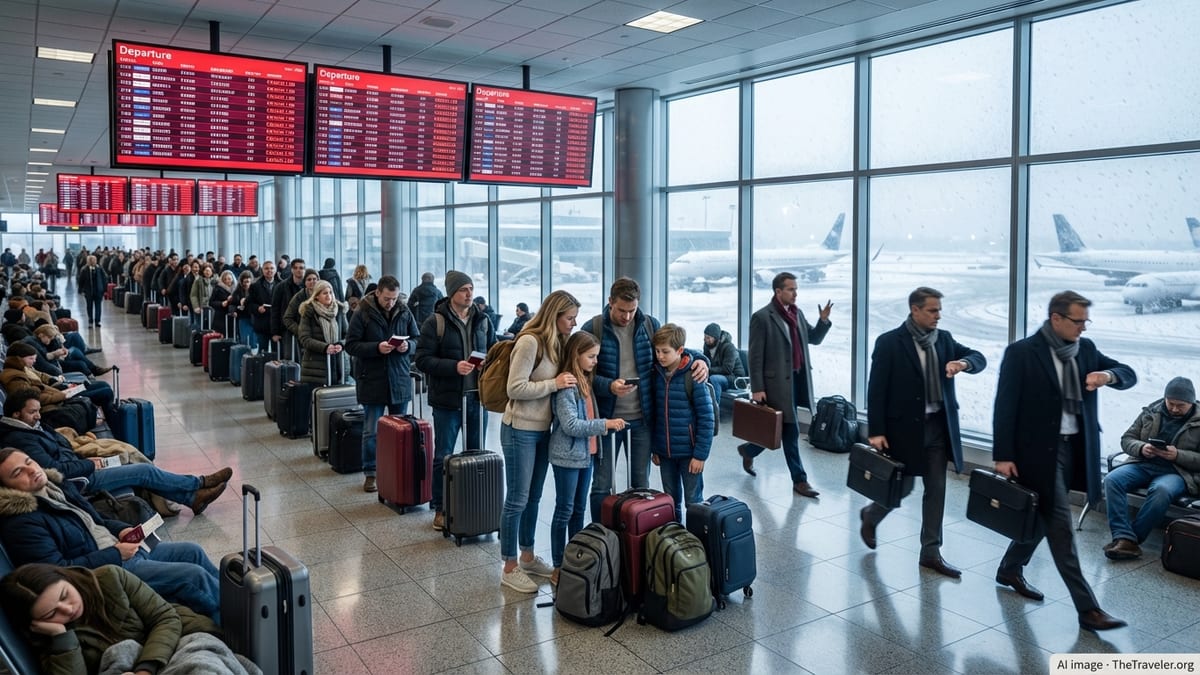
Logan Disruptions Ripple Across Domestic and Transatlantic Networks
Publicly available flight-tracking dashboards for April 3 show Logan departures and arrivals running behind schedule from early in the day, with delays gradually stacking up across the afternoon and evening schedule. The disruption is concentrated on heavily traveled business and leisure corridors linking Boston with New York, Chicago, Washington and Atlanta, alongside long haul services to major European gateways.
Based on aggregated counts from flight-status platforms, more than 160 flights tied to Boston have been marked delayed, while at least 11 flights have been canceled outright. The figures span a mix of mainline and regional operations, covering both departures from Logan and inbound services that are arriving late or not operating at all.
Large U.S. network airlines appear prominently in the disruption data. American Airlines, Delta Air Lines, JetBlue Airways and United Airlines all show a significant number of delayed departures into and out of Boston, with additional knock-on effects for passengers attempting to connect to onward flights across their broader domestic and international networks.
European routes are also feeling the strain. Flight-status boards indicate schedule changes and late operations on services linking Boston with London and Frankfurt, complicating connections for travelers heading onward into continental Europe or returning to U.S. cities beyond Boston after overnight transatlantic flights.
Weather, Network Strain and Earlier Ground Stops Feed Today’s Delays
Reports on early April operations across the United States describe a mix of severe weather patterns, airspace constraints and lingering effects from recent ground stops at other hubs. Published coverage focused on the national picture for April 3 points to storms sweeping parts of Texas and the Southeast and gusty conditions in the Northeast, contributing to an elevated number of delays and cancellations nationwide.
Industry analysis of late March and early April indicates that Logan has repeatedly absorbed secondary impacts when storms and operational issues have hit other parts of the domestic network. When aircraft and crews are left out of position by earlier disruptions at connecting hubs, Boston often experiences a wave of late inbound flights that cascade into delayed departures, even when local weather is relatively manageable.
Data aggregators tracking the April 3 disruption wave nationwide show hundreds of cancellations and several thousand delays across U.S. airports. In that wider context, Logan stands out as one of the Northeast gateways seeing elevated levels of schedule disruption, though not a full ground stop. The combination of already tight airline schedules and minimal slack in crew rosters means relatively small weather or operational shocks in the morning can turn into substantial afternoon and evening knock-on delays.
Observers of U.S. aviation trends note that Boston’s growing role as a strategic hub for multiple carriers, particularly JetBlue and Delta, increases its vulnerability to these networkwide shocks. When multiple airlines are building banks of departures and arrivals around similar time windows, any constraint in runway capacity, ramp staffing or air traffic flow can quickly translate into delay totals that number in the hundreds.
Major Airlines and Key Routes Most Affected
Within today’s disruption picture at Logan, the heaviest effects appear clustered on specific airline networks and high-demand routes. Publicly available tallies of delays and cancellations across the United States for April 3 highlight broad operational pressures at American, Delta, JetBlue and United, which are all prominent in Boston’s departure boards.
On the domestic side, routes to New York area airports, Chicago O’Hare, Washington National, Atlanta, Orlando and other major hubs feature multiple delayed departures from Boston. These flights often serve as feeders into larger connecting complexes, meaning a delay out of Logan can cause missed connections and rebookings for travelers headed onward to the West Coast, the Mountain West or secondary Midwestern and Southern cities.
Internationally, Logan’s links to London and Frankfurt are shouldering schedule pressure as well. Delayed departures from Boston can imperil carefully timed onward connections across Europe, while late-arriving transatlantic services may force rebookings for passengers trying to join domestic U.S. flights onward to cities such as Miami, Dallas, Denver or Seattle.
Low cost and hybrid carriers that operate alongside the major network airlines are also represented in the delay tallies, complicating options for travelers hoping to switch to alternative same-day flights. With gate space and runway slots tightly managed during peak periods, there is limited flexibility for airlines to add extra sections or rapidly reroute aircraft to pick up stranded demand.
What Today’s Disruption Means for Travelers Using Boston Logan
For passengers at Boston Logan on April 3, the immediate impact is most visible in longer than usual waits at departure gates and on arrivals boards populated with late inbound flights. Travelers connecting through Logan are facing tighter margins for making onward flights, and in some cases are being shifted to later departures or alternate routings via other hubs.
Travel planning resources are advising passengers to assume that knock-on effects from the day’s delays could persist into the evening and potentially into the morning of April 4, as aircraft and crews return to their scheduled positions. Even where cancellations remain relatively limited, rolling delays can produce missed connections that take until the following day to fully resolve.
Guidance drawn from consumer travel advisories stresses the importance of monitoring flight status frequently on days like today, checking both the airline’s official channels and widely used flight-tracking tools. Passengers with same-day connections through busy hubs such as New York, Chicago or London are being encouraged to build additional buffer time where possible and to consider carrying essentials in hand luggage in case of unexpected overnight stays.
Public information from transportation regulators also reiterates that, in many circumstances, travelers whose flights are canceled and who choose not to travel may be eligible for a refund of the unused portion of their ticket. For delayed flights, remedies vary by carrier and by cause, and passengers are being urged to review airline-specific policies on rebooking, meal vouchers and hotel arrangements when significant delays occur.
Outlook for Early April and the Spring Travel Corridor
The April 3 disruption at Boston Logan fits into a broader pattern of choppy operations across the U.S. aviation system as spring weather combines with strong demand and lean staffing at some carriers. Recent national data has repeatedly shown elevated counts of daily delays and cancellations, particularly when storm systems intersect with busy travel days.
Analysts following U.S. airline performance suggest that the first half of April may continue to see localized flare ups of disruption, especially at hubs vulnerable to severe thunderstorms or coastal weather shifts. In that environment, airports like Boston that sit at the crossroads of domestic business travel and transatlantic leisure demand are likely to remain sensitive to shocks elsewhere in the network.
For travelers planning itineraries through Boston over the coming days, aviation-focused publications recommend building in extra time between connections, choosing earlier departures where possible and keeping flexible options for rebooking. While airlines are working to restore schedules as conditions stabilize, the scale of today’s delay totals at Logan underlines how quickly a few operational constraints can escalate into a day of systemwide inconvenience.
As the spring travel season accelerates toward summer, the experience at Logan on April 3 is serving as another reminder that even in the absence of headline-grabbing storms, cumulative weather patterns, tight schedules and airspace limits can combine to push delay and cancellation figures sharply higher at key U.S. gateways.