

More news on this day
Passengers traveling through Keflavik International Airport on April 7 faced a fresh wave of disruption as dozens of flights were delayed or cancelled, affecting services operated by Icelandair, easyJet, Wizz Air and other carriers on routes linking Iceland with the United States, United Kingdom, Germany, Finland and additional destinations.
Get the latest news straight to your inbox!
Targeted Disruptions Amid Wider European Flight Chaos
Publicly available airport data and industry monitoring on April 7 indicate that Keflavik International Airport, Iceland’s primary international gateway, logged 27 delayed departures and arrivals alongside five outright cancellations over the course of the day. While modest compared with the hundreds of disruptions reported at major mainland European hubs, the figures represent a significant interruption for an airport of Keflavik’s size and its highly connection-dependent traffic.
The disruption in Iceland formed part of a broader pattern of operational strain across northern and western Europe. Recent coverage has linked widespread delays and cancellations at airports in Iceland, Sweden, Ireland, the United Kingdom and Germany to unsettled weather systems and reactionary knock-on effects, with thousands of passengers experiencing missed connections and rebookings. Within this context, Keflavik’s 32 affected flights contributed to a continent-wide ripple that complicated travel plans well beyond Iceland’s borders.
Data compiled from airport trackers suggest that the imbalance between departures and arrivals created additional challenges for airlines attempting to keep aircraft and crews in position. Even when flights operated, extended ground times and late inbound aircraft often translated into delayed onward departures, especially for transatlantic and intra-European legs that rely on tight rotations through Keflavik.
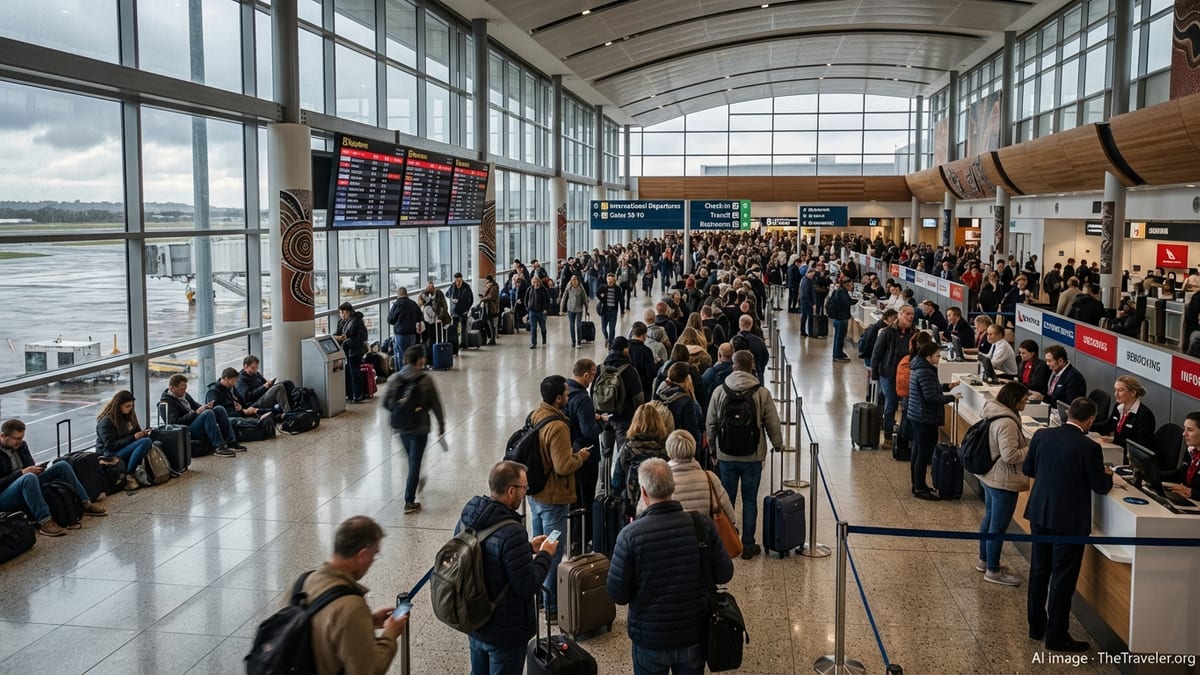
Despite the scale of the disturbance elsewhere in Europe, operations at Keflavik continued at reduced but functioning capacity. Runways remained open and the majority of the day’s schedule operated, albeit with many flights running behind their planned times, leaving travelers facing long queues at check-in, security and customer service desks.
Airlines and Routes Most Affected
According to published schedules and live departure boards, the operators most visibly affected at Keflavik were Icelandair, easyJet and Wizz Air. Icelandair, which uses Keflavik as its main hub, saw several of its transatlantic departures to North America and return services from the United States hit by delays and at least one cancellation. Flights to Boston and other US cities showed extended departure times, with knock-on effects for connecting passengers arriving from Europe.
On the European side, easyJet services linking Keflavik with UK airports, including Manchester and London-area gateways, recorded delays that at times stretched beyond half an hour. Wizz Air’s low cost connections to Central and Eastern European destinations, such as Vilnius, also experienced schedule pressure, with aircraft arriving and departing later than timetabled.
The pattern of disruption extended to flights serving Germany, Finland and neighboring markets, where carriers coordinate with Icelandair’s hub structure to provide onward transatlantic connectivity. Delays or cancellations on feeder routes to and from cities such as Frankfurt or Helsinki risked stranding passengers in Keflavik overnight or forcing rerouting via alternative European hubs when same-day connections became impossible.
While some smaller regional operators appeared less affected, industry data suggest that any interruption at a tightly scheduled airport like Keflavik can quickly cascade across multiple airlines. Even a limited number of late turns can upset aircraft utilization plans for low cost carriers and legacy airlines alike, reinforcing the vulnerability of hub-and-spoke models during days of elevated disruption.
Impact on Passengers to Iceland, Europe and North America
The immediate impact for travelers was felt most acutely by those moving between Iceland and key markets in the United States, the United Kingdom, Germany and Finland. Passengers inbound to Iceland for tourism reported longer-than-expected transit times and, in some cases, missed ground connections to Reykjavik and other destinations, particularly where bus and domestic flight links operated on fixed timetables.
For outbound passengers heading to North America, delayed departures from Keflavik threatened to interfere with onward connections at US airports. Because many Icelandair itineraries involve single-stop journeys between European cities and US gateways via Keflavik, any delay in Iceland can translate into missed domestic links in North America, complicating travel plans even when the long-haul sector eventually departs.
Travelers bound for the UK, Germany and Finland also faced uncertainty around arrival times, which can be especially problematic for same-day business meetings or tightly scheduled leisure itineraries. In hub cities such as London and Frankfurt, late arrivals from Iceland may reduce available rebooking options, as peak departure banks for European and intercontinental flights typically cluster within narrow time windows.
At Keflavik itself, terminal congestion reportedly increased as delayed passengers remained in the building for longer, placing additional strain on seating, food and beverage services, and airline ground staff. Some travelers opted to adjust their plans by requesting reroutes via alternative European hubs where more frequent services offered greater flexibility, though such options were not universally available.
Operational and Weather Factors Behind the Disruptions
While a full operational breakdown was not immediately available, recent analytical coverage of Europe-wide disruptions points to a combination of adverse weather conditions and so-called reactionary delays as principal drivers. Strong winds and unsettled conditions over parts of the North Atlantic and northern Europe can contribute to air traffic flow restrictions, holding patterns and runway capacity reductions that filter through to airports such as Keflavik.
Once schedules begin to slip, reactionary delays often become the dominant factor. When an inbound aircraft arrives late into Keflavik from a city such as London, Frankfurt or Helsinki, the same aircraft’s departure to another destination will usually push back from the gate later than planned, even if weather conditions have improved. This dynamic is particularly evident at hub airports with tight wave-based scheduling, where a single disrupted rotation can compound across multiple flights over the course of a day.
Industry statistics on punctuality for airlines serving Keflavik, including Icelandair, easyJet and Wizz Air, show that winter and early spring are already challenging periods for on-time performance because of volatile weather and higher likelihood of operational constraints. The latest figures from European regulators and airport operators suggest that airlines frequently categorize such events as outside their direct control, even when subsequent knock-on delays are driven by network decisions.
Airport-focused analyses also highlight the limited slack built into many modern schedules. With aircraft utilization pushed close to maximum and rapid turnarounds becoming standard for low cost and network carriers, there is often little room to absorb unexpected ground holds, de-icing requirements or air traffic control restrictions without creating wider timetable distortion.
Advice for Travelers Navigating Keflavik Disruptions
Travel guidance derived from recent events across Europe suggests several practical steps for passengers using Keflavik during periods of disruption. Checking flight status frequently through airline channels and airport boards remains essential, as departure times can change repeatedly in response to shifting weather patterns and air traffic control instructions.
Travelers with connections in Keflavik or beyond are generally advised to build in additional buffer time, particularly in late winter and early spring when Atlantic weather systems are most active. Booking slightly longer layovers, where possible, can reduce the likelihood that a short delay on the first leg will jeopardize an entire itinerary involving the United States, the United Kingdom or mainland Europe.
Several passenger rights organizations note that eligibility for compensation or support under European air travel regulations depends on the specific cause of a delay or cancellation. Weather-related disruptions may limit entitlement to financial compensation, but carriers are typically expected to provide care elements such as meals and accommodation when passengers are stranded overnight. Travelers are therefore encouraged to retain boarding passes and receipts in case they need to submit claims after their journey.
For those planning upcoming trips through Iceland, experts recommend monitoring both airline operational updates and broader European aviation reports. Although the 27 delays and five cancellations at Keflavik on April 7 sit within a larger regional pattern of disruption, they also underscore the importance of flexible planning when relying on tightly coordinated transatlantic and intra-European networks.