

More news on this day
Harry Reid International Airport in Las Vegas is grappling with a new wave of flight disruptions, with dozens of delays and several cancellations rippling across key U.S. and South Korean routes and affecting operations by Spirit, Delta, Korean Air, United and other major carriers on Saturday.
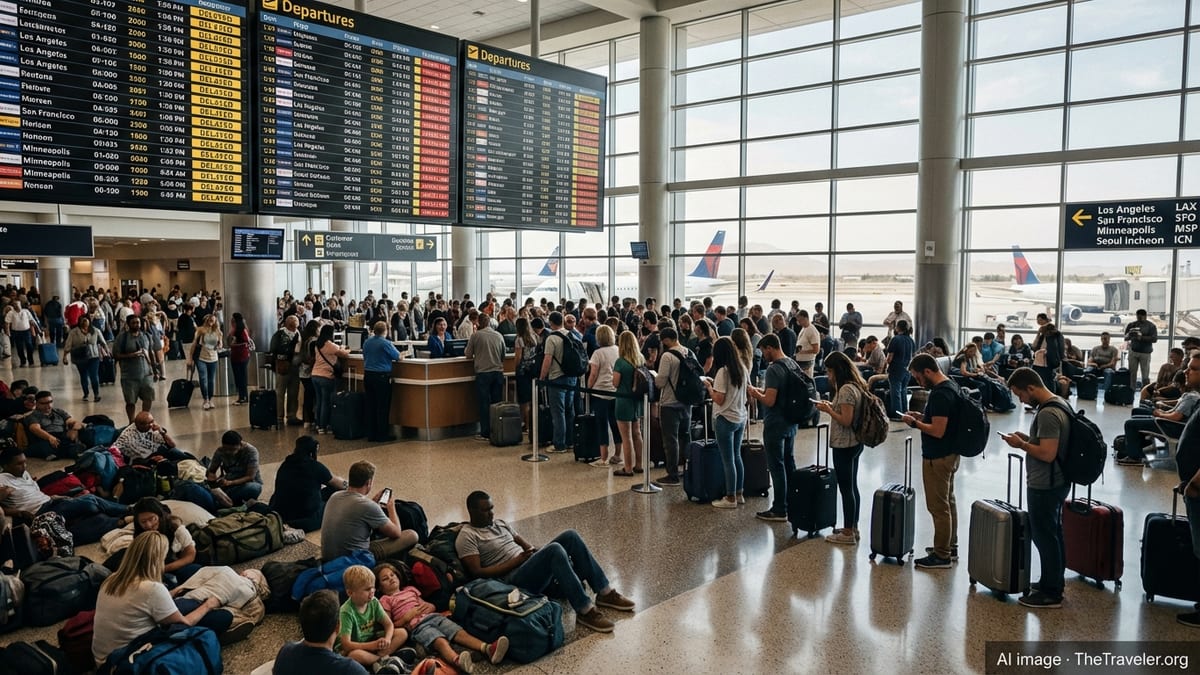
Fresh Disruptions Hit Harry Reid International Airport
Operational data compiled on February 21 shows Harry Reid International coping with another difficult travel day, as a mix of air traffic constraints, congested skies over the western United States and lingering winter weather elsewhere in the network translate into 62 delayed departures and arrivals and five outright cancellations. While the numbers are modest compared with major nationwide disruption events seen in recent weeks, the concentration of problems at a single desert hub has created outsized headaches for travelers trying to connect between the U.S. West Coast and Northeast Asia.
Spirit Airlines, Delta Air Lines, Korean Air and United Airlines are among the carriers reporting schedule disruptions at the Las Vegas gateway. The irregular operations are affecting a roster of key domestic and international connections, including flights linking Las Vegas with Los Angeles, San Francisco and Minneapolis, and long-haul services that feed onward to South Korea’s Incheon International Airport. Passengers reported long queues at customer service desks, crowded gate areas and repeated schedule updates on departure boards through the late morning and afternoon.
Airport officials said staff were working with airline and federal aviation partners to keep the operation moving, even as some flights were held at gates waiting for updated departure slots. While the airport itself has been spared the kind of severe winter weather hitting other parts of the country, knock-on delays from storms and flow-control measures elsewhere in the system have reduced the margin for error and left carriers with limited flexibility to recover when individual flights run late.
Airlines Across the Board Feel the Strain
For Spirit Airlines, which relies heavily on Las Vegas for leisure traffic, Saturday’s disruptions are the latest in a series of operational challenges that have weighed on the carrier’s performance this winter. Even a handful of delayed departures can cascade quickly for an airline that runs tight aircraft turns and serves popular short-haul routes to Southern California and the Mountain West, magnifying the impact for budget-conscious travelers with limited rebooking options.
Delta Air Lines and United Airlines, both with significant domestic networks feeding into Las Vegas, also reported delayed departures on routes linking the city to Minneapolis, San Francisco and Los Angeles. These flights often carry large numbers of connecting passengers, and when they depart late from Harry Reid, missed onward connections at hub airports become more likely. Airline operations teams spent much of the day reassigning aircraft, rotating crews and prioritizing flights with the most connecting passengers in an attempt to limit knock-on disruption.
Korean Air’s long-haul services, which tie Las Vegas into the vast trans-Pacific network centered on Incheon, were not immune either. Even minor delays departing the U.S. can force adjustments to crew schedules, ground handling windows and connecting banks on arrival in South Korea, making it more difficult to preserve smooth same-day transfers to destinations across Asia. Industry analysts note that when a long-haul carrier’s schedule is tightly synchronized with hub connection waves, an hour’s delay can be felt across multiple flights and markets.
Key Routes to Los Angeles, Minneapolis, San Francisco and Incheon Affected
Among the most visible pressure points on Saturday were the trunk routes linking Las Vegas with Los Angeles International, San Francisco International and Minneapolis–St. Paul International. Flights on these corridors support both point-to-point traffic and onward connections, serving as essential feeders into the wider domestic and international networks of Delta, United and other alliance partners. When departure times from Harry Reid slip, aircraft can lose their carefully planned arrival slots at these congested hubs, triggering holding patterns, ground delays and further schedule adjustments.
Passengers on morning and midday departures to Los Angeles and San Francisco reported departure times creeping back by 30 minutes to over an hour as crews awaited updated clearances and aircraft arriving late from other cities were turned around more slowly than planned. Travelers bound for Minneapolis, a key Upper Midwest connection point, faced similar uncertainty. For some, the delays meant missed evening flights onward to smaller regional destinations, forcing unexpected overnight stays or lengthy reroutes through alternative hubs.
At the intercontinental level, itineraries linking Las Vegas through West Coast gateways to Seoul’s Incheon International also came under strain. Travelers booked on Korean Air and partner airlines via Los Angeles and San Francisco saw connection windows shrink as their originating flights from Nevada departed late. Airline agents in Las Vegas were busy rebooking some Seoul-bound passengers onto later trans-Pacific departures or rerouting them via alternative hubs, balancing aircraft availability and crew duty limits against a strong seasonal demand for Asia travel.
Passengers Confront Long Queues and Uncertain Timelines
Inside the terminals at Harry Reid, the day’s disruption took on a familiar pattern. Lines formed early at check-in counters as airlines informed some passengers of schedule changes even before they reached security. Those already airside clustered around gate podiums, looking for updates on boards that refreshed at irregular intervals. Overhead announcements advising travelers to monitor their flight status and remain near their departure gates became a steady background soundtrack.
Families heading home from Las Vegas vacations and business travelers trying to make meetings in California and the Midwest described a mix of frustration and resignation. Some recounted multiple rolling departure-time revisions in the span of a few hours. Others, especially those with tight international connections onward to South Korea, weighed whether to proceed to a hub that was itself already reporting congestion, or to ask for rebooking on later dates.
Concessions and retail outlets inside the airport did brisk business as passengers settled in for longer-than-expected waits. Airport staff deployed additional wayfinding teams in busy concourses to help travelers navigate last-minute gate changes and to direct those facing missed connections to airline service centers. While there were no reports of significant security screening backups, some passengers arriving closer to departure time found themselves hustling through the terminal as boarding windows shifted with little notice.
A Strained U.S. Network Sets the Stage for Local Turbulence
The latest problems at Harry Reid come amid a broader period of stress for the U.S. air travel system, with carriers across the country contending with recurring winter storms, air traffic control staffing challenges and persistent high demand. In recent weeks, nationwide data have repeatedly shown several thousand daily delays and hundreds of cancellations, affecting everything from short-haul commuter flights to transcontinental and trans-Pacific services. Against that backdrop, even localized disruptions at a single airport can quickly feed into a much larger web of schedule instability.
Las Vegas sits at a crossroads of this network, drawing visitors from across the United States and serving as a connecting point for traffic heading toward California, the Pacific Northwest and Asia. When disruptions elsewhere force carriers to slow their operations, trim schedules or reposition aircraft, the knock-on effects are often felt in Nevada. On days like Saturday, a relatively small number of cancellations and a few dozen delayed departures at Harry Reid can translate into hundreds or thousands of passengers dealing with missed connections and late arrivals in distant cities.
Airlines and airport officials have repeatedly emphasized that they are investing in technology, staffing and infrastructure to better absorb such shocks, from enhanced crew-scheduling tools to more flexible gate management systems. Yet as the current wave of delays underlines, the complex choreography of modern aviation still leaves little room for error when weather, airspace constraints and tight aircraft utilization converge.
Impacts Stretch from the U.S. West Coast to South Korea
Travelers affected by Saturday’s disruptions were not confined to Las Vegas and its immediate domestic links. Because Harry Reid functions as both an origin and a transfer point, downstream effects were reported across the Pacific and in secondary U.S. markets whose connectivity depends heavily on smooth operations at larger hubs. A delayed departure to Los Angeles or San Francisco can ripple into the timing of trans-Pacific departures to Incheon and beyond, further straining crews and ground operations already working to keep long-haul flights on schedule.
South Korean travelers and Korean diaspora communities in the United States are particularly sensitive to such disruptions, as many journeys involve a chain of two or three separate flights stitched together across different airlines and alliances. A schedule slip on the first leg out of Las Vegas can upend carefully planned itineraries involving tight layovers, onward domestic segments within South Korea and ground transport arranged around specific arrival times.
Within the United States, regional travelers in cities that rely on connections through Minneapolis, San Francisco and Los Angeles also felt the pinch. Late arrivals from Las Vegas made it more difficult for airlines to dispatch smaller jets onward to secondary markets on time, especially in areas where winter weather had already narrowed operating windows. For passengers in destinations far removed from Nevada or California, the cause of a late-evening arrival or an unexpected overnight stay could be traced back to an aircraft that had left Las Vegas behind schedule earlier in the day.
How Travelers Are Adapting and What to Expect Next
Seasoned flyers caught up in the latest Harry Reid disruptions employed familiar strategies to reduce the sting of irregular operations. Many turned to airline mobile apps to track aircraft locations and gate changes in real time, while others sought out self-service kiosks in the terminal to explore alternative routings without waiting in line for an agent. Some travelers proactively requested rebooking into next-day flights when it became clear that their original itineraries would no longer preserve international connections, accepting overnight stays in exchange for greater certainty.
Travel advisers say the situation at Las Vegas underscores the importance of building extra time into itineraries that include winter-season connections through busy hubs, particularly for long-haul routes to destinations like Incheon. They recommend that passengers traveling during high-risk periods opt for longer layovers, midday departures less exposed to early-morning knock-on delays, and, where possible, nonstop flights that reduce reliance on tightly choreographed multi-leg journeys.
In the short term, airlines operating at Harry Reid are expected to spend the remainder of the weekend working through residual backlogs, repositioning aircraft and returning crew schedules to normal patterns. While no extended ground stops were in place on Saturday, continued weather volatility across the U.S. and ongoing air traffic control constraints mean that additional pockets of disruption cannot be ruled out. For travelers with upcoming departures from Las Vegas, industry experts advise checking flight status frequently, enrolling in airline text alerts and arriving at the airport with enough time to navigate any last-minute gate or schedule changes.