

More news on this day
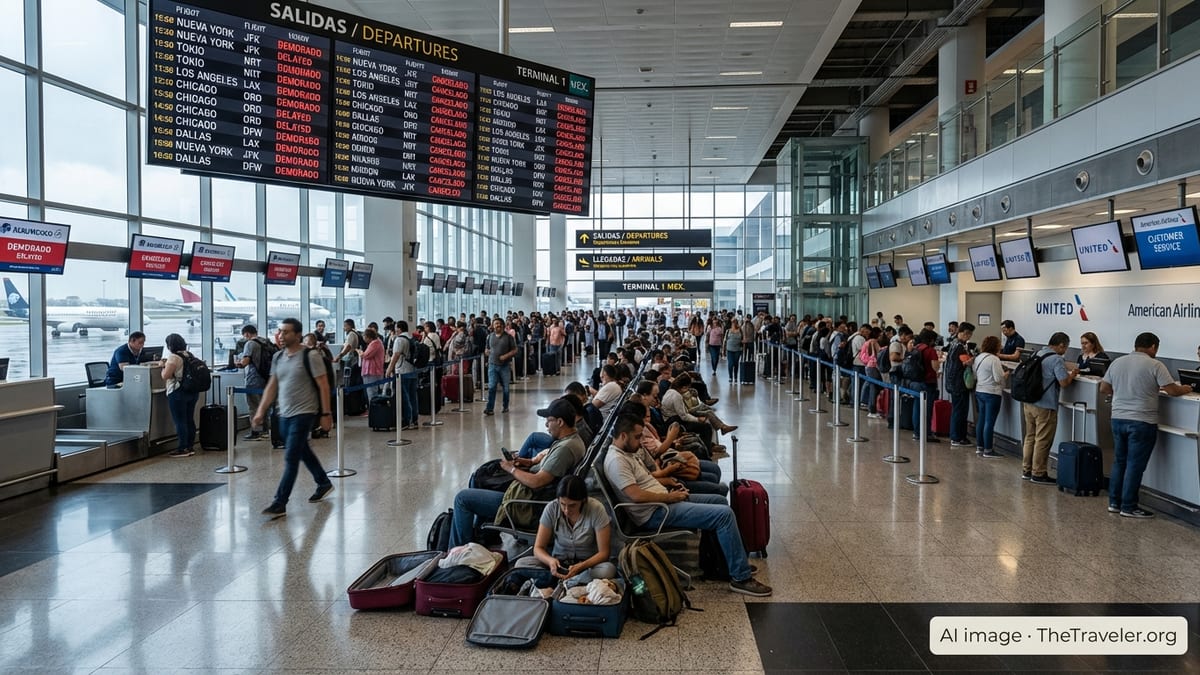
Travelers flying through Mexico City’s Lic. Benito Juarez International Airport faced a fresh wave of disruption today as 51 flight delays and 5 cancellations rippled across domestic and international routes, affecting services operated by Aeroméxico, VivaAerobus, United Airlines and other major carriers.
Operational Disruptions Hit Key Mexico City Hub
The latest disruption at Mexico City’s primary international gateway added pressure to one of Latin America’s busiest aviation hubs, with delays clustering around peak morning and late afternoon departure banks. Airport monitoring data showed that both short-haul domestic links and long-haul international services bore the brunt of the irregular operations, complicating travel plans for hundreds of passengers connecting through the capital.
While precise causes varied by flight, operational constraints, tight aircraft rotations and lingering weather impacts along certain North American corridors contributed to the knock-on delays. Ground handling bottlenecks and air traffic flow restrictions compounded the situation, leading to extended turnaround times and slower gate availability at Lic. Benito Juarez International Airport.
The pattern of disruption placed strain not only on departing services but also on arriving aircraft that feed Mexico City’s extensive domestic network. With several flights operating behind schedule, airlines were forced to re-time onward departures, creating a cascading effect that stretched into the afternoon and evening schedules.
Aeroméxico, VivaAerobus and United Among Most Affected
Aeroméxico and low-cost carrier VivaAerobus, two of the most active operators at Mexico City, were among the airlines reporting multiple delayed departures and arrivals. Their busy domestic and regional schedules, which rely on tight turnaround times, made them particularly vulnerable once the first wave of delays set in. Select frequencies to and from major Mexican cities such as Guadalajara, Monterrey and Mazatlán operated significantly behind schedule, forcing passengers to rebook missed connections.
United Airlines also reported delayed operations on routes linking the United States and Mexico City, highlighting the cross-border dimension of the disruption. With many travelers connecting onward to other U.S. cities or continuing deeper into Latin America via Mexico City, schedule changes on United’s services had an outsized impact on time-sensitive itineraries, including business travel and same-day connections.
Other international carriers serving Mexico City encountered scattered delays as they navigated congested arrival and departure windows. Even when individual flights were only moderately affected, the combination of ground congestion, crew duty-time limits and slot restrictions meant several departures pushed back later than planned, reducing schedule resilience across the day.
New York, Tokyo and Major U.S. Gateways See Knock-On Effects
The disruption at Lic. Benito Juarez International Airport extended far beyond Mexico’s borders, affecting long-haul and transborder services that link the capital to key global hubs. Flights between Mexico City and New York experienced schedule pressure as delayed departures from Mexico forced later-than-planned arrivals on the U.S. East Coast. That, in turn, complicated evening departure banks from New York for travelers hoping to connect to other cities in the United States and Canada.
Long-haul operations toward Asia were also exposed, with flights on the busy Mexico City to Tokyo corridor facing narrow connection windows and crew scheduling challenges. Even relatively modest delays on inbound aircraft arriving from other parts of the Americas risked pushing Tokyo-bound departures into less favorable time slots, heightening the risk of missed connections on arrival in Japan.
Across the broader U.S. market, services between Mexico City and large gateways such as Los Angeles, Houston and Chicago saw knock-on effects when aircraft or crews arrived late from previous segments. For travelers starting their journeys in secondary U.S. cities with connections through these hubs, a delay in Mexico City could translate into missed onward flights and unexpected overnight stays, particularly where later frequencies were already heavily booked.
Passengers Face Long Lines, Rebookings and Tight Connections
Inside the terminals, the operational strain was visible in longer-than-normal queues at check-in counters, transfer desks and airline service points. Passengers whose flights were delayed or canceled joined rebooking lines as carriers attempted to re-accommodate them on later services, often juggling already full flights at the end of a busy travel week.
Travelers connecting through Mexico City reported tight and sometimes unworkable minimum connection times, especially where inbound delays left less than an hour to clear security checks and reach distant gates. In several cases, passengers with separate tickets or complex itineraries were forced to purchase last-minute alternatives or reroute through other hubs in the United States or Central America to reach their final destinations.
Families and leisure travelers were particularly affected on routes to U.S. cities that serve as gateways to popular holiday destinations. With school holiday periods approaching in some regions, demand on Mexico City’s international routes was already elevated, limiting the number of spare seats available for same-day rebooking and pushing some disrupted journeys into the following day.
Airlines Urge Early Airport Arrival and Flexible Plans
In response to the irregular operations, airlines operating at Lic. Benito Juarez International Airport advised passengers to monitor their flight status closely and build extra time into their travel plans. Carriers encouraged travelers to arrive at the airport earlier than usual to clear check-in, baggage drop and security lines, particularly for morning departures when the day’s first delays can quickly ripple through the schedule.
Airlines also highlighted the importance of using official mobile apps and customer channels to receive real-time updates on departure times, gate changes and rebooking options. Passengers with critical connections in New York, Tokyo and key U.S. hubs were urged to contact their carriers proactively if their inbound flights from Mexico City showed signs of significant delay, in order to secure alternative routings where possible.
With demand for cross-border and long-haul travel continuing to grow, today’s disruption at Mexico City’s Lic. Benito Juarez International Airport underscored how quickly a cluster of delays and cancellations can spread across interconnected networks. For now, airlines and airport authorities are working flight by flight to recover the schedule, while travelers are reminded that flexibility and advance preparation remain essential when flying through one of the region’s busiest hubs.