

More news on this day
Hundreds of airline passengers were left scrambling for options in the United States on Thursday after a wave of delays and cancellations at Oklahoma City’s OKC Will Rogers International Airport disrupted morning and midday schedules for American, Delta, United and several other carriers.
Get the latest news straight to your inbox!
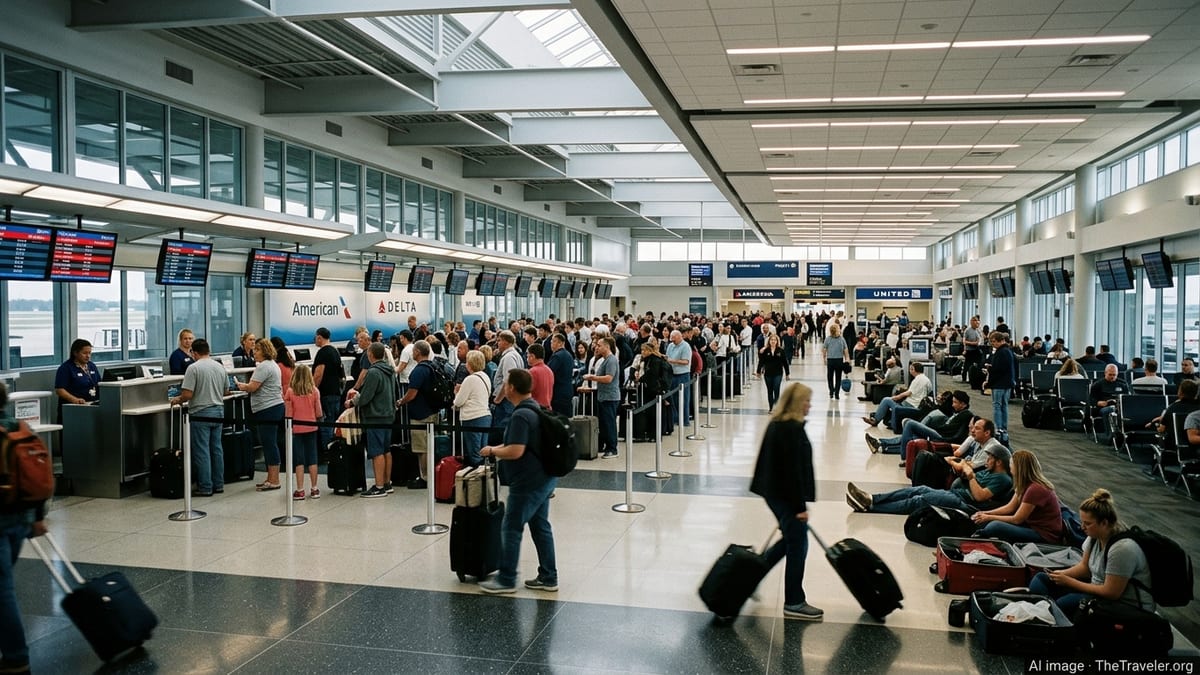
Cluster of Disruptions Hits OKC and Ripples Across Networks
Publicly available flight-tracking data for Thursday indicates that nine departures and arrivals at OKC Will Rogers International Airport were delayed and five were canceled, concentrating disruption into a relatively short window of the travel day. While those numbers are modest compared with large hub airports, the impact is magnified in a mid-sized market where each flight can represent a critical link in longer, multi leg journeys.
The affected flights involved a mix of domestic routes operated or marketed by American Airlines, Delta Air Lines, United Airlines and their regional partners. With many of these services funneling passengers into major hubs such as Dallas Fort Worth, Atlanta, Denver and Houston, the schedule problems in Oklahoma City quickly cascaded into missed connections and rebookings across the country.
According to published coverage and airline status boards, some of the cancellations occurred with limited lead time, leaving travelers already checked in or at the gate when aircraft were reassigned or grounded. Others were the result of rolling delays that pushed departures beyond crew duty limits or connecting bank times, forcing airlines to scrub segments entirely.
The timing of the disruption, during a busy late March travel period and amid broader operational strains at several U.S. airports, amplified pressure on customer service channels as passengers sought alternative itineraries or compensation.
Stranded Passengers Face Long Lines and Limited Options
Travelers at OKC reported extended waits at airline counters and crowded gate areas as they queued for rebookings, meal vouchers and hotel information. With a finite number of daily departures from Oklahoma City and strong demand for seats on remaining services, same day alternatives were in many cases scarce or unavailable.
Some passengers faced overnight stays in Oklahoma City after their outbound flights were canceled and onward connections could not be protected. Others remained stuck mid journey at larger hubs when inbound services from OKC were scrubbed, creating bottlenecks at rebooking desks in cities such as Dallas, Chicago and Denver.
Airlines’ mobile apps and websites showed fluctuating departure times throughout the morning and early afternoon as carriers adjusted operations. Reports indicate that customers who monitored digital updates and rebooked proactively often secured seats ahead of those waiting in physical lines, highlighting the ongoing shift toward technology driven disruption management.
For travelers with time sensitive plans, including business meetings, family events and cruise departures, the combination of short notice cancellations and limited rebooking options translated into significant stress and, in some cases, out of pocket expenses for accommodation and alternate transportation.
Weather, Staffing and Air Traffic Constraints Under Scrutiny
The disruptions in Oklahoma City occurred against a national backdrop of challenging spring weather patterns and ongoing staffing constraints at some airports. Recent storm systems and strong winds across portions of the Central United States have periodically slowed operations, and Oklahoma sits near regions that have seen severe weather watches and warnings in late March.
While there was no single widely reported catastrophic event at OKC on Thursday, publicly available information suggests a combination of minor weather impacts, tight aircraft rotations and constrained staffing can tip an already packed schedule into a series of rolling delays. When one inbound aircraft arrives late, the outbound it is scheduled to operate may lose its slot or push flight crews toward the limits of their allowable duty periods.
Industry analysts note that medium sized airports like Oklahoma City are especially vulnerable when small disruptions occur simultaneously across multiple airlines. With fewer spare aircraft and limited redundancy in the schedule, a single delayed arrival can lead to a cancellation if there is no backup plane or crew available.
Air traffic control programs elsewhere in the network can also contribute. If major hubs implement ground delay or flow control measures, regional spokes such as OKC may see flights held on the ground or rescheduled, disproportionately affecting passengers whose journeys depend on tightly timed connections.
Broader U.S. Travel System Already Under Pressure
The situation in Oklahoma City comes at a time when many U.S. travelers are already wary of disruptions. Recent months have seen widespread delays and cancellations driven by winter storms, severe weather outbreaks and occasional technology issues that have tested airline resilience and passenger patience.
Data from previous major storms and operational crises shows how quickly cancellations can multiply nationwide once a few large hubs begin experiencing significant disruption. Even when an event is limited to a handful of flights in a single city, travelers often feel the effects across several states as missed connections ripple outward and seat availability tightens.
In this context, the problems at OKC Will Rogers International Airport serve as another reminder of the fragility of tightly optimized airline schedules. With aircraft and crews scheduled close to capacity in peak travel periods, modest localized issues can translate into hundreds of disrupted travel plans.
Travel forums and social media discussions on Thursday reflected growing frustration among passengers who have experienced multiple disruptions over recent seasons. At the same time, some travelers acknowledged that complex weather patterns and broader federal staffing challenges at security and air traffic facilities are placing additional strain on airlines that are already operating near their limits.
What Travelers Can Do When Flights From OKC Go Awry
Consumer advocates recommend that passengers flying through Oklahoma City and similar mid sized airports build extra buffer time into itineraries, particularly when making critical same day connections. Leaving more time between flights increases the chances of salvaging a trip if an initial segment is delayed.
When cancellations occur, reports indicate that customers who contact airlines through multiple channels such as apps, websites and phone lines often secure rebookings faster than those relying on airport counters alone. Monitoring flight status frequently and signing up for mobile alerts can also provide early warning of schedule changes.
Airport documentation for OKC highlights that parking and ancillary services may offer limited relief in the case of airline initiated cancellations, but travelers are generally encouraged to retain receipts and documentation in case they pursue refunds or reimbursement later. Passengers are also advised to review each airline’s specific policies on rebooking, meal vouchers and hotel coverage, which can vary depending on the cause of disruption.
As the spring travel season continues, the latest round of delays and cancellations at Oklahoma City’s primary airport underscores the importance of flexible planning, digital tools and realistic expectations for anyone connecting through the heart of the Central United States.