

More news on this day
Travelers moving between Argentina, Brazil and the United States faced a disruptive day at Buenos Aires’ Ministro Pistarini International Airport, where published airport data and live tracking platforms on March 28 pointed to 19 delays and six cancellations on routes linking Buenos Aires with São Paulo, Miami and New York JFK across several carriers, including Flybondi, American Airlines, Copa Airlines and LATAM.
Get the latest news straight to your inbox!
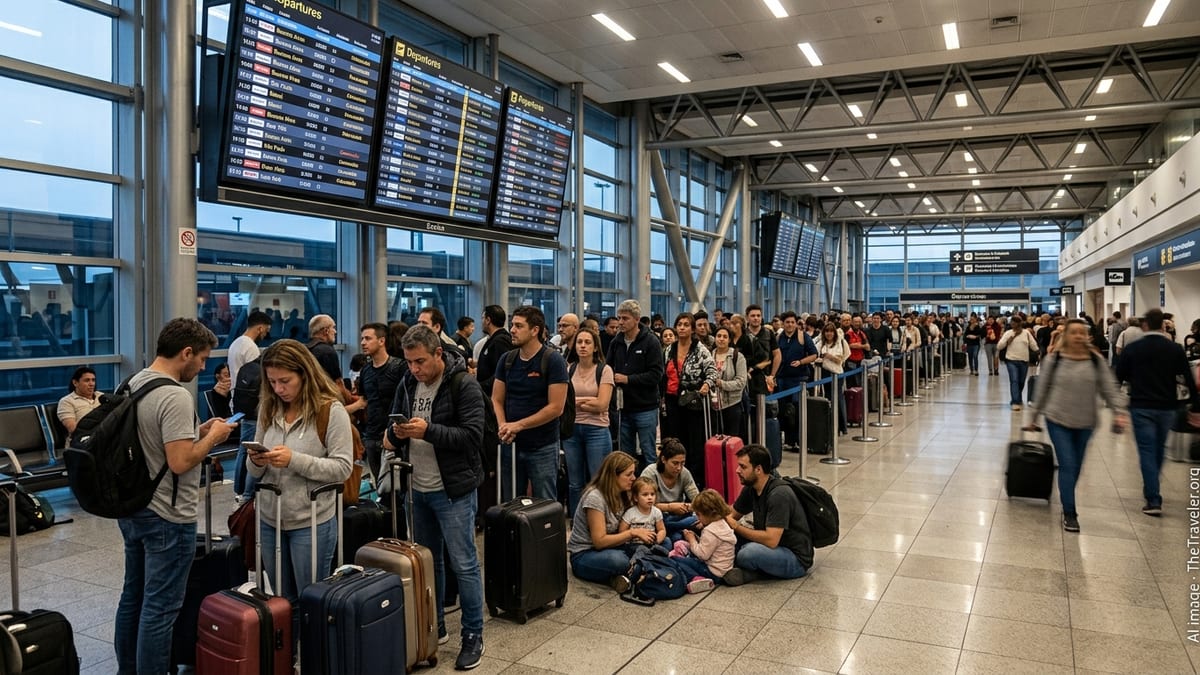
Disruptions Hit Ezeiza on South America–US Corridors
The latest operational picture at Ministro Pistarini International Airport shows a cluster of schedule disruptions affecting both regional and long haul services. Flight tracking boards for March 28 highlighted delays building across departures and arrivals to São Paulo Guarulhos, Miami International and New York JFK, alongside cancellations that removed several planned frequencies from the day’s schedule.
Publicly available information indicates that the impact was spread across low cost and full service carriers. Flybondi, which has expanded domestic and seasonal routes for the 2025–2026 summer period, appeared alongside major network airlines such as American, Copa and LATAM in the list of affected departures. Combined, these and other operators accounted for 19 delayed services and six outright cancellations tied to the Buenos Aires hub.
Operational statistics from recent months for airports such as Miami and São Paulo already show dense schedules for American, LATAM and Copa on links to South America, underscoring how even a small number of disruptions at a key hub like Ezeiza can quickly propagate across connecting banks. On March 28 those stresses were visible in rolling delays that pushed back departure times by more than an hour on some services and forced same day rebooking for passengers on cancelled flights.
While the specific triggers for each individual delay varied from flight to flight, the cumulative effect created a difficult travel day on air corridors that are central for leisure travelers, business passengers and diaspora traffic moving between the Southern Cone and major North American gateways.
Flybondi’s Performance Under Scrutiny Once Again
Low cost carrier Flybondi, which markets aggressively priced tickets on domestic Argentine routes and selected regional links, was among the airlines most closely watched by travelers during the disruptions. Previous coverage in Argentine media and online forums has frequently highlighted a pattern of schedule changes, airport switches and day of travel delays, placing the airline under particular scrutiny any time operations at Ezeiza tighten.
Reports compiled over recent seasons describe episodes in which Flybondi reprogrammed or suspended significant numbers of flights in response to regulatory requirements and foreign currency constraints, as well as individual cases where passengers experienced last minute cancellations or several hour delays. Those earlier disruptions have shaped passenger expectations, leading many to build in wide connection buffers or to avoid tight onward links when traveling with the carrier.
On March 28, Flybondi’s presence among the delayed and cancelled departures at Ezeiza fit within that broader narrative. Although the airline has been adding capacity from Argentine interior cities and marketing itself as a key player in the country’s deregulated market, operational reliability remains a central concern for travelers trying to connect through Buenos Aires toward São Paulo or onward to long haul flights operated by other airlines.
For passengers on affected services, the combination of low fares and higher schedule risk once again highlighted the trade offs inherent in relying on a low cost carrier in a market still adjusting to economic volatility, regulatory changes and infrastructure constraints.
American, Copa and LATAM See Knock-On Effects
Network carriers American Airlines, Copa Airlines and LATAM also appeared in the March 28 disruption tally, underscoring that operational challenges at Ezeiza are not limited to any one business model. Publicly accessible performance data for these carriers at Miami, JFK and São Paulo reveal that they handle large volumes of international traffic on South America routes, with American in particular operating tens of thousands of annual movements at Miami and LATAM anchoring a broad network at São Paulo Guarulhos.
Copa, which frequently transports Argentine passengers via its Panama City hub to North America and the Caribbean, has in recent months circulated schedule change and waiver information in connection with labor actions and other disruptions in Argentina. Those advisories outline rebooking options and conditions when flights are delayed beyond several hours or cancelled, illustrating how operational issues at Buenos Aires can ripple through to connecting itineraries far from the Southern Cone.
LATAM’s operations between São Paulo, Buenos Aires and North American gateways such as Miami and New York are also an important part of the regional long haul network. Any delay or cancellation on the Buenos Aires–São Paulo leg can threaten onward connections, especially during peak travel periods when alternative seats are scarce. Historical travel discussions from recent years recount cases where modest inbound delays at Ezeiza translated into missed overnight flights and unplanned hotel stays.
American Airlines, which links Buenos Aires with its hubs in the United States, has likewise been the subject of traveler reports describing rolling delays on certain dates, including long overnight disruptions on Ezeiza–Miami services. The March 28 pattern of delays and cancellations therefore landed in an environment where passengers have become increasingly attuned to monitoring flight status and contingency plans long before heading to the airport.
Travelers Face Tight Connections and Limited Back-Up Options
The practical consequences of 19 delayed and six cancelled flights in a single day are most acutely felt by travelers with connections on both sides of the Atlantic and within South America. Ezeiza’s location outside central Buenos Aires, combined with the need to clear immigration and security checks, means that even modest inbound delays can jeopardize same day departures.
Recent traveler accounts describe how a 60 to 90 minute delay on an inbound domestic or regional flight into Ezeiza can put pressure on international departures that typically require check in and security clearance well in advance. With limited frequency on some long haul routes and high load factors on Miami and JFK services, options to rebook onto later flights may be restricted, especially for economy class passengers traveling on the busiest days of the week.
The concentration of long haul departures in late afternoon and overnight banks adds to the challenge. If a disruption at Ezeiza leads to a missed connection for an evening departure to Miami or New York, passengers may be forced to wait an entire day for the next available service or to route through alternative hubs such as São Paulo or Panama City. In practice, this can turn what was intended as a single overnight journey into a multi day odyssey involving unplanned hotel costs and additional time off work.
The situation also highlights the risk for travelers who attempt tight cross airport connections between Ezeiza and Buenos Aires’ domestic focused Aeroparque. Past public discussions have repeatedly warned that road travel between the two airports can take an hour or more depending on traffic and demonstrations, meaning that even small schedule changes at Ministro Pistarini can cascade into missed flights across the city.
Planning Ahead in an Uncertain Operating Environment
The March 28 disruptions at Ministro Pistarini reinforce a broader lesson for passengers traveling through Argentina’s main international gateway. Publicly available advice from frequent travelers and consumer advocates emphasizes the value of building generous layovers, avoiding separate tickets on unrelated carriers when possible, and monitoring flight status closely in the 24 to 48 hours before departure.
For those using low cost airlines like Flybondi to position from interior Argentine cities to Ezeiza for long haul flights, experts in travel forums often recommend overnighting in Buenos Aires instead of same day connections. This reduces the risk that a domestic delay or cancellation will cause passengers to forfeit a costly intercontinental ticket on another carrier.
Passengers flying on American, Copa or LATAM are encouraged to familiarize themselves with each airline’s rebooking and waiver policies in case of long delays or cancellations. Recent schedule change advisories and customer guidance documents detail circumstances under which travelers can shift travel dates, reroute via different hubs or request refunds, all of which can be crucial when irregular operations affect high demand routes between Buenos Aires, São Paulo, Miami and JFK.
As Argentina continues to adjust to changing economic conditions and evolving aviation regulations, Ezeiza’s role as a critical link between South America and the United States ensures that any day of concentrated disruptions will resonate far beyond the airport perimeter. The March 28 experience serves as a reminder that flexibility, contingency planning and real time information are now essential parts of international travel through Buenos Aires.