

More news on this day
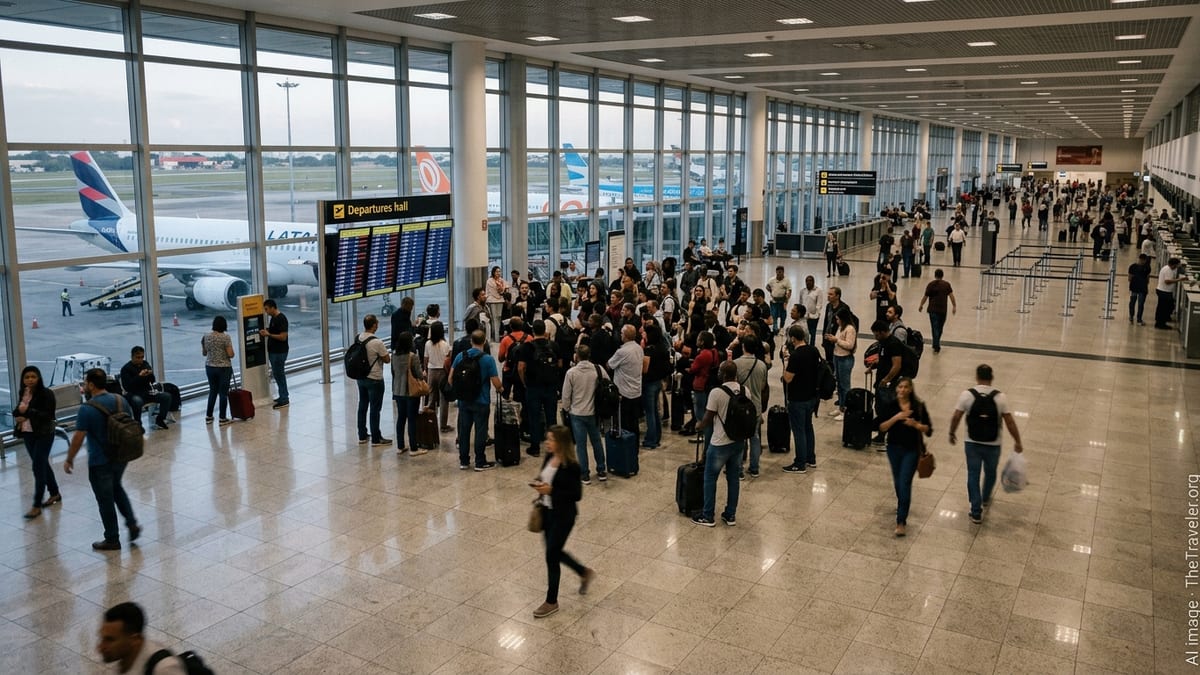
Travelers across Brazil and Argentina faced significant disruption as a wave of delays and cancellations involving LATAM, Gol and Aerolíneas Argentinas affected dozens of flights linking São Paulo, Rio de Janeiro, Buenos Aires and Córdoba, intensifying concerns about the region’s flight reliability at the height of the Southern Hemisphere travel season.
Get the latest news straight to your inbox!
Disruptions Ripple Across Major South American Hubs
Publicly available airport and flight-tracking data indicate that a cluster of 49 delays and 14 cancellations on services operated by LATAM, Gol and Aerolíneas Argentinas recently impacted operations across key South American hubs. The bulk of the problems were recorded on routes connecting São Paulo and Rio de Janeiro with Buenos Aires and Córdoba, corridors heavily used by both business travelers and tourists.
Across multiple days, flights on these carriers showed extended ground times, rolling departure pushes and last-minute cancellations. The disruptions affected both domestic Brazilian legs, such as São Paulo to Rio de Janeiro, and cross-border services between Brazil and Argentina, amplifying the impact on connecting passengers whose itineraries rely on tight transit windows.
The operational strain appears concentrated at the largest airports in the region, particularly São Paulo–Guarulhos, Rio de Janeiro–Galeão, Buenos Aires–Ezeiza and Aeroparque, along with Córdoba’s international airport. These gateways are central nodes for LATAM, Gol and Aerolíneas Argentinas networks, so even a modest number of problem flights can quickly cascade into missed connections and rebookings across South America and beyond.
While the combined figure of 63 affected flights represents a small fraction of the total daily schedule across these airports, the disruption is highly visible to travelers because it clusters on popular city-pair routes and peak-time departures. Online flight-status boards and social media posts show passengers contending with overnight waits, unexpected airport changes and reissued itineraries.
Operational Pressures Behind the Flight Irregularities
Recent company disclosures and industry analyses point to a mix of structural and short-term pressures weighing on airline operations in the region. LATAM has highlighted ongoing airport infrastructure works and broader industry challenges, such as aircraft and engine availability, as potential sources of schedule vulnerability. Similar issues affect other carriers that rely on the same congested hubs and maintenance ecosystems.
Weather volatility around São Paulo and Rio de Janeiro can also constrain takeoff and landing slots, triggering knock-on effects when aircraft and crews arrive late to their next rotations. When conditions tighten at multiple airports on the same day, airlines have limited flexibility to recover, especially on dense shuttle routes and popular cross-border links where aircraft utilization is already high.
In Argentina, recent industrial actions and negotiations across the aviation sector have periodically disrupted operations for several airlines. Although the latest cluster of delays and cancellations affecting LATAM, Gol and Aerolíneas Argentinas does not appear tied to a single publicized nationwide stoppage, it is unfolding in a context where staffing levels, rostering and contingency planning are under pressure.
Analysts note that many Latin American carriers are still fine-tuning schedules that were rebuilt after the pandemic slump and subsequent demand rebound. As airlines experiment with new frequencies and routes between Brazilian and Argentine cities, some are operating closer to the limits of crew and fleet availability, leaving little margin when unexpected disruptions arise.
Passenger Impact: Missed Connections, Extra Costs and Overnight Stays
For travelers, the operational statistics translate into long hours in terminals, missed tours and additional out-of-pocket costs. Reports shared on travel forums describe passengers facing sequences of delays that led to missed long-haul departures from São Paulo and Buenos Aires, forcing last-minute hotel bookings and changes to onward rail and bus journeys.
Some travelers on Aerolíneas Argentinas services between Buenos Aires and regional destinations have described sudden timetable changes and cancellations that left them seeking alternative flights, occasionally turning to LATAM or Gol to complete itineraries. Others on LATAM itineraries involving São Paulo connections report narrowly missing onward flights after short delays on inbound legs, followed by rebooking on departures 24 hours later.
Gol passengers on Brazil’s busy shuttle sectors between São Paulo and Rio de Janeiro have also reported extended ground holds and rolling delays, particularly at peak travel times. Even when flights eventually operate, arrival times several hours behind schedule can invalidate pre-booked ground transfers or same-day connections to domestic Argentine services.
Across all three airlines, disrupted travelers commonly highlight difficulties accessing timely information, with online status tools, call centers and airport desks sometimes providing conflicting updates. In several cases, passengers have noted arriving at the airport to find additional adjustments, including gate changes or aircraft swaps, that did not appear in earlier notifications.
How LATAM, Gol and Aerolíneas Argentinas Are Responding
According to published coverage and publicly available company materials, all three airlines continue to emphasize efforts to stabilize schedules and improve communication with passengers during irregular operations. LATAM and Gol have invested in digital tools that allow travelers to track flights, receive alerts and, in some cases, rebook disrupted journeys through apps and websites without visiting a service desk.
Aerolíneas Argentinas has promoted flexibility measures during recent periods of operational stress, including options to change travel dates in specific disruption windows. However, some customers describe inconsistencies between advertised policies and the experience at the airport, particularly during peak travel days when check-in and service counters are crowded.
Industry observers note that carriers in the region face trade-offs between maintaining high aircraft utilization to control costs and building in operational slack to recover from disruptions. Increasing buffer times between legs and adding spare aircraft or crews can reduce the risk of cascading delays, but such measures are expensive for airlines operating in highly competitive markets.
Some airports, including major hubs in São Paulo and Buenos Aires, are also working on infrastructure and airspace management improvements aimed at reducing congestion and smoothing traffic flows. As these projects advance, airlines may gain more flexibility to absorb short-term shocks without resorting to widespread cancellations or lengthy delays.
What Travelers Can Do When Flying Between Brazil and Argentina
Travel experts and consumer advocates frequently encourage passengers flying on regional routes between São Paulo, Rio de Janeiro, Buenos Aires and Córdoba to build extra time into itineraries, especially when connecting to long-haul flights. Allowing several hours between segments, or even overnighting in a hub city when possible, can reduce the risk that a single delayed sector will derail a complex trip.
Passengers are also advised to monitor their bookings closely in the days and hours before departure. Airline apps, airport departure boards and independent flight-tracking platforms can help travelers detect changes early, giving them a better chance of securing alternative options when a disruption appears likely.
Understanding local passenger rights frameworks in Brazil and Argentina is another useful step. While specific entitlements depend on the route, fare conditions and reason for disruption, regulations in both countries can provide for assistance, rerouting or reimbursement in certain circumstances when flights are heavily delayed or canceled.
As LATAM, Gol and Aerolíneas Argentinas work to refine operations in a challenging environment, travelers on key regional corridors are likely to continue facing periodic disruption. For now, careful planning, flexible schedules and close monitoring of flight information remain the best defenses against the kind of travel chaos that has recently rippled through São Paulo, Rio de Janeiro, Buenos Aires and Córdoba.