

More news on this day
Passengers traveling through Amman’s Queen Alia International Airport on Royal Jordanian Airlines faced unexpected disruption today, as a cluster of cancellations and rolling delays hit several major regional and long haul routes.
Get the latest news straight to your inbox!
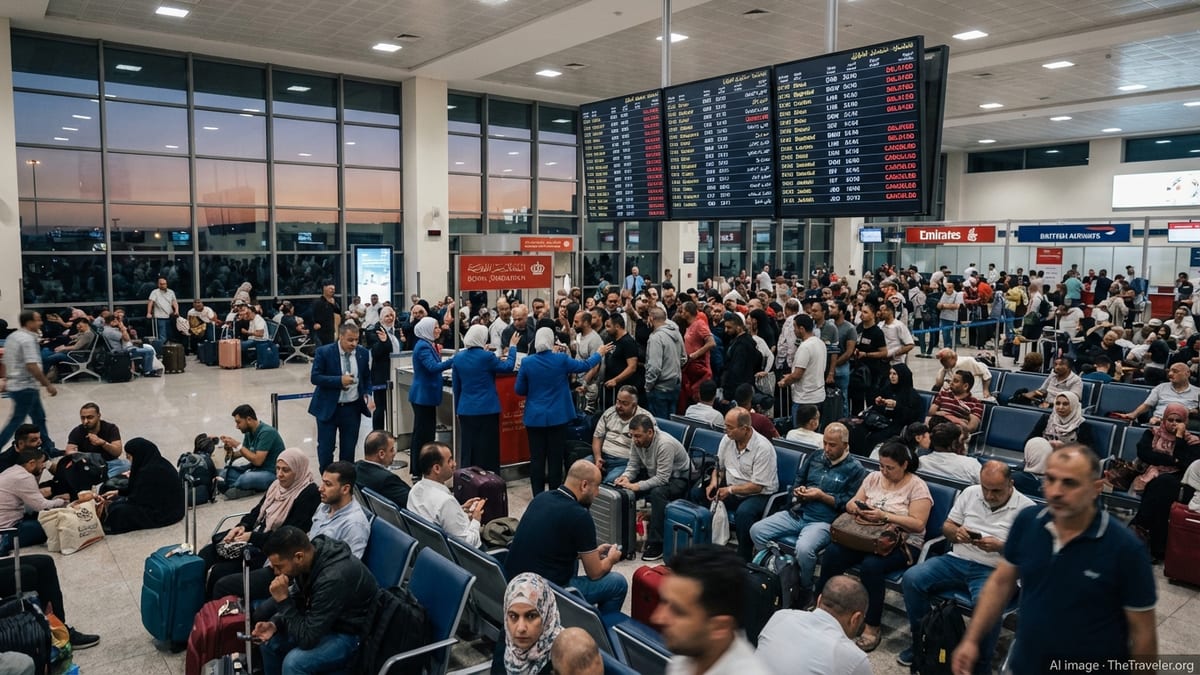
Cluster of Cancellations Disrupts Queen Alia Operations
Publicly available flight tracking data and airport information point to at least three same day Royal Jordanian cancellations linked to services through Queen Alia International Airport, affecting passengers on routes connecting Amman with nearby hubs and longer haul destinations. The cancellations were concentrated on busy regional corridors and European links, compounding wider operational strains already affecting air travel across the Middle East.
The affected network includes flights touching Amman, Beirut, Frankfurt, Amsterdam and Addis Ababa, highlighting how disruption on a relatively small number of departures can ripple across a carrier’s schedule. In several cases, aircraft that were due to operate onward segments after arriving in Amman did not depart as planned, leaving travelers facing airport overnights or unplanned rerouting via alternative hubs.
Reports compiled from aviation data platforms and regional media indicate that the cancellations came on a day when airports across the wider region were already contending with elevated levels of delay. Other Middle Eastern hubs have logged dozens of late running departures and additional cancellations, creating a challenging operating environment for airlines working to keep aircraft and crews in the right place at the right time.
Although the precise operational triggers behind each Royal Jordanian cancellation have not been detailed in public advisories, the pattern aligns with a broader picture of congestion, tight aircraft rotations and knock on effects from earlier delayed services. For travelers at Queen Alia International Airport, the impact has been immediate, with check in queues lengthening as passengers seek rebooking options and updated information.
Long Delays Hit Beirut, Frankfurt, Amsterdam and Addis Ababa Links
Alongside the outright cancellations, multiple Royal Jordanian departures and arrivals recorded extended delays on routes connecting Amman with Beirut, Frankfurt, Amsterdam and Addis Ababa. According to aggregated status boards and third party monitoring sites, some flights were pushed back by several hours, disrupting both point to point journeys and onward connections onto transatlantic and regional networks.
Beirut, already under close watch by airlines because of regional security and airspace constraints, has seen frequent schedule adjustments in recent weeks. The latest delays on the Amman to Beirut corridor added uncertainty for passengers relying on the short sector as a feeder to European and Gulf connections, particularly when misaligned with banked departure waves at Queen Alia International Airport.
Flights between Amman and major European hubs such as Frankfurt and Amsterdam have been equally sensitive to disruption. These services are often used by travelers linking Jordan with North America and northern Europe, meaning that even moderate delays can lead to missed long haul departures on partner carriers. Travel industry reporting shows that several European airlines have already thinned or rerouted parts of their Middle East operations this season, leaving fewer same day backup options when schedules unravel.
The Addis Ababa connection underscores how delays in Amman can reverberate across Africa, where hub and spoke networks depend on tight aircraft utilization. Late departures from Queen Alia can lead to off schedule arrivals into African capitals and altered crew duty patterns, amplifying disruption beyond the original point of delay.
Regional Airspace Strains Add to Operational Pressure
The travel turmoil at Queen Alia International Airport is unfolding against the backdrop of a Middle East aviation landscape marked by heightened volatility. Recent industry summaries and travel advisories describe a patchwork of flight bans, reroutes and temporary suspensions across parts of the region, particularly on routes touching conflict affected airspace and high risk areas.
Several European and low cost carriers have extended or expanded restrictions on flights to and from destinations such as Amman, Beirut, Tel Aviv and Gulf hubs in recent weeks, citing evolving security assessments and the need to avoid certain air corridors. While Jordan’s airspace remains open and commercial flights continue to operate, the need to carefully manage routings and build in additional contingency time has added complexity for all airlines serving the country.
Separate reporting on regional performance shows that other Middle East airports are also grappling with large numbers of delayed and canceled flights, involving carriers ranging from major Gulf airlines to regional operators. This broader strain on aircraft availability, crew scheduling and maintenance slots can indirectly affect carriers like Royal Jordanian when they rely on code share partners, shared ground handling resources or connecting passenger flows.
In this environment, a series of cancellations and multi hour delays at a hub such as Queen Alia International Airport reflects both local operational challenges and the cumulative effect of regional instability on network planning. For passengers, the distinction between local and regional causes matters less than the practical outcome of longer waits, missed events and disrupted itineraries.
Impact on Passengers and Travel Planning
The immediate consequence for travelers at Queen Alia International Airport has been a sharp rise in uncertainty. Passengers booked on the canceled Royal Jordanian flights have faced queues at service desks, tight availability on alternative departures and, in some cases, the need to reorganize hotel bookings, ground transport and visa arrangements at short notice.
Travel forums and social media posts describing the day’s events reference families attempting to rebook complex multi segment trips, business travelers scrambling to maintain meeting schedules and tourists worried about losing prepaid arrangements at their destinations. For those transiting through Amman from neighboring countries, missed connections have sometimes turned what was planned as a brief layover into an unplanned overnight stay.
Publicly available guidance from the airline outlines general procedures for handling delays and cancellations, including efforts to re accommodate affected passengers on the next available Royal Jordanian flight or, where applicable, to provide other options within the constraints of the carrier’s policies. However, when disruption is concentrated on multiple routes on the same day, seat availability on near term departures can quickly become limited.
Travel industry analysts note that such episodes can also affect traveler confidence, particularly among visitors who may be unfamiliar with the region’s operational environment. While most journeys through Queen Alia International Airport still proceed without incident, clusters of disruption can influence perceptions and prompt some travelers to build in longer buffers or favor routings that offer more redundancy.
What Travelers Through Amman Should Do Next
For travelers with upcoming Royal Jordanian bookings via Queen Alia International Airport, published advisories from airlines, airports and tourism bodies point to a few practical steps. The most consistent recommendation is to monitor flight status frequently using official airline channels and airport information boards, rather than relying solely on static booking confirmations issued days or weeks earlier.
Checking in early, particularly for peak time departures to hubs such as Beirut, Frankfurt, Amsterdam and Addis Ababa, can provide additional flexibility if last minute gate changes or retimings occur. Arriving well in advance of departure also increases the chances of securing rebooking options in the event of a same day cancellation, especially when multiple flights on the same route operate within a narrow time window.
Travel planners increasingly suggest building longer connection times into itineraries that route through Amman and other busy Middle East hubs, especially when onward segments involve long haul flights or destinations with limited daily frequencies. A connection time that once felt generous may now be considered the minimum prudent buffer when regional airspace conditions are fluid.
For now, commercial flights continue to operate in and out of Jordan, and Queen Alia International Airport remains an important gateway for business, leisure and transit traffic. The latest episode of cancellations and delays on Royal Jordanian’s network, however, underscores how quickly conditions can change and how important it has become for travelers to stay informed and adaptable when passing through the region’s interconnected hubs.