

More news on this day
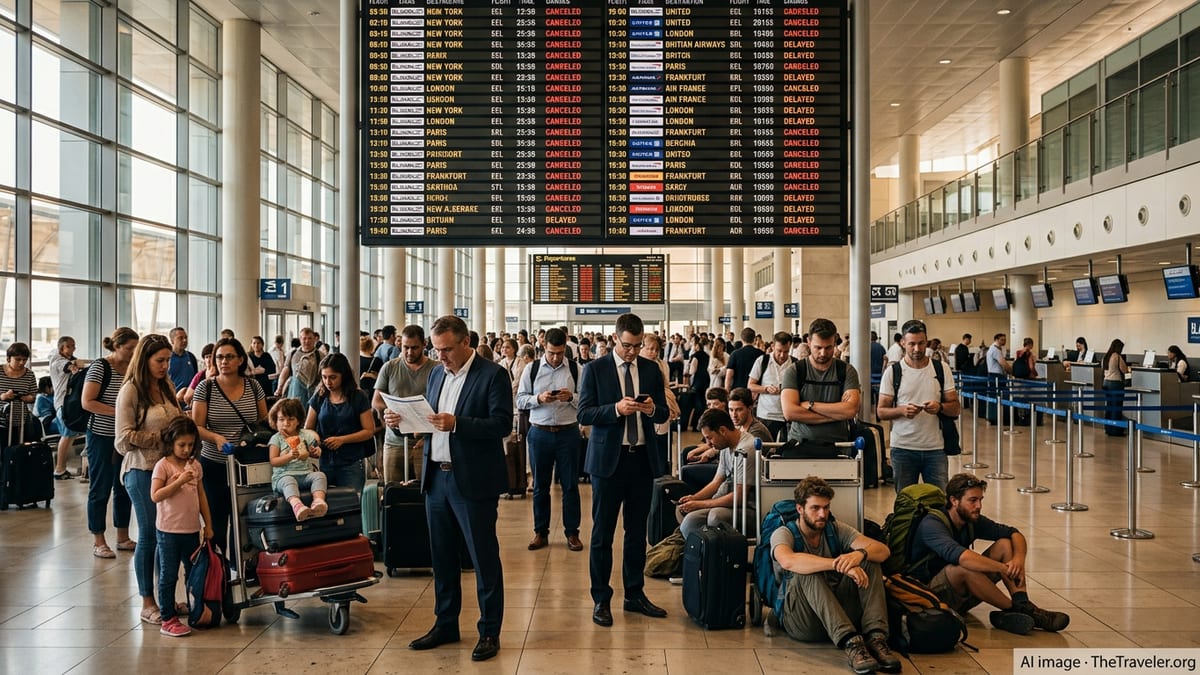
Dozens of travelers were left in limbo at Tel Aviv’s Ben Gurion Airport after a wave of disruption saw at least 16 flights delayed and five canceled, upending connections to major hubs across Europe, North America, and the Middle East and adding fresh strain to an already pressured regional air network.
Get the latest news straight to your inbox!
Cluster of Disruptions Hits Key Regional Gateway
The latest disruption at Ben Gurion comes at a time when the airport is handling rising passenger volumes following a volatile period for regional aviation. Publicly available traffic data show that the airport has recovered strongly since the sharp downturn in 2023, with tens of millions of passengers now passing through each year, reinforcing its role as one of the busiest international gateways in the Middle East.
On the day of the incident, the flight board for Tel Aviv reflected a dense pattern of knock-on delays and short-notice cancellations, with affected services spanning both short-haul and long-haul routes. The delayed flights outnumbered the cancellations by more than three to one, but even a handful of grounded departures was enough to leave travelers facing missed connections, extended layovers, and unplanned overnight stays.
Operational disruptions at a tightly scheduled hub can quickly cascade, particularly when crews, aircraft, and passengers are all relying on precise slot timings. At Ben Gurion, even a limited set of delays had visible effects across departure halls, security lanes, and check-in counters as passengers sought to rebook or reroute their journeys.
While the precise operational triggers for the 16 delays and five cancellations were not immediately detailed in official dispatches, recent months in the region have seen a mix of weather constraints, airspace restrictions, and security-related checks that can complicate flight planning and turnarounds.
Ripple Effects on Europe, North America, and Middle East Routes
Because Ben Gurion functions as both an origin point and a connecting gateway, schedule problems in Tel Aviv tend to echo across airline networks. The flights affected in the latest disruption were scheduled to connect with major hubs including cities in Western and Central Europe, key East Coast and transatlantic gateways in North America, and high-frequency Middle Eastern transfer points.
Travelers booked on one-stop itineraries via European hubs to destinations across the Atlantic were particularly vulnerable. When outbound departures from Tel Aviv left late or did not operate at all, passengers often lost their long-haul connections, requiring complex rebooking on alternative routes that were already busy at the start of the spring travel period.
For Middle Eastern connections, delays out of Ben Gurion can reduce the number of viable same-day transfer options, especially when onward services operate in tightly banked waves. Missed banks frequently mean that travelers must wait for the next departure cycle, which may not be until the following day on some routes.
Airlines serving Tel Aviv generally aim to preserve long-haul operations where possible, as those flights are high-value and harder to re-accommodate. As a result, same-day schedule disruptions often concentrate on short-haul services, which in turn affects regional connectivity and increases crowding on remaining flights.
Passenger Impact: Missed Connections and Overnight Stays
For passengers on the ground, the practical outcome of a relatively small number of cancellations and a larger cluster of delayed departures was a day of queueing, uncertainty, and improvised travel plans. Published accounts from recent disruptions at Ben Gurion indicate that even individual long delays can cause baggage complications, missed onward flights, and confusion about rebooking options, especially when several carriers are involved in a single itinerary.
Travelers connecting to North America via European hubs are particularly exposed to timing constraints, as many transatlantic departures leave in concentrated evening windows. A late-afternoon delay out of Tel Aviv can easily push a traveler past their last viable same-night connection, resulting in involuntary overnight stays and the need to shift onto flights the following day.
Families and older travelers may face additional strain when disruptions occur at short notice, especially if they need to navigate unfamiliar airports or language barriers while seeking assistance. Publicly available consumer guidance notes that passengers are encouraged to monitor airline apps and airport departure boards in real time, as gate changes and revised timings can be frequent when airport operations are under pressure.
Crowding at check-in counters and transfer desks can also slow down the process of finding alternatives. In previous episodes of widespread disruption at Ben Gurion, images and traveler reports have shown long lines forming quickly once multiple flights slip behind schedule at the same time.
Rights, Remedies, and What Stranded Flyers Can Do
The complex patchwork of passenger rights adds another layer of difficulty for those caught up in disruptions at Ben Gurion. For flights to or from the European Union, many itineraries fall under EU Regulation 261, which sets out compensation and care obligations for long delays, cancellations, and denied boarding in certain circumstances. Eligibility often depends on factors such as whether the operating carrier is EU-based, the departure or arrival point, and whether the cause of disruption is deemed within the airline’s control.
Travel from Tel Aviv to or via the United States is governed by a different framework. U.S. regulations do not mirror the European compensation regime but do require airlines to adhere to their own published customer service commitments. These policies typically address issues such as meal vouchers, hotel accommodation in the event of overnight delays, and rebooking on the next available flight, though the specifics vary by carrier and ticket type.
Consumer advocates often recommend that affected passengers document the timing and nature of any disruption, keep boarding passes and receipts, and seek written confirmation of the reason for delay or cancellation where available. This information can prove useful when pursuing reimbursement, travel insurance claims, or complaints via airline customer relations teams.
Travel insurance policies that include trip interruption coverage may also provide an additional layer of protection, although coverage limits and conditions differ widely. Travelers are frequently advised to review policy language around missed connections, weather-related disruptions, and security incidents before departure.
Broader Strains on Israel’s Air Travel Network
The latest problems at Ben Gurion highlight how sensitive Israel’s primary gateway remains to regional volatility and operational shocks. Recent years have already seen periods of suspended service by foreign airlines, temporary flight bans, and missile-related incidents affecting airspace confidence. During past crises, a significant share of scheduled flights at the airport have been delayed or canceled in compressed timeframes, underlining the fragility of international links when conditions deteriorate.
Despite those challenges, traffic statistics from the Israel Airports Authority show that Ben Gurion has remained a critical hub for both outbound and inbound travel, with passenger numbers rebounding as carriers gradually restore routes and capacity. The airport’s importance is amplified by Israel’s limited number of large international gateways and by its role as the primary link between the country and distant markets in North America and Asia.
For airlines, maintaining a stable schedule at Tel Aviv requires continuous assessment of security, airspace availability, and demand patterns, especially during peak travel seasons. When irregular operations do occur, the combination of high load factors and limited spare capacity can make it more difficult to absorb stranded passengers promptly.
For passengers planning trips through Ben Gurion in the coming months, travel specialists often emphasize practical steps such as allowing longer connection times, favoring through-tickets on a single carrier or alliance, and closely monitoring flight status in the 24 hours before departure. While no amount of planning can eliminate the risk of disruption, travelers who build more flexibility into their itineraries may be better positioned to navigate the kind of cascading delays and cancellations seen in this most recent episode.