

More news on this day
Travelers at Des Moines International Airport faced mounting disruption on April 2 as publicly available tracking data showed eight flight cancellations and 25 delays, with regional operators SkyWest Airlines, PSA Airlines and Allegiant Air contributing to schedule problems on routes linking Iowa to Chicago, Dallas and several other U.S. cities.
Get the latest news straight to your inbox!
Regional Carriers Drive a Spate of Cancellations
Operational data from flight-tracking and airport status platforms indicates that a cluster of regional carriers played an outsized role in the disruption at Des Moines International Airport on Thursday. SkyWest Airlines, PSA Airlines and Allegiant Air all appeared among the affected operators, with their flights either scrubbed entirely or significantly delayed as the day’s schedule unfolded.
The eight cancellations at Des Moines were concentrated among regional connections that typically feed major airline networks at hubs such as Chicago and Dallas. These flights are often marketed under the brands of larger carriers but operated by regional partners, which leaves passengers facing complex rebooking scenarios when irregular operations occur. The cancellations reduced options for morning and midday departures, limiting same day alternatives for many travelers.
While the precise causes of each cancellation were not immediately clear, publicly available industry data shows that regional operators have faced persistent reliability challenges in recent years, driven by tight crew availability, aircraft utilization pressures and weather-related constraints. Historical statistics compiled by federal transportation agencies and independent analysts show that SkyWest, PSA and Allegiant collectively carry a higher share of late or canceled flights than some mainline peers, particularly during periods of broader system stress.
For Des Moines, which relies heavily on regional aircraft to maintain connectivity with major hubs, even a single carrier’s operational difficulties can cascade quickly. With three such operators posting disrupted flights on the same day, the airport’s modest schedule left limited room to absorb the shock without leaving travelers stranded or substantially delayed.
Ripple Effects Reach Chicago, Dallas and Beyond
The impact of the Des Moines disruptions extended well beyond Iowa, affecting passengers with connections across the United States. Flight-status boards for the day showed several of the cancellations and delays tied to services bound for Chicago and Dallas, two of the most important hubs for travelers originating in central Iowa. Those hubs serve as gateways to dozens of onward destinations, so interruptions on feeder routes created missed connections and last minute itinerary changes.
According to published coverage of nationwide air traffic conditions for April 2, Chicago O’Hare and Chicago Midway were already dealing with a mix of low clouds and air traffic control programs that slowed traffic flows into the region. Similar constraints were reported for Dallas-area airports and other major hubs, where weather and congestion combined to reduce operating capacity. Those systemwide pressures left limited slack to accommodate late-arriving regional flights from cities like Des Moines.
The combination of local cancellations at Des Moines and ground delay programs at major hubs produced a classic ripple pattern: outbound flights departed late or not at all, aircraft arrived in hub cities behind schedule, and onward legs departed with open seats that connecting passengers could not reach in time. Travelers trying to reach destinations such as the East Coast, mountain states and West Coast via Chicago or Dallas found themselves rebooked on later departures or, in some cases, pushed to travel on Friday instead.
As the day progressed, flight tracking platforms indicated that knock-on delays continued into the afternoon and evening banks at several large airports. Even when weather improved or traffic restrictions were eased, residual congestion from earlier disruptions kept on time performance below normal levels for much of the domestic network.
Weather, Staffing and Infrastructure Add to the Strain
Conditions at Des Moines on April 2 added further complexity for airlines already operating near capacity. Local weather reports for the airport described moderate rain and low clouds in the morning, conditions that can reduce arrival and departure rates and require greater spacing between aircraft. Although such conditions are routine, they can quickly lead to delays when combined with tight turn times and limited spare aircraft.
Across the national air system, the Federal Aviation Administration’s daily operations plan highlighted a series of weather impacts, runway construction projects and air traffic flow initiatives affecting multiple major hubs on Thursday. Airports including Chicago O’Hare, Chicago Midway, Dallas, San Francisco and several East Coast fields were all listed as facing potential or active delay programs. These measures, while designed to maintain safety and orderly flows, inevitably translate into longer taxi times, airborne holding and gate shortages.
Industry analysts have also pointed to ongoing staffing and fleet pressures among regional airlines, particularly for carriers like SkyWest and PSA that operate under capacity purchase agreements for multiple mainline brands. Pilot shortages, competition for crew, and high utilization of smaller regional jets all reduce flexibility when weather or maintenance issues arise. Allegiant’s point to point leisure model, with fewer daily frequencies on many routes, similarly leaves travelers with limited backup options when a single flight cancels.
At Des Moines, these broader structural challenges intersect with an airport that is in the midst of a long term modernization program. Publicly available planning documents describe a new terminal project slated to expand gate capacity and improve deicing infrastructure in the coming years. Until that work is completed and fully integrated into operations, the airport continues to operate with relatively constrained space during peak periods, which can magnify the effect of even minor disruptions.
Travelers Confront Long Waits and Complex Rebooking
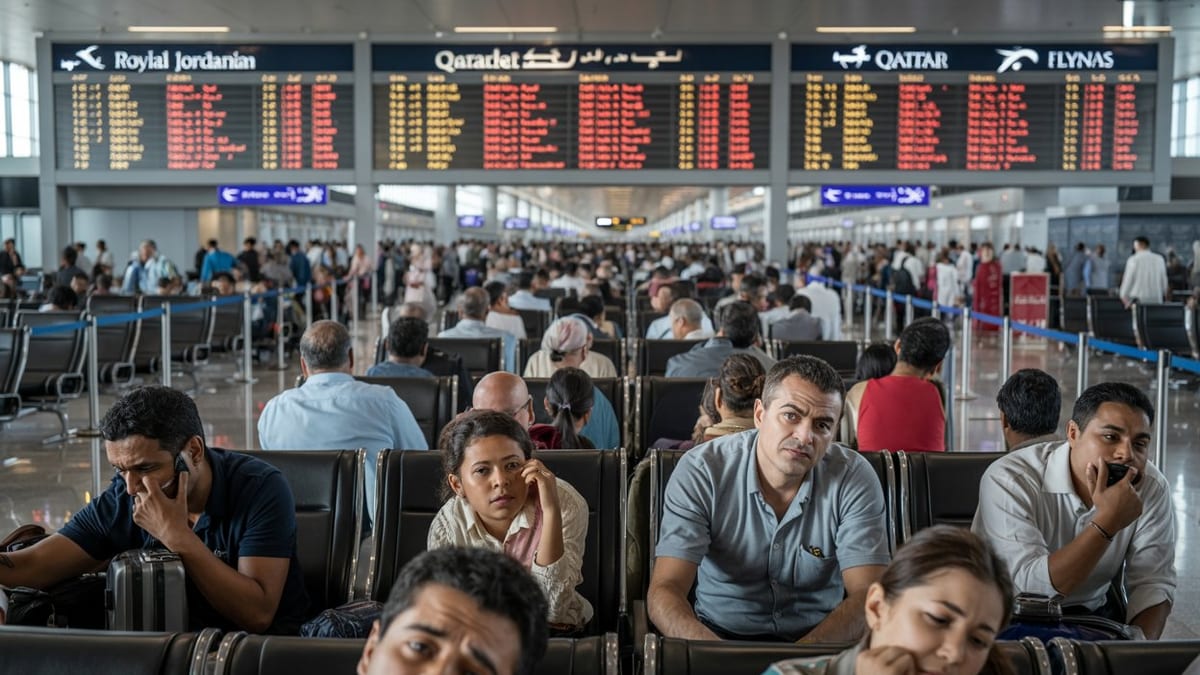
For passengers, Thursday’s figures of eight cancellations and 25 delays translated into long waits at departure gates and customer service counters. With many disrupted flights involving regional operators on behalf of larger airlines, travelers were often required to navigate multiple channels for assistance, from mobile apps and websites to call centers and in airport desks.
According to publicly available consumer guidance from transportation agencies and advocacy groups, passengers affected by cancellations or significant delays must typically rely on airline policies for rebooking and meal or hotel vouchers, since U.S. regulations provide limited mandated compensation in most weather or air traffic related cases. When irregular operations stem from controllable factors such as maintenance or crew scheduling, carriers sometimes offer additional accommodations, but the process can vary widely by airline and situation.
At Des Moines, where many routes operate no more than once or twice daily, same day recovery options were limited. Travelers seeking to reach Chicago or Dallas for onward international connections, business appointments or events often faced difficult choices between lengthy rebookings and abandoning trips altogether. Those able to secure seats to alternate hubs such as Denver, Minneapolis or Phoenix sometimes added hours and extra connections to their journeys.
Travel advisers recommend that passengers departing smaller markets in periods of unsettled weather build extra time into their itineraries, select earlier flights in the day when possible, and monitor airport and airline status pages closely. The events of April 2 at Des Moines illustrate how quickly routine rain and regional carrier constraints can snowball into a complicated travel day with nationwide implications.
What Today’s Disruptions Signal for Spring Travel
The difficulties at Des Moines International Airport arrived as airlines enter one of the busiest spring travel periods in recent years, with demand for domestic and leisure trips continuing to rebound. Industry data for the last two years shows that carriers such as Allegiant, SkyWest and PSA are playing a central role in restoring connectivity between smaller cities and major hubs, but that expansion has come with reliability challenges.
Market analysis of 2022 and 2023 performance indicates that Allegiant has posted some of the highest rates of delayed departures among U.S. carriers, while SkyWest and PSA have also faced above average disruption levels during peak travel waves. Analysts note that these patterns are not uniform and can improve as carriers adjust schedules, add staff and refine their operations, but the trends suggest that regional and low cost operators remain more vulnerable when the national airspace system is under strain.
For Des Moines area travelers planning spring and summer trips, today’s disruptions offer a reminder to review itineraries with an eye toward connection times, hub choices and flexibility. Flights connecting through large, weather sensitive hubs such as Chicago, Dallas and New York may require additional buffer time, especially when operated by regional affiliates. Some passengers may also consider nonstop options where available, even at slightly higher fares, to reduce exposure to cascading delays.
As the new terminal and infrastructure upgrades at Des Moines advance over the next several years, local officials and industry observers expect the airport’s resilience to improve. Until then, the events of April 2 underscore how a relatively small number of cancellations and delays concentrated among a handful of carriers can ripple outward, affecting travel plans from the Midwest to both coasts in a single day.