

More news on this day
Travellers moving through Kelowna, Vancouver, Calgary and Toronto on Friday, April 3 faced another bout of travel turmoil, as a cluster of cancellations and a dozen delays involving WestJet Encore, Air Canada and Jazz Airlines rippled across some of Canada’s busiest domestic corridors.
Get the latest news straight to your inbox!
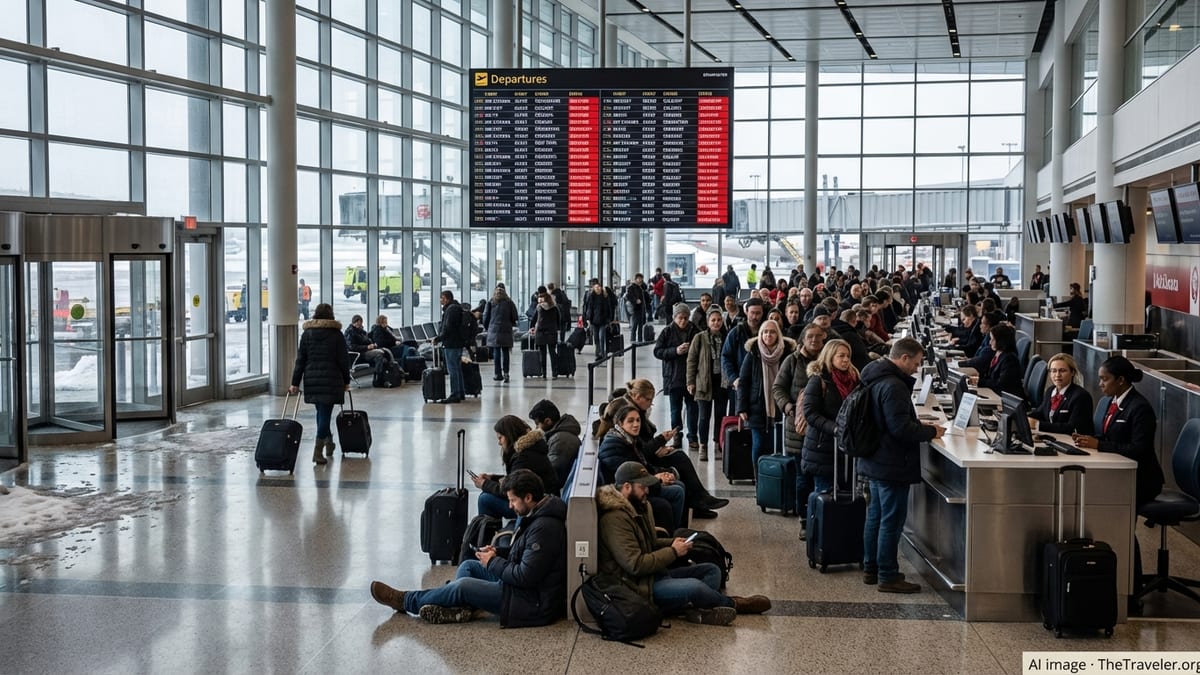
Five Cancellations and a Dozen Delays Ripple Across Key Routes
Publicly available flight-tracking boards and schedule data for April 3 indicate that at least five flights operated by or on behalf of WestJet Encore, Air Canada and Jazz were cancelled across the four cities, with a further 12 departures and arrivals subject to varying degrees of delay. The disruptions primarily affected heavily travelled links between the regional hub of Kelowna and the larger gateways of Vancouver and Calgary, as well as trunk traffic connecting Calgary and Toronto.
Among the standout cancellations was WestJet flight WS595 between the Toronto region and Calgary, listed as cancelled in updated status records for Friday, leaving passengers with the task of seeking rebooking options or refunds on short notice. Other cancellations, reflected in day-of-operations feeds and historical status logs, were concentrated on short-haul regional services typically flown by smaller aircraft under the WestJet Encore and Air Canada Express banners, including Jazz-operated flights serving Kelowna, Calgary and Vancouver.
Delays ranged from modest schedule slips of 20 to 40 minutes on some Vancouver to Calgary and Vancouver to Kelowna services to more extended hold-ups on certain eastbound departures out of Toronto and Calgary. While such delays are not unusual in isolation, the clustering of 12 affected flights across a single day added fresh strain for passengers at airports already dealing with tight connection windows and busy school break travel patterns.
The latest disruption comes at a time when data aggregators tracking airline performance across Western Canada have highlighted elevated delay rates on some routes linking Kelowna, Vancouver and Calgary, with average lateness on selected WestJet and Air Canada services in recent months measured in the range of 20 to 30 minutes. That backdrop has heightened traveller sensitivity to even small schedule shifts on these critical domestic links.
Operational Pressures for WestJet Encore and Regional Networks
For WestJet Encore, which operates turboprop regional flights feeding into WestJet’s mainline hubs, the day’s cancellations and delays underscore the tight margins under which regional carriers tend to operate. Flight-status archives and schedule tools show that several Kelowna and smaller-city services have already seen adjustments in recent seasons, including reduced frequency or removal of certain point-to-point routes in favour of funneling traffic through larger hubs such as Calgary.
Industry commentary and public scheduling changes over the past year suggest a broader recalibration of WestJet’s regional footprint, with capacity pulled from some secondary markets and retimed in others. The cancellation of specific Encore-operated segments on April 3 appears to fit into a pattern where regional flying is particularly vulnerable when aircraft, crew or weather-related constraints ripple through the system.
The Canadian Transportation Agency’s recent penalties against WestJet for earlier delay and cancellation handling have also kept the carrier’s operational reliability in the public eye. While the April 3 issues involve different flights and circumstances, that regulatory context has reinforced consumer expectations that regional disruptions should be managed with clear communication, timely rebooking options and appropriate compensation where rules require it.
For passengers in Kelowna, whose direct connections to major hubs are vital for both leisure and business travel, any cancellation or extended delay on limited-frequency routes can translate into missed same-day connections to transcontinental or international flights, raising the stakes of even a single regional aircraft being held at the gate or removed from service.
Air Canada and Jazz Grapple With Congested Hubs
Air Canada and its regional partner Jazz also featured prominently in the day’s irregular operations picture. Network data and recent performance analyses point to ongoing punctuality challenges for the country’s largest airline at Toronto Pearson and Vancouver International, where congestion, weather and air traffic control constraints can quickly cascade into rolling delays on short-haul sectors.
Recent strike-related disruptions at Air Canada in 2025, while now resolved, left lasting impressions among travellers and pushed the carrier to emphasize schedule resiliency and recovery planning. Publicly available analyses of Air Canada’s 2026 performance show a system completion rate above 97 percent, but also underline that the remaining fraction of flights subject to cancellation or long delay tends to cluster at the busiest hubs and during adverse weather events.
Jazz, operating as Air Canada Express on many regional routes in Western Canada, plays a pivotal role in maintaining connectivity from centres like Kelowna into the wider Air Canada network. When mainline aircraft at Toronto or Vancouver are delayed, flows of inbound and outbound passengers for Jazz-operated flights can be disrupted, creating knock-on effects such as tighter connection windows, gate changes and aircraft swaps that were in evidence on parts of the schedule on April 3.
Observers note that even when only a handful of flights are cancelled, the impact can be magnified across hub operations if those flights were scheduled to feed multiple onward connections. This dynamic was visible in the way the five recorded cancellations and 12 delays affected both point-to-point travellers and those with multi-leg itineraries spanning Kelowna, Vancouver, Calgary and Toronto.
Weather, Airspace Constraints and a Year of Disruptions
The April 3 disruptions unfolded against a wider weather and infrastructure backdrop that has challenged Canadian aviation throughout the first months of 2026. A major winter storm in late January brought record snowfall to Toronto Pearson and triggered hundreds of cancellations, while episodes of heavy snow and freezing rain across the Prairies and British Columbia have sporadically restricted operations at Calgary and Vancouver. Airlines, including WestJet and Air Canada, have periodically pre-emptively thinned schedules at these hubs to reduce the risk of long on-the-day delays.
In Western Canada, terrain-influenced weather patterns and variable visibility in mountain passes can complicate approaches into cities such as Kelowna and contribute to operational caution that results in delayed or diverted flights. Travellers and aviation enthusiasts sharing experiences from recent weeks have highlighted occasions where air traffic control measures and de-icing bottlenecks at Calgary and Vancouver added to weather-related challenges, occasionally leading to hours-long waits on aircraft or at departure gates.
Airlines have also been dealing with the lingering effects of high demand and constrained resources as travel volumes remain strong. Recruiting and training pilots, cabin crew and ground staff, along with ensuring sufficient spare aircraft to cover unexpected maintenance, all take time. When several of these factors intersect with poor weather or congested airspace, the outcome can resemble the pattern seen on April 3: a relatively small number of outright cancellations, but an outsized number of delayed flights and disrupted journeys.
Regulatory attention on passenger rights has increased in parallel. The enforcement action directed at WestJet in March over earlier disruptions, and prominent public discussion of compensation and care obligations under Canada’s Air Passenger Protection Regulations, have made operational choices more visible to travellers who are now quicker to document and share their experiences when delays mount.
What Passengers Can Do When Disruption Hits
Consumer guidance from government agencies and passenger advocacy groups emphasizes several practical steps for travellers facing situations like those seen on April 3. The most consistent advice is to monitor real-time flight status through airline channels and airport boards before leaving for the airport, since same-day changes and rolling delays are now more common on busy routes between Kelowna, Vancouver, Calgary and Toronto.
Advisory materials also highlight the importance of understanding the distinction between disruptions within an airline’s control, such as crew or maintenance-related issues, and those tied to weather or air traffic control restrictions. This difference can influence whether passengers are entitled to compensation, meal vouchers or hotel coverage, or whether the airline is only required to provide rebooking on the next available flight.
For those with onward connections, travel experts recommend planning slightly longer layovers at hubs like Calgary and Toronto during seasons when storms or heavy traffic are more likely, accepting some extra time on the ground in exchange for a greater buffer against delays. They also note that travel insurance with trip interruption and delay coverage can help offset costs related to accommodation and alternative transport when irregular operations stretch beyond a few hours.
As WestJet Encore, Air Canada and Jazz work through yet another day of schedule challenges, the pattern emerging across Canadian skies in early 2026 suggests that occasional clusters of cancellations and delays may remain an unwelcome feature of air travel. For passengers caught in the middle, clear information, realistic expectations and an understanding of their rights remain the best tools for navigating the turmoil.