

More news on this day
Passengers travelling through London Gatwick on Saturday, March 28 are experiencing another day of disruption, as live data shows a steady stream of delayed departures and a cluster of cancellations affecting both short haul and long haul services.
Get the latest news straight to your inbox!
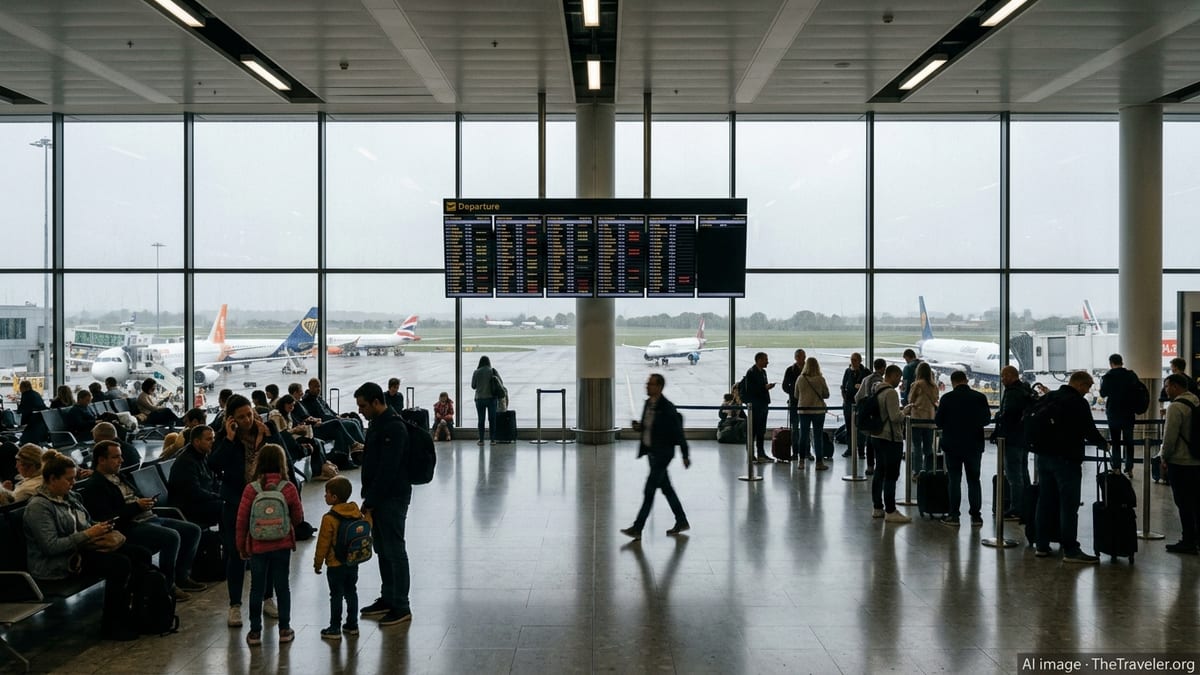
Morning peak sees clusters of delays and a handful of cancellations
By mid-morning on March 28, publicly available flight tracking boards for London Gatwick showed a mixed picture, with a high volume of scheduled departures operating but many leaving later than planned. A number of early services within the first wave from around 06:00 to 09:00 departed with delays typically ranging from 30 minutes to just over an hour, particularly on popular leisure routes to European hubs and Mediterranean destinations.
Several flights in this morning peak were listed as cancelled, affecting routes to mainland Europe and at least one longer sector. The affected services were spread across multiple carriers, rather than concentrated in a single airline, suggesting a combination of operational factors rather than a single point of failure. Passengers booked on those flights were being moved onto later services where possible, contributing to heavier loads on subsequent departures.
Although the total number of cancellations at this stage of the day remained relatively limited compared with major weather or air traffic control incidents seen in previous years, the pattern of rolling delays created knock-on disruption. Longer queues at check in and security in both North and South Terminals were reported by travellers sharing updates from the terminal concourses, with some passengers warning others to arrive earlier than usual.
Performance figures published by Gatwick for recent months indicate that, in typical winter and early spring conditions, the airport aims for at least three quarters of flights to depart on time. However, historical data has also shown Gatwick among the UK airports with the longest average delays in recent years, meaning that even modest day-to-day disruption can quickly be felt by passengers.
Weather and air traffic conditions contribute to slower operations
While there has been no single headline incident at Gatwick on March 28, broader operational conditions appear to be playing a role in today’s sluggish performance. Forecasts for southeast England indicated variable cloud, showers in parts of the region, and occasionally gusty winds. Although far from extreme, such conditions can still prompt slightly increased spacing between aircraft movements and more cautious handling of take offs and landings.
Gatwick’s status as a major international hub operating largely on a single runway makes it particularly sensitive to even minor constraints. Aviation analysts have repeatedly noted that when arrival or departure rates are trimmed for safety or capacity reasons, backlogs can form quickly, particularly during the morning and evening peaks. Today’s pattern of creeping delays appears consistent with that kind of gradual capacity squeeze rather than a sudden shutdown.
In the wider European airspace network, ongoing staff shortages and occasional industrial action at air navigation and ground handling providers continue to exert pressure on the schedule. Even when no strike is active on a given day, reduced staffing levels can require flow restrictions in busy sectors, feeding through into slot delays at departure airports including Gatwick. Flights bound for congested hubs on the continent are often the first to be held at the gate to ensure they meet revised slot times.
For many passengers, these intertwined factors translate into aircraft stuck on stands awaiting clearance, longer taxi times and revised boarding calls. While the disruption on March 28 is not on the scale of previous high-impact events such as winter storms or large-scale air traffic outages, it underlines how sensitive Gatwick’s schedule remains to relatively small operational stresses.
Impact on airlines, routes and passenger experience
Today’s delays and cancellations at London Gatwick are affecting a cross section of airlines, from low cost carriers operating high frequency European routes to full service airlines flying long haul services to the Americas, Africa and the Middle East. Live departure screens highlight a particular concentration of delayed flights on short haul leisure routes, where tight turnarounds and dense scheduling leave limited room to recover from earlier slippages.
For passengers, the most visible impacts are extended waits at departure gates, frequent changes to estimated departure times, and last minute gate switches. Families heading out on Easter season holidays and weekend city breaks have been posting images of crowded gate areas and lengthy boarding lines, with some travellers describing waits of more than two hours from original boarding time to take off on certain services.
Inbound disruption is also evident. A number of arriving flights have been posted as significantly delayed, in some cases due to late departures from origin airports where separate weather or staffing issues are in play. These late arrivals in turn affect outbound punctuality, because aircraft scheduled to turn around quickly for return legs cannot board the next set of passengers until cleaning, catering and safety checks are complete.
While the overall number of outright cancellations remains comparatively modest so far this Saturday, each cancelled service displaces hundreds of travellers. Seats on alternative flights later in the day can be limited, particularly on popular leisure routes, forcing some passengers to accept overnight rebookings or routings via other airports in the London system, such as Heathrow or Luton, where space is available.
What travellers through Gatwick today should expect
With delays already evident from the early morning wave and some cancellations recorded by late morning, the rest of March 28 is likely to remain challenging for those passing through Gatwick. Even if weather and air traffic conditions stabilise in the afternoon, the accumulated knock on effects of earlier disruption may continue to push back departure times for part of the day.
Travellers with flights later on Saturday are being advised by airlines and travel agents, via public statements and customer emails, to monitor their flight status closely and allow extra time at the airport. Many carriers encourage passengers to use apps and digital boarding passes where possible, both to receive real time updates and to reduce the time spent queuing at traditional check in desks.
Passengers already inside the terminals are making use of the seating areas, food outlets and retail spaces to pass the time during extended waits. Some are reporting that restaurants and cafes are busier than usual at off peak times as delayed travellers look for somewhere to sit and charge devices while watching departure boards for further changes.
Travellers with tight onward connections, prebooked transfers or time sensitive engagements at their destination are likely to feel the most acute impact. For them, even a seemingly modest delay of 45 minutes can mean missed trains, coaches or events on arrival. Travel insurers and consumer groups routinely recommend building additional slack into itineraries involving Gatwick, given its historically high average delay figures and the risk of unpredictable day-of-travel disruption.
Broader context: Gatwick’s ongoing punctuality challenges
Today’s difficulties come against a backdrop of wider concerns about Gatwick’s reliability. Official statistics for recent years have highlighted the airport as one of the least punctual in the UK, with average departure delays measured in the tens of minutes. Industry observers point to a combination of ultra-dense scheduling, the single-runway layout and the airport’s role as a base for several high-growth low cost carriers as contributing factors.
Recent performance reports published by Gatwick show efforts to improve resilience, including modest gains in on time departure rates during some months and infrastructure projects aimed at smoothing passenger flows through security and boarding. However, the experience on March 28 illustrates that incremental improvements can still be overwhelmed on busy days when multiple small pressures coincide.
For airlines, sustained punctuality issues translate into higher operating costs, more complex crew and aircraft rotations, and reduced customer satisfaction. For passengers, they often mean missed connections, lost holiday time and increased stress around air travel. Travel trade bodies continue to call for coordinated action between airports, airlines, air traffic providers and government to address structural bottlenecks and reinforce the resilience of the UK’s aviation network, with Gatwick frequently cited as a key test case.
As Saturday, March 28 progresses, the situation at Gatwick will be closely watched by travellers, airlines and analysts alike to see whether the current disruption eases into the evening or develops into a more prolonged episode of delays and cancellations across the rest of the weekend.