

More news on this day
Spring travelers passing through Austin-Bergstrom International Airport on April 6 are facing another day of turbulence on the ground, as regional and national disruption prompts Spirit Airlines and Delta Air Lines to suspend several flights and stack up delays on key routes linking Central Texas with Albuquerque, Atlanta, Nashville, Baltimore, Charlotte and additional hubs.
Get the latest news straight to your inbox!
Three Key Flights Pulled as Weather Strains National Network
Publicly available aviation data and airline schedule trackers for April 6 indicate that at least three Spirit and Delta departures involving Austin-Bergstrom International Airport have been suspended amid a wider wave of U.S. delays and cancellations tied to spring storms and associated air traffic control programs. While most flights at Austin are still operating, specific rotations touching cities such as Albuquerque, Atlanta and Nashville have been taken off the board, shrinking options for travelers who were relying on already limited nonstop links.
Data compiled by travel industry outlets for the early April holiday period show that storms across the Plains and Central United States have pushed airlines and airports into recovery mode, with hundreds of cancellations and thousands of delays logged nationwide over April 5 and April 6. Those same summaries list Austin among the affected airports, with dozens of delayed departures and a smaller cluster of outright cancellations as carriers work through aircraft and crew imbalances created by earlier disruptions in Dallas, Chicago, Detroit, Phoenix and other major hubs.
Spirit Airlines, which has built a network of point-to-point routes serving leisure and price-sensitive travelers, appears to have suspended at least one Austin rotation touching the Mid-Atlantic and one linking into its broader East Coast pattern, affecting connectivity for passengers heading toward Baltimore and other cities. Delta, heavily exposed to storm-related congestion at its Atlanta megahub, has also withdrawn at least one Austin-linked sector while grappling with rolling ground delay programs and aircraft repositioning.
Flight-status boards show the direct impact in Austin as a modest number of cancellations relative to an otherwise busy schedule, but the knock-on effect for passengers has been significant. With three flights removed and multiple additional departures delayed well beyond advertised times, same-day rebooking options have tightened, particularly for those needing to reach connecting hubs in Atlanta or secondary destinations such as Albuquerque and Nashville.
Major Hubs Ripple Out to Austin, Baltimore and Charlotte
The difficulties at Austin-Bergstrom are closely tied to mounting strain at several major hubs that sit at the center of Spirit and Delta’s networks. Recent travel coverage for the long Easter weekend highlighted heavy operational pressure at Dallas-Fort Worth and other large airports, where storms and air traffic management initiatives produced hundreds of cancellations and more than three thousand delays on April 5 alone. That wave of disruption has flowed into April 6 as aircraft and crews end up out of position across the system.
Atlanta’s Hartsfield-Jackson International Airport, Delta’s primary connecting hub, has been a particular pinch point. Public delay statistics for the U.S. market on Easter Monday show Delta among the carriers with the highest number of affected flights, with many of those delays concentrated around Atlanta and other Southeastern gateways. Because so many Austin passengers rely on an Atlanta connection to reach destinations across the East Coast and Midwest, even modest schedule changes at the hub have outsized consequences in Central Texas.
Routes connecting Austin with Baltimore and Charlotte have also come under pressure. Spirit’s East Coast operation has been contending with a series of weather and congestion challenges over recent days, leading to patterns of late arrivals and extended departures across multiple airports. Industry blogs and passenger reports describe substantial delays on a high proportion of Spirit flights over the April 5–6 window, a trend that has complicated efforts to maintain point-to-point timetables linking Austin with Mid-Atlantic and Southeastern cities.
As schedules compress, travelers connecting through Charlotte on Delta and partner carriers are experiencing added uncertainty. With Atlanta handling large numbers of rerouted passengers and equipment, secondary hubs and focus cities throughout the network, including Charlotte, have seen knock-on delays. That has translated into longer total journey times for passengers whose trips begin or end at Austin-Bergstrom.
Albuquerque, Nashville and Other Secondary Cities Feel the Pinch
Beyond the headline hubs, the latest disruption is acutely felt in smaller and secondary markets that rely on a limited number of daily flights. Albuquerque and Nashville, both important leisure and business destinations from Texas, have been singled out in coverage as examples of cities where spring capacity is heavily concentrated on a handful of rotations. When one of those flights is suspended or heavily delayed, options for same-day recovery quickly narrow.
Schedule information compiled by airports and regional aviation authorities ahead of the spring season shows that carriers serving Austin often run only one or two daily round-trips on routes like Austin to Albuquerque or Austin to Nashville. That lean structure works efficiently in normal conditions but becomes a vulnerability when storms, air traffic control programs or crew availability issues remove a flight from service. Travelers who had counted on afternoon departures out of Austin toward these cities found themselves facing long waits, overnight stays or complex re-routes through distant hubs.
For Spirit and Delta, the current situation underlines the challenge of balancing network resilience with cost control. Ultra-low-cost and legacy carriers alike have optimized fleets closely to demand, leaving relatively little spare capacity to plug sudden gaps. When a single aircraft falls behind schedule on routes touching cities such as Baltimore, Charlotte or Albuquerque, the resulting delays can cascade across multiple airports, including Austin-Bergstrom.
Observers note that this pattern has become more visible during peak travel periods, when aircraft utilization is pushed to the limit and airports from Austin to Nashville operate near capacity for much of the day. In those conditions, even short-lived storms or brief air traffic control constraints can trigger a domino effect across multiple regions of the country.
Travelers Confront Long Lines, Rebookings and Missed Connections
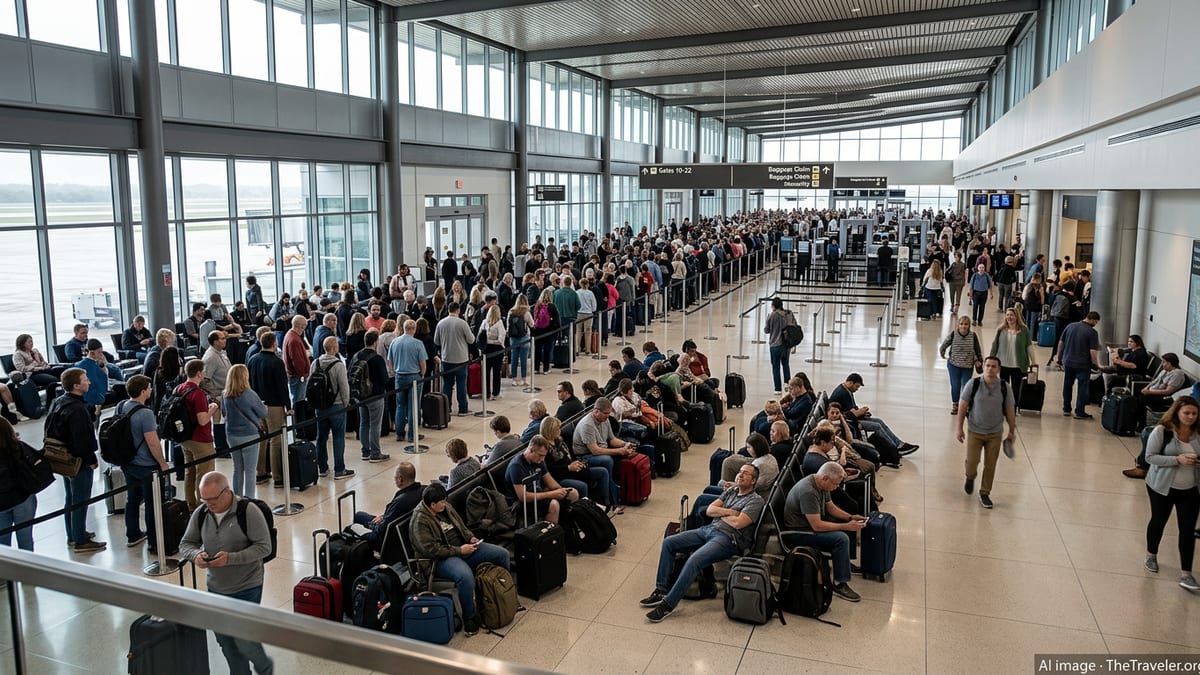
For passengers on the ground at Austin-Bergstrom, the practical impact of three suspended flights and numerous delays has taken familiar forms: longer check-in lines, extended waits at security, crowded gate areas and a rush to secure scarce rebooking options. Social media posts and accounts shared with travel publications on April 6 describe travelers spending hours in the terminal as departure times repeatedly slid, particularly for flights connecting through Atlanta and other storm-affected hubs.
According to real-time tracking data compiled by aviation analytics services, Delta and Spirit passengers have encountered rolling departure pushes throughout the morning and early afternoon, sometimes in 30-minute increments that eventually added up to several hours. Each new delay has made it more difficult for affected travelers to preserve onward connections in Atlanta, Baltimore, Charlotte and other nodes in the network, driving up the number of missed links and unexpected overnight stays.
At the same time, airline and airport staff have been working within tight constraints created by the broader national situation. With Dallas-Fort Worth, Chicago and other key airports also in recovery mode, there are limited spare aircraft available for rapid substitution, and hotel capacity near major hubs has been stretched by multiple days of irregular operations. These factors have made it harder for carriers to quickly absorb the disruption and restore a normal pattern of service through Austin.
Public information from industry trackers suggests that, as of early afternoon on April 6, the majority of scheduled flights at Austin-Bergstrom were still operating, albeit with a significant share running late. However, for those booked on the three suspended Spirit and Delta flights, the options remained constrained, with many rebooked onto later departures or alternate routings that extended total travel time well beyond original expectations.
What the Latest Setback Signals for Spring and Summer Travel
The turbulence facing passengers at Austin-Bergstrom International Airport at the start of April arrives at a moment when the U.S. air travel system is already under close scrutiny for its ability to handle peak demand. Travel research firms tracking Easter Monday performance report that April 6 has brought more than three hundred cancellations and several thousand delays nationwide, with large network carriers such as Delta and American among the most affected.
Analysts note that the combination of robust leisure demand, tightly scheduled fleets and periodic bouts of severe weather has created an environment in which local disruptions rapidly become national headaches. The events in and around Austin illustrate this dynamic: a handful of suspended flights and a cluster of delays at one Central Texas airport are tightly linked to storms and air traffic measures hundreds of miles away, as well as earlier issues logged at Dallas, Chicago and other busy hubs.
For travelers looking ahead to late spring and summer, the episode serves as a reminder of the importance of buffer time and flexible planning. Industry guidance consistently highlights strategies such as choosing morning departures, allowing generous layover windows at hubs like Atlanta or Charlotte, and monitoring flight status closely in the 24 hours before departure. Those measures cannot prevent a suspension or cancellation, but they can improve the odds of finding workable alternatives when irregular operations strike.
As airlines refine schedules for the coming months, recent on-time performance data show that both Delta and Spirit continue to operate large networks with generally competitive punctuality scores, even as episodic weather systems and staffing constraints generate periods of acute disruption. For Austin-Bergstrom and its passengers, the challenge will be navigating those peaks of irregular operations while benefiting from the broader growth in air service that has linked Central Texas more tightly than ever to cities across the United States.