

More news on this day
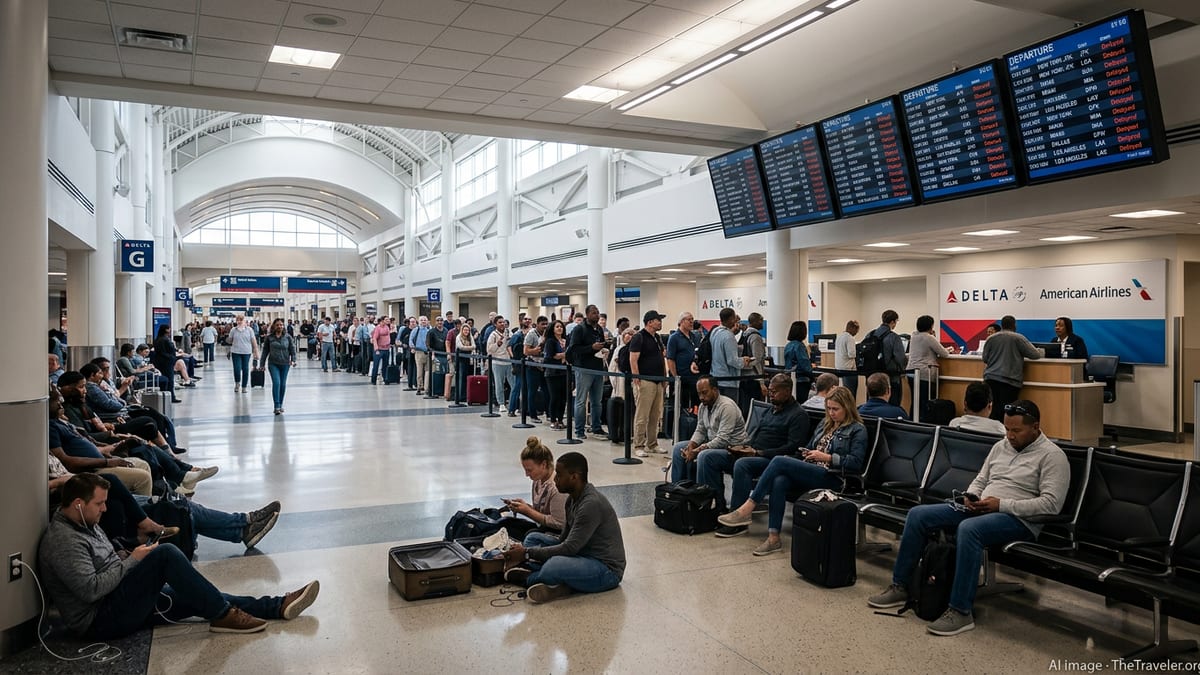
Hundreds of passengers were left stranded at Hartsfield-Jackson Atlanta International Airport on Thursday after 108 flights were delayed and four were canceled, disrupting travel on Delta Air Lines, American Airlines and other carriers to major hubs including New York, Miami, Dallas and Los Angeles.
Get the latest news straight to your inbox!
Ripple Effects Across the Nation’s Busiest Hub
The disruption unfolded at the world’s busiest airport by passenger volume, where even a relatively small number of cancellations can quickly cascade into wider system delays. With 108 flights delayed and four canceled, concourses at Hartsfield-Jackson Atlanta International Airport grew increasingly crowded as departure boards filled with revised times and rolling updates.
Delta, which maintains its largest hub in Atlanta, bore much of the brunt as passengers waiting for connections to New York, Miami, Dallas and Los Angeles saw their departure times repeatedly pushed back. American Airlines and several smaller domestic carriers also reported delays on services feeding into and out of Atlanta, adding to the congestion at gates and customer service counters.
As the morning peak gave way to the afternoon travel rush, lines for rebooking stretched along concourses, with travelers attempting to salvage business meetings, family gatherings and long-planned vacations. Airport staff moved through the crowds offering basic updates, but many passengers reported relying primarily on airline apps and text alerts as gate information and departure times continued to shift.
Because Atlanta is such a critical connecting point for domestic and international itineraries, the impact extended well beyond Georgia. Affected flights included not only point-to-point services but also key segments in multi-leg journeys, leaving some travelers stranded mid-route and scrambling for alternative connections.
Passengers Confront Long Waits and Limited Options
Throughout the day, frustrated travelers described scenes of crowded concourses, scarce seating and overworked airline staff attempting to handle a surge of customer inquiries. Families traveling with children and elderly passengers found it particularly difficult to secure updated information and assistance as call center wait times stretched and in-person queues grew longer.
Some passengers reported that their flights had initially posted as on time, only to be delayed repeatedly in short increments before ultimately being pushed several hours back. Others faced tight connection windows that vanished as their inbound flights taxied to the gate, leaving them stranded in Atlanta as their onward flights departed without them.
At customer service desks, agents worked to rebook travelers onto later departures or, in some cases, alternative routes through other hubs such as Dallas-Fort Worth, Charlotte, Chicago and Houston. However, with many of those connecting flights already near capacity, options for same-day travel quickly narrowed, especially for those heading to heavily trafficked destinations like New York, Miami and Los Angeles.
Hotel availability around the airport also became a concern for travelers whose rebooked flights were pushed into the following day. Some passengers turned to nearby regional airports or even long-distance drives as they sought to reach their destinations without waiting for the next available seat out of Atlanta.
Operational Strain on Airlines and Airport Systems
The disruption highlighted the operational sensitivity of major airline hubs, where small schedule shocks can trigger far-reaching effects across the network. Delays in Atlanta not only affected departing flights but also aircraft and crews scheduled to operate subsequent segments elsewhere in the country, compounding the challenge for airlines like Delta and American.
Airline operations teams worked to reposition aircraft and manage crew duty limits, a critical constraint that can force additional delays or cancellations if flight crews time out before departures. When delays stretch over several hours, airlines must also coordinate with airport ground handlers, gate agents and baggage teams to avoid overcrowding at gate areas and ramp bottlenecks.
In the terminals, airport systems faced pressure as passengers repeatedly refreshed mobile apps, checked flight displays and sought updated information at kiosks. While Hartsfield-Jackson is designed to handle large passenger volumes, sudden surges at certain gates and concourses created choke points at security recheck zones, restrooms, charging stations and food outlets.
Industry analysts noted that even a single day of disruption at a mega-hub like Atlanta can ripple through airline schedules for 24 to 48 hours, as carriers work through aircraft rotations and crew assignments. Passengers booked on late-evening and next-morning departures were advised to monitor their flights closely for potential knock-on delays.
Key Routes to New York, Miami, Dallas and Los Angeles Hit Hard
Among the most heavily affected travelers were those heading to and from major coastal and Sun Belt markets, particularly New York, Miami, Dallas and Los Angeles. These routes form some of the busiest domestic corridors from Atlanta, carrying a mix of business travelers, international connections and leisure passengers.
Flights to the New York area, including services to LaGuardia and John F. Kennedy airports, experienced rolling delays as aircraft and crews arrived late into Atlanta. Passengers bound for Miami and other South Florida destinations reported extended waits, with some connections misaligned as weather and congestion slowed turnarounds on both ends of the route.
Travelers heading west to Dallas and Los Angeles also encountered disruptions, with several departures held at the gate while airlines worked through aircraft availability and traffic management programs affecting routes across the Southeast and central United States. For some, the delays in Atlanta meant missed international connections from Los Angeles and New York, compounding the cost and complexity of rescheduling long-haul journeys.
With demand still strong on these high-traffic routes, rebooking options for same-day seats became scarce, particularly in premium cabins. Many passengers accepted middle seats on later departures or routed through secondary hubs simply to secure a confirmed itinerary.
What Travelers Can Do When Left Behind
As word of the disruptions spread through social media and messaging apps, travel advisors and consumer advocates shared practical guidance for passengers caught in the delays. The most common advice was to act quickly: use airline apps to request rebooking, message carriers through their digital channels and monitor multiple alternate routes rather than waiting in long airport lines.
Travelers were also urged to review the specific delay and cancellation policies of their airlines, which can vary depending on the cause of the disruption and the length of the delay. In some cases, passengers may be eligible for meal vouchers, hotel accommodations or fee-free changes, particularly when delays are within the carrier’s control.
Experts recommended that passengers keep essential items, medications and a change of clothes in their carry-on luggage whenever possible, given the risk that checked bags may be separated from travelers during irregular operations. They also suggested building longer connection windows when routing through major hubs such as Atlanta, especially during seasons prone to weather or air traffic control disruptions.
For those planning upcoming trips that involve connections through Hartsfield-Jackson, travel planners noted that real-time monitoring tools and flexible ticket options can offer an extra buffer against the kind of cascading delays that left hundreds of passengers behind in Atlanta.