

More news on this day
Heavy delays, weather disruptions and mounting infrastructure strain at Knoxville’s McGhee Tyson Airport are testing traveler patience at a time when Tennessee is posting record visitor numbers and positioning itself as one of the United States’ tourism powerhouses.
Get the latest news straight to your inbox!
Snowstorms, Ground Stops and a Frustrated Traveling Public
In recent months, travelers using McGhee Tyson Airport near Knoxville have faced a series of disruptive events, from weather-related shutdowns to airline technology issues. A late January 2026 snowstorm temporarily closed the airport’s runways for several hours, forcing widespread delays and cancellations across East Tennessee’s main air hub. Earlier, a nationwide airline technology outage in August 2025 triggered a ground stop that backed up departures and arrivals, leaving passengers stranded and scrambling to rebook.
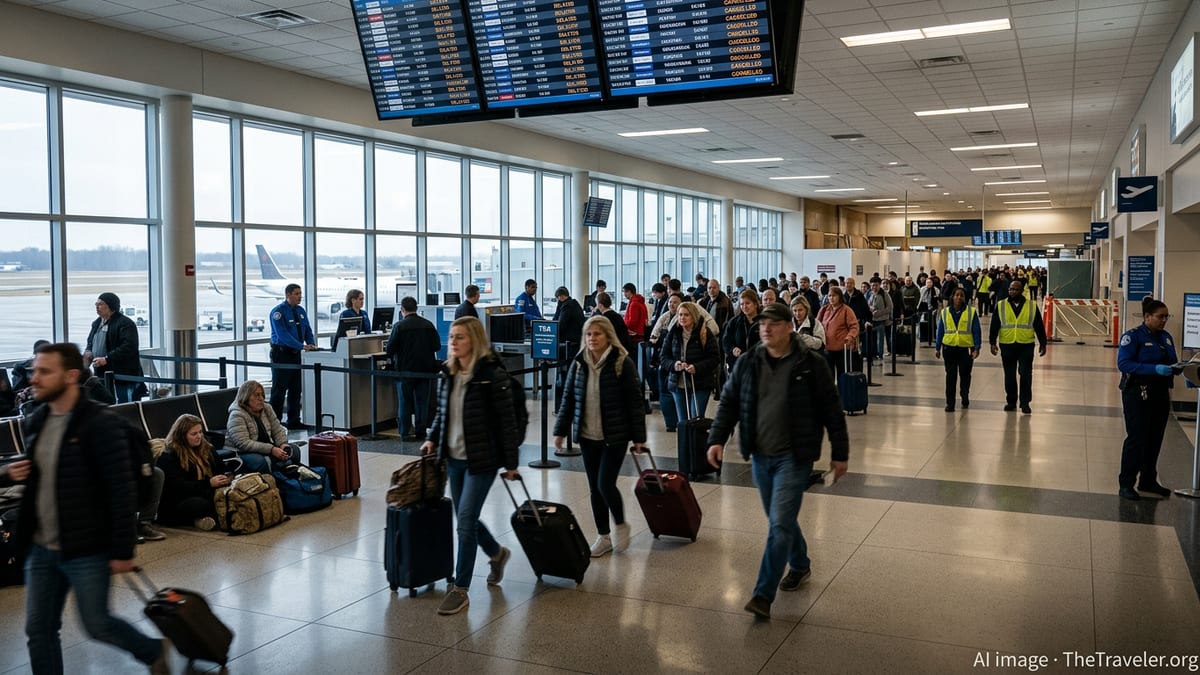
Publicly available reports and local coverage describe scenes that many travelers now find familiar: crowded departure halls, backed-up security and check-in lines, and uncertainty over when flights will actually depart. Social media posts and community forums from Knoxville residents and visitors point to a growing sense of frustration, with some travelers reporting missed connections, hours-long waits and confusion over rebooking options.
While some of these problems are clearly linked to national or regional disruptions, such as major winter storms or airline-specific outages, the cumulative effect has focused attention on McGhee Tyson itself. For many visitors headed into the Great Smoky Mountains, Knoxville, or nearby resort communities, this airport is the primary gateway. When it slows down, so does the first impression many tourists have of East Tennessee.
The pattern of repeated disruptions has prompted questions about how resilient the airport is to shocks that increasingly seem to be part of modern air travel. As extreme weather events become more common and airlines rely more heavily on complex technology, even mid-sized regional airports like McGhee Tyson are under pressure to keep operations running smoothly.
Infrastructure Strain at One of America’s Fastest-Growing Airports
McGhee Tyson’s operational challenges are unfolding against a backdrop of growth. Federal transportation data, summarized in regional coverage, indicate that the Knoxville airport has ranked among the fastest-growing U.S. airports by passenger numbers. That growth brings new routes, fuller planes and more economic opportunities, but it also puts strain on facilities originally built for lighter traffic.
Local reporting over the past year has highlighted a mix of infrastructure stress points. Construction projects inside the terminal have temporarily reduced escalator capacity and rerouted foot traffic, while a sinkhole discovered along Airport Loop Road in mid-2025 forced a partial road closure and detours for drivers accessing the terminal. These issues have not shut down the airport, but they have complicated the flow of passengers and vehicles during peak travel times.
Travelers have reported that parking, curbside pickup and the passenger drop-off area can become congested, particularly in early morning and late afternoon banks of flights. Online accounts describe long lines forming quickly if staffing at check-in counters or security checkpoints is not aligned with the rush. For a facility serving both a fast-growing metropolitan area and a major national park gateway, capacity constraints that were once occasional are becoming more routine.
Airport leadership has emphasized in public information that construction is aimed at improving long-term accessibility and passenger experience. However, the near-term reality for many travelers is a feeling that McGhee Tyson is being stretched uncomfortably as it tries to keep pace with rising demand and evolving safety and security requirements.
Record Tourism Numbers Contrast With Airport Headaches
The turbulence at McGhee Tyson comes at an awkward moment for Tennessee’s broader tourism narrative. State data and industry reports show that visitor spending has climbed steadily in recent years, surpassing 30 billion dollars in 2024 and marking multiple consecutive years of record performance. More than 140 million visits were recorded statewide, underscoring Tennessee’s status as a leading U.S. travel destination.
East Tennessee plays a central role in that growth. The Great Smoky Mountains National Park remains one of the most visited national parks in the United States, and gateway communities in Blount and Sevier Counties rely heavily on visitors who arrive by air before driving into the mountains. Local coverage indicates that rising tourism across the state has directly benefited Blount County, where McGhee Tyson is located, helping support lodging, dining, attractions and transportation businesses.
This juxtaposition of surging demand and operational strain at the main regional airport raises a key question for tourism stakeholders: can Tennessee’s infrastructure keep up with its own success. When visitors confront delays, cancellations and crowded terminals at the very start or end of their trip, their overall perception of the destination can be affected, even if the disruptions originate with factors outside the state’s control.
Industry analysts often point out that air access is a vital ingredient in sustaining growth in overnight visitation and higher-spending segments such as international travelers and business events. Persistent disruptions at a primary gateway, especially during peak travel seasons, risk pushing some visitors to alternative airports or even competing destinations in neighboring states.
Is Tennessee’s Tourism Momentum at Risk?
Despite the current frustrations at McGhee Tyson, available tourism indicators do not yet show a downturn for Tennessee. State-level data for 2023 and 2024 reflect rising visitor volumes and higher daily spending, and recent reports from tourism agencies and local governments continue to forecast growth. Nashville, Memphis, Chattanooga and the Smokies corridor each attract distinct visitor markets, providing a measure of resilience even when one region faces operational challenges.
However, the experience in Knoxville illustrates how quickly bottlenecks in transportation infrastructure can become a reputational issue. Travelers increasingly share real-time feedback and photos from airports on social media, amplifying stories of long lines and missed flights. If such accounts become closely associated with a particular gateway, they can gradually shape perceptions of the destination’s reliability and ease of access.
For now, much of the disruption at McGhee Tyson can be traced to episodic events rather than chronic systemic failure: a major snowstorm that temporarily closed runways, a technology-driven airline ground stop, and targeted construction projects designed to modernize facilities. Yet as traffic continues to grow, what were once exceptional stress tests could start to resemble the new normal unless capacity, staffing and contingency planning keep pace.
Travel experts observing Tennessee’s tourism trajectory note that the state’s long-term outlook remains strong, supported by diversified attractions ranging from music and food to outdoor recreation. The question is not whether visitors will continue to come, but how smoothly they will be able to get in and out of key gateways like Knoxville.
What Travelers Can Expect in the Months Ahead
Looking ahead into the 2026 travel season, passengers using McGhee Tyson Airport can expect a mixed picture of incremental improvements and continued growing pains. Construction projects that temporarily disrupt passenger flow are often scheduled in phases designed to limit the impact, and some upgrades may begin to ease congestion as they come online. Airlines serving Knoxville are also adjusting schedules and capacity in response to demand, which could help spread traffic more evenly across the day.
At the same time, Knoxville’s popularity as both a standalone destination and a launching point for Smokies vacations suggests that peak travel periods will remain busy. Holiday weekends, school breaks and major regional events are likely to bring pressure on parking, check-in counters and security lines. Travelers may increasingly build in additional buffer time, particularly during winter months when weather across the eastern United States can cascade into widespread airline delays.
For Tennessee’s tourism industry, the situation at McGhee Tyson is a reminder that record visitor numbers depend not only on marketing and attractions, but also on the reliability of the transportation network that gets people there. Investment decisions in airport infrastructure, along with coordination among airlines, local governments and tourism organizations, will help determine whether today’s frustrations become tomorrow’s deterrents or simply a passing chapter in a larger growth story.
As the next wave of visitors books flights into Knoxville, the performance of this regional airport will remain an important barometer of how well Tennessee can translate its booming appeal into consistently positive travel experiences on the ground.