

More news on this day
Passengers across the United States faced fresh disruption on March 28 as Hartsfield-Jackson Atlanta International Airport recorded at least 10 cancelled departures and more than 170 delays, tangling schedules for Delta Air Lines, Republic Airways, Endeavor Air and several other carriers on routes touching New York, Dallas, Orlando, Chicago and additional hubs.
Get the latest news straight to your inbox!
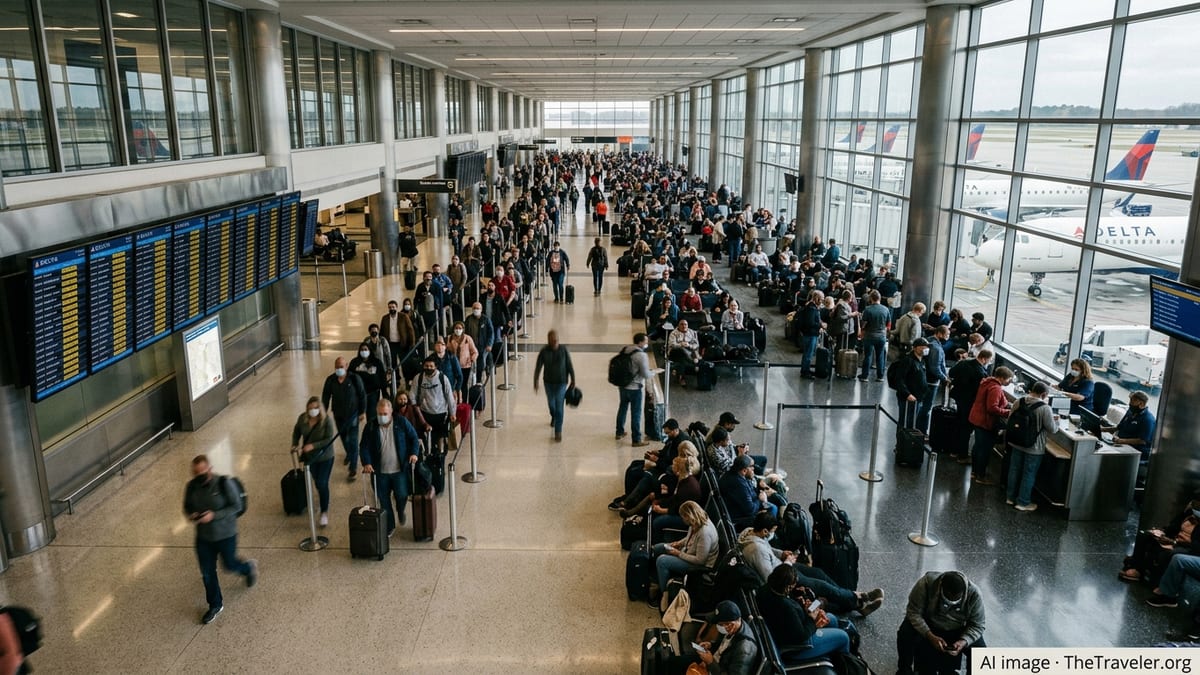
Targeted Disruptions at the World’s Busiest Airport
Publicly available tracking data for March 28 shows around 185 flight movements linked to Hartsfield-Jackson Atlanta International Airport affected, including roughly 10 outright cancellations and about 175 delayed departures or arrivals. While modest compared with major weather-related meltdowns in recent years, the problems were concentrated in key morning and midday banks when connecting traffic is heaviest.
The picture was most visible on large domestic networks that rely on Atlanta as a connecting hub. Delta Air Lines, which bases a significant portion of its fleet and crew at Hartsfield-Jackson, saw a mix of late departures and arrivals on high-frequency routes to New York, Dallas, Orlando and Chicago. Regional partners operating under major-carrier codes, including Republic Airways and Endeavor Air, also experienced schedule slippage as congestion cascaded through the system.
Although many individual delays stayed under two hours, the knock-on effect was magnified for travelers with tight connections. Passengers arriving late into Atlanta often found their onward flight already boarding or closed, forcing rebookings later in the day and, in some cases, overnight stays when downstream options were full.
By early afternoon, overall delays at Atlanta had eased somewhat, but ripple effects remained noticeable on departure boards at connected airports around the country. Some services into Atlanta pushed back on time but were held in airborne holding patterns or on the ground waiting for gates, extending total journey times.
Ripple Effects Across New York, Dallas, Orlando and Chicago
The disruption in Atlanta quickly spread along some of the country’s busiest corridors. Flights between Atlanta and the New York area, particularly services to LaGuardia and John F. Kennedy, registered a cluster of late operations as aircraft and crews originating in Georgia arrived behind schedule. Similar patterns were visible on services to Dallas-Fort Worth and Dallas Love Field, where late inbound jets compressed turnaround times.
Orlando and Chicago also featured prominently among affected routes. The Atlanta–Orlando corridor, heavily used by leisure travelers and families beginning spring trips, saw a series of late departures that pushed arrivals deeper into the evening hours. Meanwhile, connections to Chicago O’Hare, a critical link for both business and connecting traffic, experienced rolling delays as aircraft cycled between two of the country’s largest hubs.
For airlines operating regional jets on these links, even a short holdup in Atlanta can have outsized impact. A delayed early-morning departure can cause a “domino” sequence of late turns throughout the day as the same aircraft is scheduled to operate multiple segments. According to general industry data, regional carriers like Republic Airways and Endeavor Air often run tight schedules with limited spare aircraft, leaving little margin when congestion flares at a major hub.
Across the network, travelers reported missed connections, rebooked itineraries, and extended waits at gates as ground crews worked through a compressed wave of arrivals. Some flights were held at outstations to avoid adding to congestion in Atlanta, trading a later departure at origin for a more predictable arrival slot at the hub.
Operational Strain After Weeks of Elevated Pressure
The latest day of disruption comes after weeks of elevated operational pressure at Hartsfield-Jackson. Recent coverage has highlighted prolonged security-screening lines, staffing gaps and wider national strains on Transportation Security Administration resources. On several days in March, travelers reported arriving three to four hours before departure and still encountering lengthy queues at checkpoints, contributing to missed flights and late gate arrivals.
While the current round of delays appears tied more to airside congestion and schedule compression than to a single severe-weather outbreak, the broader operational backdrop has left the system more vulnerable. A series of winter storms across North America in January and February already pushed airlines and airports to reroute aircraft and crews, adding complexity to spring scheduling and aircraft positioning.
Industry analysts note that large hubs like Atlanta can return quickly to apparent normalcy on paper, with most flights operating, while still masking significant day-to-day strain. When staffing, aircraft availability and gate space are finely balanced, even a moderate disturbance can tip a portion of the schedule into rolling delay territory, particularly during peak connection banks.
Travel-waiver policies and flexible rebooking options now commonly used by U.S. carriers help soften some of the impact, but they do not eliminate crowded concourses or long customer-service lines when multiple flights are affected. At Atlanta, those pressures are amplified by the sheer volume of daily traffic passing through the airport.
Impact on Passengers and Airline Recovery Efforts
For passengers, the March 28 disruptions translated into longer journey times, missed family events and rescheduled work plans. Travelers on early morning flights out of regional cities found their connections through Atlanta no longer aligned, while those departing from the hub itself faced extended waits on board aircraft, at the gate, or in security lines before reaching their seats.
Airlines responded with a mix of standard tools, including rolling updates to estimated departure times, automatic rebooking on later flights where inventory allowed, and limited same-day changes for travelers whose connections became unworkable. Some carriers sought to prioritize long-haul and last-bank departures in order to avoid strandings far from passengers’ home bases, allowing shorter regional segments to absorb more of the delay.
Published operational data shows that carriers such as Delta, Republic and Endeavor have historically maintained relatively strong on-time performance at Atlanta compared with national averages. The latest disruptions, however, underscore how quickly performance metrics can deteriorate when hub operations encounter concentrated disruption, even on a day without headline-grabbing severe weather.
Recovery efforts are expected to continue into the evening and potentially into the following morning’s schedule as airlines reposition aircraft and crews. For many passengers, the visible sign of that effort will be early-morning flights departing on time again, even if their own travel day ended with an unplanned overnight stay.
What Travelers Can Expect in the Coming Days
Given the pattern of recent weeks, travelers using Hartsfield-Jackson and its key domestic links are likely to see a cautious approach from airlines in the days ahead. Carriers may build slightly longer scheduled turn times into peak-busy flights, hold a limited number of aircraft and crew in reserve, or fine-tune bank structures to reduce the risk of cascading delays.
At the same time, passengers are likely to encounter continued crowds at peak morning and late-afternoon periods, particularly at security checkpoints and central concourses. Publicly available guidance from airlines and local media outlets has consistently recommended arriving earlier than pre-2026 norms, especially for those checking bags or connecting internationally through Atlanta.
For travelers connecting between cities like New York, Dallas, Orlando and Chicago via Atlanta, experts generally recommend leaving additional buffer time for connections until performance stabilizes. Selecting itineraries with longer layovers, even by 30 to 60 minutes, can provide a margin of safety when minor schedule disruptions stack up over the course of a travel day.
As the busy spring and early summer travel seasons approach, the March 28 disruptions serve as a reminder of both the central role Atlanta plays in U.S. air travel and the fragility of tightly banked hub schedules. Small pockets of disruption, like 10 cancellations and 175 delays in a single day, can reverberate across the national network when they originate at its busiest crossroads.