

More news on this day
Operations at Paris Charles de Gaulle/Roissy Airport came under renewed strain this weekend as Air France and RwandAir grounded two flights, contributing to a fresh wave of delays rippling through routes linking Detroit, Brussels, Paris, Algiers, Oran and a long list of other cities.
Get the latest news straight to your inbox!
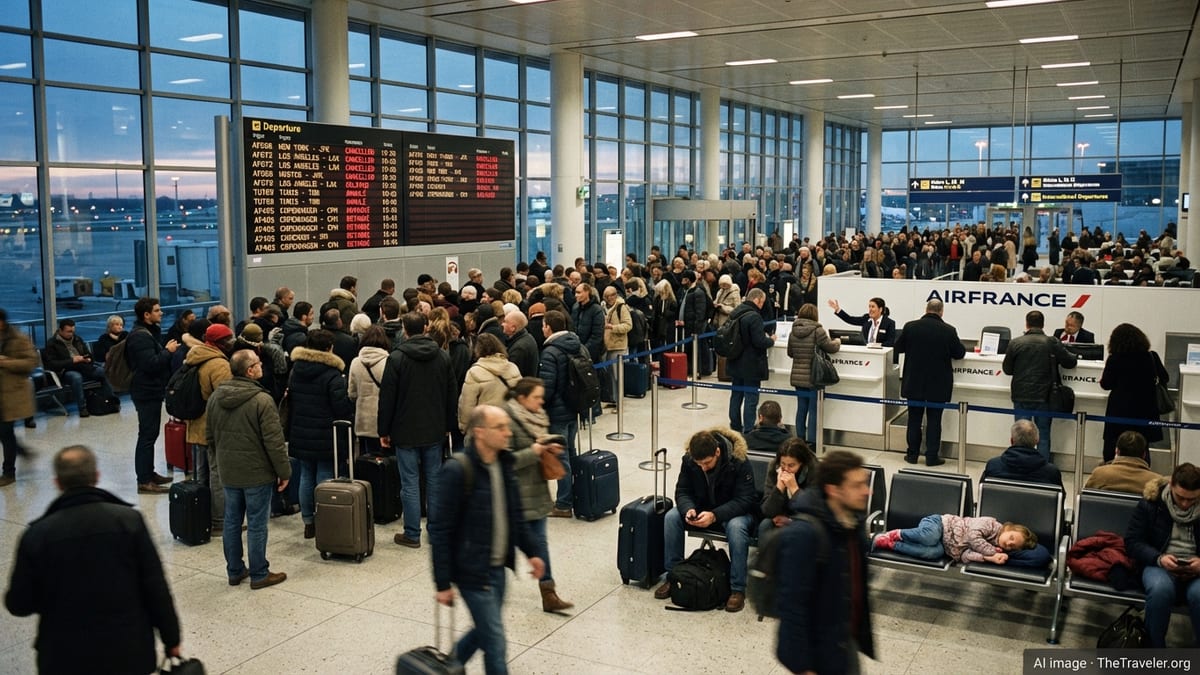
Grounded Flights Add Pressure to an Already Busy Hub
Publicly available information compiled on April 5 indicates that one Air France service and one RwandAir service at Charles de Gaulle were withdrawn from operation, with both cancellations feeding into an already stretched schedule at the French capital’s main international hub. The grounded flights were recorded amid a broader pattern of knock-on disruption affecting departures and arrivals across Europe, North Africa and transatlantic markets.
Tracking data and airport dashboard snapshots show clusters of delayed services building around peak travel periods, with some departures pushed back by more than an hour. At Charles de Gaulle, where Air France recently concentrated its Paris operations after exiting Orly, the latest setback is adding further complexity to aircraft rotations and crew scheduling at a time of sustained demand.
While the two grounded flights represent a small fraction of the day’s overall traffic, their timing within an intricate hub network means missed connections, tighter turnarounds and growing queues at transfer points. The result is a visible slowdown in passenger flows, particularly in terminals handling long haul and North African services.
According to published coverage, the situation at Roissy reflects more than isolated operational issues. Instead, it underscores how a single cancellation at a major hub can reappear hours later in the form of a delayed departure from a secondary airport hundreds or even thousands of kilometres away.
Routes to Detroit, Brussels, Algiers and Oran Among Those Hit
Among the destinations most clearly affected by the latest disruption are Detroit and Brussels, both of which rely heavily on Charles de Gaulle as a connecting gateway. Flight boards for early April show altered timings and extended delays on selected services linking Paris with Michigan’s primary international airport and Belgium’s main hub, complicating itineraries for both business and leisure travellers.
North African routes are also feeling the strain. Services between Paris and Algerian cities such as Algiers and Oran feature prominently in the list of affected flights, with some departures held on the ground as aircraft and crews rotate late into their next sectors. These routes are a vital bridge for family visits, student travel and trade, meaning even modest schedule changes can have outsized effects on onward journeys.
The disruption radiates further into the network, reaching destinations from Tunis and Djerba to Casablanca, Marrakesh and Tangier, according to route summaries referenced in recent coverage. In practice, this can translate into missed same day connections, rebooked itineraries via alternative hubs and increased pressure on airline customer service channels as passengers seek updated options.
Within Europe, short haul links to cities such as Frankfurt, Amsterdam, Dublin, Copenhagen and Stockholm appear across lists of delayed flights, demonstrating how quickly operational stress at one node can flow into neighbouring markets. With many of these services operating multiple times per day, punctuality issues in the morning can echo across afternoon and evening rotations.
Knock On Effects Across Long Haul and Regional Operations
The grounding of two flights at Charles de Gaulle is occurring against a backdrop of wider European aviation challenges. Separate reporting for early April points to hundreds of delayed and cancelled services across hubs including London Heathrow, Amsterdam Schiphol and Zurich, creating a tightly interconnected band of disruption over northern and western Europe.
Because many long haul aircraft operate mixed schedules that pair transatlantic or African sectors with intra European legs, a delay on one side of the network frequently surfaces as a late departure elsewhere. A widebody aircraft arriving behind schedule into Paris from North America, for example, may be quickly turned for a regional flight to southern Europe or North Africa, leaving little margin to absorb additional delays if ground handling or air traffic flow programs slow the turn.
Regional services are particularly vulnerable in this environment. Short sectors to nearby destinations such as Brussels or Luxembourg offer fewer opportunities to regain lost time en route, while turnaround windows at busy gates are often tightly planned. When even a single rotation is removed from the schedule, airlines may need to reshuffle aircraft assignments or consolidate lightly booked flights, further complicating the operational picture.
Industry analysis published earlier this year has highlighted how carriers with dense hub structures, including Air France at Charles de Gaulle, face mounting pressure to refine their tail assignment and turnaround strategies in order to contain the cost of recurrent delays. The latest events at Roissy provide a live test of how those strategies perform under stress.
Passenger Experience: Longer Queues and Uncertain Connections
For travellers on the ground, the operational nuances translate into longer queues, crowded gate areas and more time scrutinising departure boards. Reports from recent days describe extended waits at check in and security in some terminals at Charles de Gaulle, particularly during morning and late afternoon peaks when delayed departures and arriving connections overlap.
Transferring passengers are among the most exposed. Those connecting from long haul flights originating in cities such as Detroit or Boston onto regional services for Brussels, Algiers or Oran may find originally comfortable connection windows shrinking to 45 minutes or less, raising the risk of missed flights if passport control or terminal transfers take longer than expected.
Publicly available guidance from airlines and consumer groups typically advises travellers facing disruptions of this kind to monitor flight status tools closely, allow extra time at the airport and be prepared for re routing via other hubs when necessary. Under European passenger rights rules, significant delays and cancellations may entitle eligible passengers to care provisions or financial compensation, depending on the specific cause and length of the disruption.
However, in fast evolving situations, the immediate priority for many travellers is simply reaching their destination on the same day. This can involve accepting alternative routings that add connections or swap non stop flights for itineraries with intermediate stops, particularly on popular transatlantic and North African corridors.
Outlook for the Coming Days at Charles de Gaulle
As airlines work through the backlog created by grounded flights and rolling delays, the short term outlook at Charles de Gaulle remains finely balanced. Schedules for the coming days continue to show high load factors on key routes, leaving limited spare capacity for large scale re accommodation if further cancellations occur.
Aviation data and recent reporting suggest that, in the absence of additional shocks such as severe weather or industrial action, hubs like Roissy can often absorb operational turbulence within 24 to 48 hours. Even so, residual delays and isolated cancellations are likely to persist while aircraft and crews are repositioned and maintenance windows are adjusted to reflect altered flying patterns.
For travellers departing in the next few days, the disruption serves as a reminder to build extra time into itineraries, especially when connecting through Paris from long haul flights into short haul services for Brussels, Algiers, Oran and other nearby destinations. Early arrival at the airport, careful attention to terminal and gate changes, and flexibility about routing options can all help reduce the practical impact of ongoing schedule instability.
For airlines using Charles de Gaulle as a primary hub, the episode underscores the continuing vulnerability of global networks to relatively small operational shocks. With traffic levels recovering and peak seasons approaching, the performance of Roissy and other European gateways will remain in sharp focus for passengers and the wider industry alike.