

More news on this day
Travelers across the United States faced another difficult travel day as Ronald Reagan Washington National Airport in Washington, D.C., recorded at least 12 cancelled departures and more than 120 delays, with knock-on disruptions affecting regional carriers such as PSA Airlines and Republic Airways, as well as JetBlue and other major operators on busy corridors linking the capital with New York, Atlanta, Dallas and additional domestic hubs, according to real-time aviation tracking data and publicly available airport information on Thursday.
Get the latest news straight to your inbox!
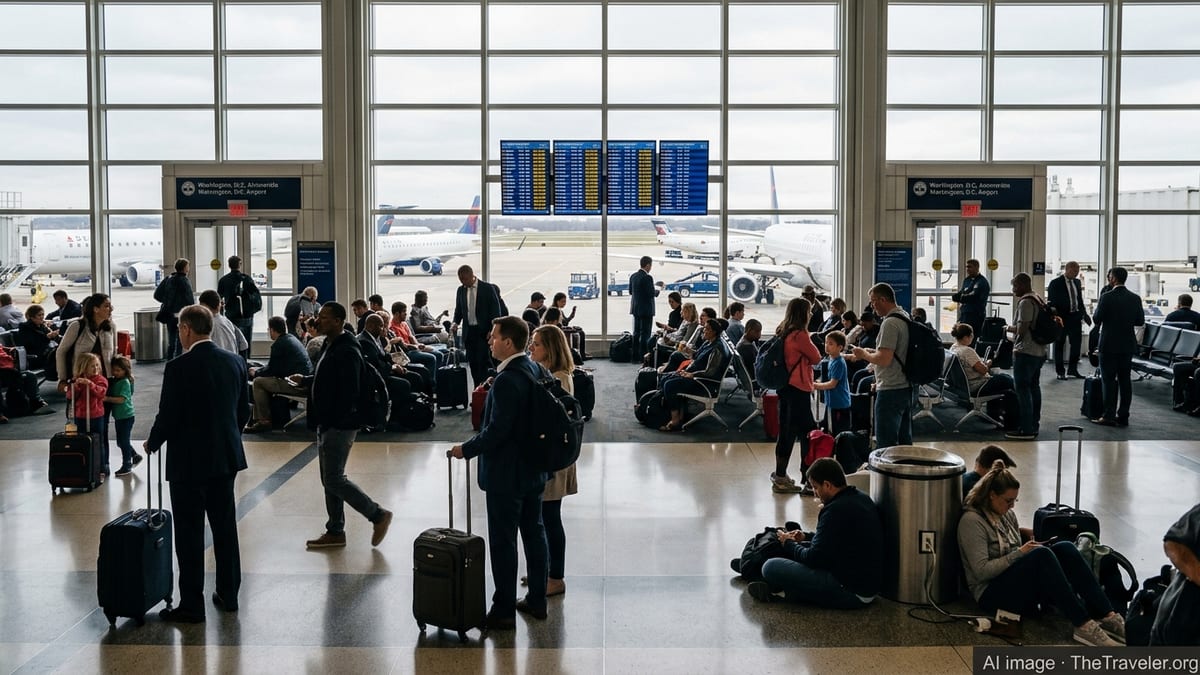
Reagan National Becomes a Mid-Atlantic Bottleneck
Operational data for Thursday indicated that Reagan National functioned as a significant chokepoint in the mid-Atlantic air network, with a cluster of delays building through the morning and early afternoon. A mix of late inbound aircraft, air traffic control flow constraints, and weather-related spacing requirements contributed to longer-than-usual turnaround times on several concourses. The airport’s role as a slot-restricted field with a dense schedule of short-haul flights meant that relatively minor schedule slippages quickly cascaded into broader disruptions.
Publicly available flight status boards showed that the 12 cancelled flights at Reagan National were spread across regional and mainline operators, with PSA Airlines and Republic Airways among those most affected. These carriers operate many of the American Eagle and other regional-branded services into the airport, so a single cancelled leg often translated into missed connections for travelers heading beyond Washington. A number of additional services experienced departure holds of 30 minutes to more than an hour, widening the pool of inconvenienced passengers.
JetBlue, which serves Reagan National with a limited but strategically important schedule to cities such as Boston and New York, was also caught in the disruption. Several of its departures and arrivals showed departure or arrival times pushed back as the day progressed, reflecting the knock-on effect of late-arriving aircraft from other parts of the network. Other large carriers, including those operating to Atlanta and Dallas, reported slower-than-normal operations, even where flights eventually departed.
The timing of the problems at Reagan National coincided with already busy late-March travel patterns, compounding pressure on ticket counters and security checkpoints. Reports from passengers on social media and travel forums described long queues at some gates and rebooking desks, with many travelers attempting to salvage same-day connections or secure seats on the remaining evening departures.
Ripple Effects Across New York, Atlanta, Dallas and Beyond
Because many of the affected services were short-haul flights linking Washington with other major hubs, the disruption extended far beyond the capital region. Routes serving New York-area airports, particularly LaGuardia and John F. Kennedy, saw rolling delays as aircraft arrived out of sequence and crews reached duty-time limits. Publicly available tracking tools showed rotation changes as airlines attempted to reposition aircraft and consolidate lightly booked services to preserve capacity on core routes.
In Atlanta and Dallas, key connecting points for several major carriers, departures to and from Washington experienced irregular operations throughout the day. Some flights departed on time but arrived late due to en route flow restrictions along the East Coast, while others were held at the gate awaiting updated clearance times into the constrained Washington airspace. Travelers using these hubs as connection points to the West Coast and the Midwest reported missed onward flights and unplanned overnight stays.
Secondary markets linked to Reagan National through regional operators also felt the impact. Cities that rely on smaller regional jets routed through Washington experienced last-minute schedule swaps, downgauged aircraft, or outright cancellations where spare planes and crews were unavailable. This pattern particularly affected smaller East Coast and Appalachian communities where alternatives to the main Washington link are limited.
Industry observers noted that the high density of short-stage flights in the Washington–New York–Boston and Washington–Atlanta–Florida corridors increases vulnerability to systemic delays. When a hub like Reagan National encounters multiple hours of constrained operations, aircraft and crews that would otherwise cycle through several turns in a single day are quickly pushed off schedule, leading to a widening circle of knock-on disruption across the domestic network.
Regional Carriers Under Strain
The day’s disruptions were felt acutely by regional carriers PSA Airlines and Republic Airways, which collectively operate hundreds of daily flights on behalf of larger brands. These airlines often serve as the connective tissue linking mid-sized and smaller cities to major hubs like Washington, New York, Atlanta and Dallas. When one or two aircraft fall out of position due to delays or cancellations at a slot-controlled airport such as Reagan National, it can leave entire spokes temporarily without service.
Recent federal Air Travel Consumer Reports show that regional carriers typically record a higher proportion of delays attributed to late-arriving aircraft and air traffic control constraints compared with some mainline operators. Analysts frequently point out that these airlines have less slack in their fleets and crew rosters, which limits their ability to recover quickly once irregular operations begin. Thursday’s pattern at Reagan National appeared consistent with that dynamic, as several regional-branded flights remained significantly delayed even after mainline schedules started to stabilize.
For passengers, the practical effect was visible in longer waits at gates operated under the American Eagle and other regional banners. Travelers heading to smaller destinations reported having to accept rebookings via alternative hubs or overnight stays when their single daily flight to Washington was cancelled. In some cases, airlines combined lightly booked services to consolidate operations and free up aircraft for heavily demanded trunk routes.
Aviation analysts note that persistent pressure on regional operations, including higher operating costs and pilot availability challenges, has already led to service reductions in some smaller communities. Disruption days centered on major airports like Reagan National can accelerate that trend temporarily, leaving travelers with fewer same-day rerouting options when flights do not run as scheduled.
JetBlue and Major Carriers Juggle Network Recovery
JetBlue and other large airlines serving Reagan National spent much of the day adjusting schedules and aircraft assignments to restore network integrity. Publicly available tracking data showed instances where flights were swapped between aircraft arriving from different origins, allowing airlines to prioritize routes with higher passenger loads or limited alternative options. This kind of tactical reshuffling is a standard response during irregular operations but can lead to boarding gate changes and sudden shifts in departure times for passengers.
JetBlue’s operations along the Northeast corridor are particularly sensitive to bottlenecks at Washington and New York because of tight turnaround times and heavy airport congestion. Historical performance statistics from federal data sets illustrate how delays propagated from one station to another can compound, especially when weather or air traffic management initiatives restrict the number of simultaneous arrivals. The delays connected to Reagan National on Thursday resembled previous episodes in which relatively modest local disruptions produced extended recovery times systemwide.
Legacy carriers operating to Atlanta, Dallas and Chicago similarly faced the task of balancing available aircraft and crews against duty-time regulations. In some instances, airlines opted to cancel one flight entirely to avoid a sequence of rolling delays that might have affected multiple later departures. While this approach can be frustrating for the passengers on the cancelled service, network planners often view it as a necessary step to protect a larger number of travelers from even longer disruptions.
Throughout the afternoon and evening, airline operations centers appeared to focus on returning aircraft to their planned overnight locations, a critical step in ensuring that the next morning’s schedule can begin on time. For travelers booked on early Friday departures, this behind-the-scenes repositioning may determine whether the effects of Thursday’s Reagan National disruptions linger into the start of the weekend.
What Travelers Experienced on the Ground
Accounts shared on social platforms and travel forums suggested that many passengers encountered crowded gate areas, long lines at service counters and ongoing uncertainty about departure times. Some travelers reported receiving multiple schedule updates on mobile apps as airlines adjusted departure estimates in response to evolving air traffic control restrictions and late-arriving crews. Others described watching departure boards cycle through successive delay increments before a final decision on whether a flight would operate.
At security checkpoints and within concourses, the combination of routine spring break travel and irregular operations produced a busier-than-normal environment. Families traveling with children faced particular challenges as they navigated packed terminals and rebooked itineraries, while business travelers attempted to find alternative connections to meet same-day commitments in New York, Atlanta, Dallas and other cities.
Airport amenities, including food outlets and seating areas, came under added strain as delayed passengers remained in the terminal for several extra hours. Some travelers turned to airline lounges where available, though capacity constraints limited access in peak periods. Others reported seeking out quieter corners of the concourses to work or rest while waiting for updated flight information.
Consumer advocates frequently recommend that travelers build additional buffer time into itineraries involving congested hubs such as Reagan National, particularly during seasons prone to weather or air traffic control initiatives. The day’s events provided another reminder that even a relatively small number of cancellations and a few dozen extended delays at a critical node in the network can quickly translate into widespread inconvenience across multiple regions of the country.