

More news on this day
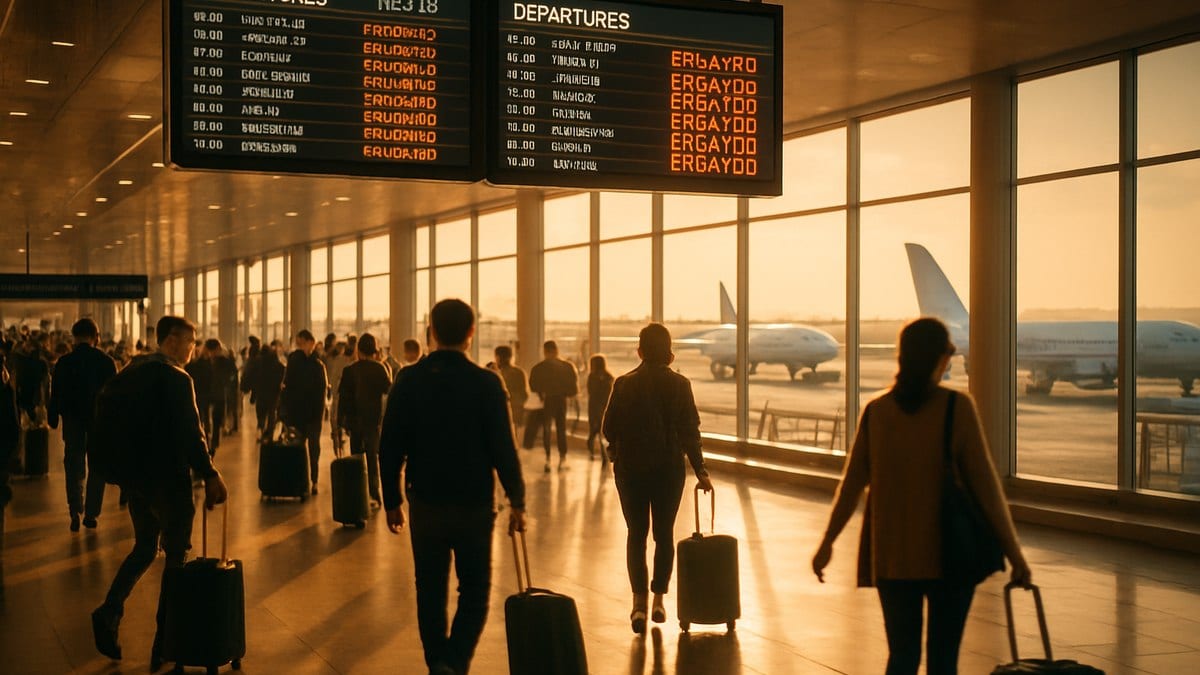
Flight disruptions at Philadelphia International Airport in April 2026 are sending shockwaves through the broader Northeast corridor, with delays and cancellations at the Pennsylvania hub contributing to knock-on disruptions in New York, Boston and Washington, D.C.
Get the latest news straight to your inbox!
Spike in Delays Puts Philadelphia in the Spotlight
Recent data snapshots from aviation trackers and industry coverage indicate that Philadelphia International Airport has experienced a marked uptick in delays in the second week of April 2026, with dozens of affected departures and arrivals on some days. One widely cited tally counted more than 60 delayed flights and a small but significant number of cancellations at Philadelphia in a single 24 hour period, a level that places the airport among the more heavily disrupted hubs in the country during this stretch of the month.
While those figures remain below the most extreme disruption levels seen at other major hubs earlier in the year, they come at a sensitive moment for air travel along the Northeast corridor. The spring break travel window is still open for many school districts, and airlines have been operating on tight schedules following a winter of weather related turbulence and ongoing challenges in crew and controller staffing across multiple regions.
Operationally, disruptions at a large connecting hub such as Philadelphia tend to propagate outward. Delayed aircraft and crews arriving from the Midwest and Southeast into Philadelphia can miss their tightly timed departure windows to Northeast cities, creating rolling delays that can last for much of the day even when local conditions at the origin or destination airport appear calm.
Weather and Network Congestion Drive Cascading Impact
Although day of travel weather in Philadelphia itself has at times appeared relatively benign, broader patterns across the Eastern United States are playing an outsized role in the April slowdown. The Federal Aviation Administration’s national delay summaries for early April highlight a cluster of weather driven traffic management initiatives centered on the Mid Atlantic and New England, including New York area airports, Boston and Washington, D.C. These programs, designed to keep airspace flows within safe limits, often reduce the number of flights that can land or depart in a given hour.
Reports summarizing the FAA’s April 2026 weather delay listings show Philadelphia grouped with New York’s John F. Kennedy, LaGuardia and Newark Liberty, as well as Washington, D.C. facilities and several Florida hubs, on multiple days when convective weather, low ceilings or strong winds constrained the system. When route saturation spikes along the busy I 95 corridor, planners respond by instituting ground delay programs and, in more severe cases, ground stops that temporarily halt departures bound for affected airports until conditions improve.
Even relatively short ground delays can cascade when they hit a network already operating near capacity. Aircraft scheduled to perform four or five legs in a day may encounter an initial 45 or 60 minute hold at one congested Northeast hub, only to accumulate additional minutes with each subsequent turn. By evening, some flights are still operating but several hours behind schedule, while others are cut entirely in order to reset the following morning’s rotations.
Northeast Hubs Feel the Ripple Effects
As Philadelphia contends with its own bottlenecks, the disruptions are being felt sharply at other airports that share heavy traffic flows with the city. Published coverage of early April operations notes that key Northeast gateways including New York, Boston and Washington, D.C. have all appeared on the same daily delay reports as Philadelphia, reflecting their interconnected roles in the national network.
New York’s three major airports, which routinely rank among the nation’s most delay prone facilities, are particularly exposed. When Philadelphia experiences arrival slowdowns, flights inbound from New York area airports can be held on the ground, contributing to gate crowding and departure queues there. In the other direction, delayed departures from Philadelphia to Boston or Washington can force resequencing of arrival banks, complicating operations at Logan International and the capital region’s airports.
Further afield, ripple effects have surfaced as far as Florida and the Mountain West. Industry analyses of April’s disruption pattern point to a broader strain on routes linking the Northeast to Orlando, Tampa, Las Vegas and Salt Lake City, where aircraft and crews originating in Philadelphia or New York arrive out of position. As seen during previous episodes of nationwide disruption, passengers on seemingly unrelated routes may ultimately feel the consequences of a bad operational day in the Northeast corridor.
Underlying Strains: Staffing, Construction and Winter Hangover
The April congestion is unfolding against a backdrop of longer running structural pressures in the U.S. air traffic system. The FAA has been candid in public documents and testimony about controller staffing gaps at several major facilities, including those that manage airspace over the New York and Philadelphia region. Although additional personnel are in the training pipeline, the process to fully qualify controllers for complex airspace can take years, leaving the system vulnerable to surges in demand or bouts of disruptive weather.
Construction and airspace modernization projects are also shaping operations in 2026. Federal planning reports highlight ongoing and recently completed work tied to relocating and upgrading approach control facilities associated with Philadelphia and Newark, as well as installation of new arrival management technology. While these initiatives are intended to improve long term efficiency and safety, they can necessitate interim operating restrictions, including temporary caps on arrivals and departures during certain phases.
The network is also still recovering from the cumulative effects of a volatile winter. Successive storms in January and February brought heavy snow, ice and high winds to parts of the Mid Atlantic and Northeast, forcing mass cancellations and creating significant backlogs in aircraft positioning and maintenance. Aviation analysts note that when winter schedules are repeatedly disrupted, some carriers enter the spring period with fewer schedule buffers and less flexibility to absorb additional shocks such as early season thunderstorms or staffing shortfalls.
What Travelers Through Philadelphia Should Expect
For travelers planning to pass through Philadelphia in the coming days, the April pattern suggests that disruption risk is elevated even on days with mild local weather. Industry experts and travel advocacy groups consistently advise passengers to monitor their flights through airline apps and text alerts, and to arrive at the airport with additional time to clear security during peak hours, particularly in a month where staffing changes and recent security checkpoint disruptions have periodically lengthened screening lines.
Passengers with itineraries that rely on tight connections through Philadelphia to other Northeast or Midwest cities may be especially exposed to knock on delays. When possible, travel planners recommend selecting earlier departures, avoiding the final flights of the day on vulnerable routes and allowing longer connection windows through busy hubs. These strategies can provide more options for rebooking if schedules unravel.
While April’s problems at Philadelphia and neighboring hubs do not yet match the scale of previous years’ holiday meltdowns, the pattern underlines how a combination of modest weather issues, tight staffing and infrastructure constraints can quickly constrain capacity across a critical region. For now, travelers moving through the Northeast are likely to face an environment where flexibility, preparation and contingency planning remain essential parts of any spring journey.