

More news on this day
Travelers moving through Phoenix, Seattle and San Francisco on March 14 faced mounting frustration as major U.S. carriers reported 231 delays and 16 cancellations, disrupting tightly packed spring travel plans across three key West Coast hubs.
Get the latest news straight to your inbox!
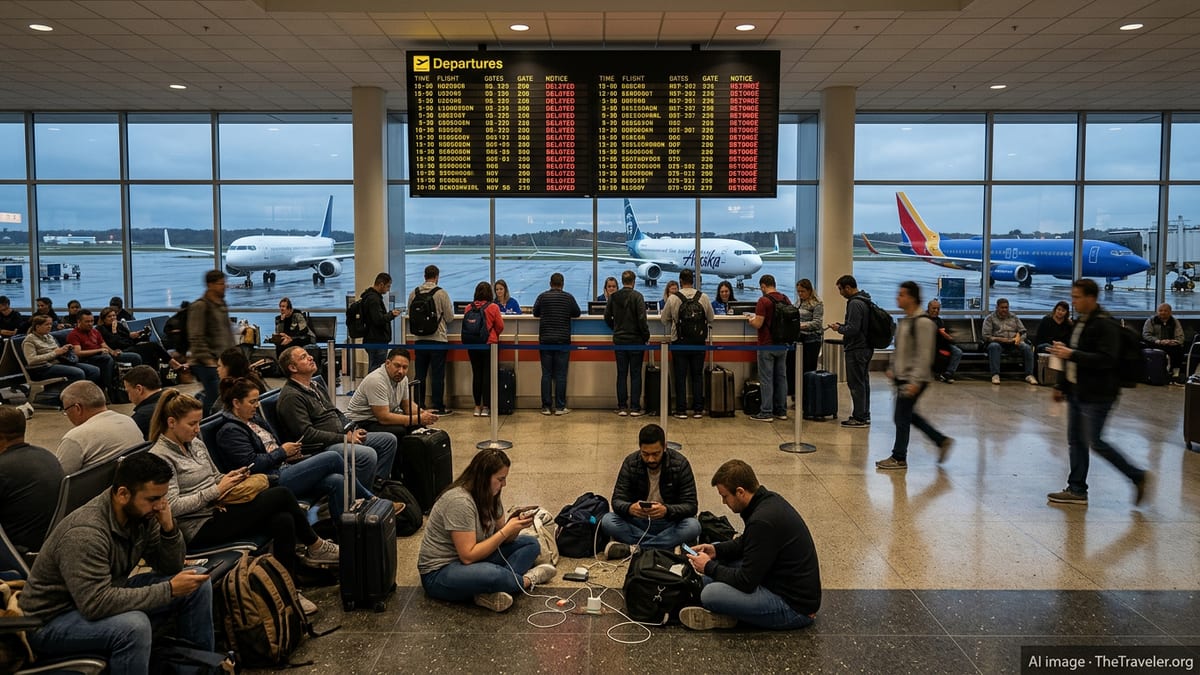
Operational Strains Across Three Major West Coast Gateways
The day’s disruptions were concentrated at Phoenix Sky Harbor International Airport, Seattle–Tacoma International Airport and San Francisco International Airport, all critical nodes in the domestic networks of American Airlines, Alaska Airlines and Southwest Airlines. Phoenix serves as a primary hub for American Airlines and an important base for Southwest, while Alaska Airlines relies heavily on Seattle and maintains a significant presence in San Francisco.
Publicly available tracking data indicated that a total of 231 flights operated by the three carriers were delayed and 16 were canceled, affecting departures and arrivals across the three cities as well as onward connections nationwide. The figures capture same-day performance and do not include rolling knock-on effects for later rotations, meaning the true impact for travelers with tight connections may be higher.
The disruptions came during a busy mid-March travel period, when business trips, conferences and early spring-break getaways converge. With aircraft and crews tightly scheduled, even modest operational issues can quickly cascade into wider network challenges, particularly at airports that function as major connecting points.
Observers note that all three airports are linchpins in their respective carriers’ networks. This concentration means that when irregular operations hit Phoenix, Seattle or San Francisco, the consequences can ripple far beyond the West Coast, touching secondary markets across the Midwest, Mountain West and Sun Belt.
Weather, Congestion and Network Complexity Fuel Knock-On Delays
Initial indications suggest a mix of factors behind the delays, including intermittent weather constraints, congestion in busy airspace corridors and ongoing operational complexity within airline networks. Even on days without severe storms, routine low clouds, wind patterns and air traffic management programs can reduce runway capacity and extend spacing between arrivals and departures.
Industry data shows that a significant share of delays in the United States are categorized broadly as air carrier or national aviation system issues, which include crew logistics, aircraft routing and traffic flow management. When a single flight departs late from one airport, the same aircraft and crew may arrive behind schedule for subsequent legs, pushing back departure times and straining duty-time limits for staff.
In tightly timed operations, that kind of delay can force difficult choices for schedulers. If crews approach their maximum allowable working hours, airlines may be required to cancel later segments or substitute aircraft and teams, which is not always possible during peak periods. This can help explain why a relatively modest number of cancellations can still have an outsized impact on passenger itineraries.
The disruptions in Phoenix, Seattle and San Francisco also highlight how vulnerable interconnected hubs can be to bottlenecks. When capacity is constrained at one airport, airlines sometimes implement ground delay programs or slow the pace of arrivals into affected airspace, resulting in rolling delays that reach well beyond the immediate region.
American, Alaska and Southwest Passengers Face Missed Connections
American Airlines customers traveling through Phoenix reported experiencing extended waits as departure boards filled with yellow and red delay indicators. Because Phoenix is a major connection point for routes to the Midwest, East Coast and Mexico, some passengers faced missed onward flights and unplanned overnight stays when their initial legs departed late.
In Seattle, travelers on Alaska Airlines encountered a combination of delayed departures and scattered cancellations as the carrier worked to reposition aircraft and crews. Social media posts and online forums reflected long hold times with customer service and crowded gate areas, with some passengers weighing whether to reroute via other hubs such as Portland, Los Angeles or Denver.
Southwest Airlines, which runs dense point-to-point schedules into all three affected airports, also saw its operations slow as delays on early-morning and mid-day turns began to accumulate. Because the airline relies on rapid aircraft turnarounds and multiple legs per aircraft per day, disruptions in one part of the network can quickly influence later flights, especially on shorter-haul West Coast and intermountain routes.
For many travelers, the most immediate impact was uncertainty. Rolling adjustments to departure times and gate changes complicated efforts to plan ground transport and meeting schedules. Families traveling for leisure expressed concern about losing valuable vacation time at their destinations as departure times slid back through the afternoon and evening.
Airports Manage Crowding as Lines Lengthen and Seats Fill Up
The surge in delays produced visible strain inside terminals at Phoenix, Seattle and San Francisco. Reports from travelers pointed to long queues at check in, security and customer service counters, as well as crowded gate areas where available seating quickly disappeared. Restrooms, food concessions and charging stations saw sustained demand as passengers waited for updated departure information.
Airport operators typically coordinate closely with airlines and the federal aviation system during days of irregular operations, adjusting staffing levels where possible and working to manage gate availability. In practice, however, rapid swings in traffic can leave terminals feeling congested even when total daily passenger counts are within expected ranges.
At Phoenix Sky Harbor, which hosts a significant volume of narrow-body operations for American and Southwest, gate congestion can become a limiting factor when arriving flights are held short of the gate due to late departures. Similar pressures exist at Seattle–Tacoma and San Francisco, where mix of domestic and international wide-body traffic further complicates gate assignments.
While some travelers shifted to rebooked flights later in the day, others sought alternative ground transport to nearby cities or regional airports, especially for shorter-distance journeys in the Pacific Northwest and Northern California. Rental car and rideshare availability can tighten quickly when a wave of cancellations hits, adding another layer of unpredictability for passengers.
What Travelers Can Do When Disruptions Mount
Consumer advocates and frequent flyer communities often emphasize preparation as the best defense against days like this one. They recommend that travelers monitor flight status across multiple sources, including airline apps and independent tracking services, in order to spot early signs of disruption and evaluate alternative options.
When widespread delays emerge, same day rebooking can be more successful for those who act quickly, especially on routes with multiple daily frequencies. Passengers are often encouraged to look at nearby airports within a reasonable driving radius, as seats may be available on flights departing from secondary markets when primary hubs are saturated.
Travel planners also point out the value of building longer connection times into itineraries during seasons prone to operational disruptions. A wider buffer between flights is not always practical for business travelers, but it can significantly reduce the risk of misconnecting when delays accrue throughout the day.
The situation affecting Phoenix, Seattle and San Francisco illustrates how even a seemingly modest tally of cancellations, when paired with a larger wave of delays, can reshape travel plans across a wide region. With spring travel demand building, passengers and airlines alike are expected to pay close attention to operational resilience in the weeks ahead.