

More news on this day
Flight disruption at Minneapolis–St Paul International Airport is stranding and rerouting travelers on Saturday, as publicly available tracking data shows Endeavor Air, Sun Country Airlines and Delta Air Lines facing a combined 45 delays and 3 cancellations, with knock-on effects reported in Chicago, New York, Atlanta and other major U.S. cities.
Get the latest news straight to your inbox!
Operational Pressures Build at a Key Midwest Hub
Minneapolis–St Paul International Airport functions as a central hub in the U.S. domestic network, particularly for Delta and its regional affiliate Endeavor Air, with Sun Country Airlines also operating a busy schedule of leisure and seasonal routes. When disruption occurs at this airport, it can quickly reverberate through connecting banks of flights serving both coasts and the South.
On Saturday, aggregated flight-status information pointed to 45 delayed departures and arrivals and 3 outright cancellations involving Endeavor Air, Sun Country and Delta services linked to Minneapolis–St Paul. The figures represent a small fraction of the day’s total movements but are enough to create rolling schedule congestion, tighter connection windows and missed onward flights for passengers traveling through the Twin Cities hub.
While the individual delay times vary, a pattern of late-arriving aircraft and extended turnarounds has been evident on several routes. Historic performance data for some Minneapolis–originating services, such as Sun Country’s Orlando flights and Delta’s connections to New York, already shows a tendency toward longer-than-average delays when the network is under strain, compounding today’s operational challenges.
As aircraft and crews arrive late into Minneapolis–St Paul, subsequent departures are pushed back, forcing airlines to reassign equipment, adjust crew pairings and reroute passengers. These adjustments can be especially disruptive on Saturdays, when many travelers are heading to or from weekend events, family visits and holiday trips.
Impact Radiates to Chicago, New York, Atlanta and Beyond
The disruption at Minneapolis–St Paul is coinciding with a broader day of U.S. flight delays and cancellations, especially at major hubs such as Chicago O’Hare, New York’s primary airports and Hartsfield–Jackson Atlanta International Airport. Published reports tracking nationwide operations on Saturday describe thousands of delayed flights and more than a hundred cancellations spread across multiple carriers.
Within that wider picture, Minneapolis–St Paul’s role as a Delta and Endeavor Air hub means that issues there are flowing directly into congested airspace and busy terminals at Chicago, New York and Atlanta. Travelers connecting through Chicago or New York from Minneapolis are encountering longer layovers, rebooked itineraries and, in some cases, overnight stays as available seats on later flights quickly fill.
In Atlanta, where Delta maintains its largest hub, downstream effects are apparent in banks of flights that depend on on-time arrivals from the Upper Midwest. Late inbound aircraft from Minneapolis can lead to knock-on delays across Southeast and transcontinental routes, tightening already busy weekend schedules for crews and ground staff.
Secondary airports around the country are also feeling the strain. As carriers reposition aircraft away from the most affected hubs or use alternative routings to maintain key connections, some regional airports may see short-notice schedule changes, including upgauged or downgauged aircraft and minor timing shifts that do not always show up in headline disruption figures.
Weather, Congestion and Network Complexity Drive Disruptions
Recent coverage of U.S. air travel over the past several days has highlighted a familiar mix of contributing factors behind nationwide delays: unsettled weather, thunderstorms around major hubs, lingering air traffic control constraints and heavily loaded spring travel schedules. These elements appear to be shaping the pattern of disruption observed today, with Minneapolis–St Paul’s delays interacting with conditions at other airports.
When storms or low visibility affect cities such as Chicago, New York or Atlanta, air traffic managers typically reduce arrival and departure rates, slowing the flow of aircraft into already busy airspace. Flights from Minneapolis headed to these metros may be held on the ground, sent into holding patterns or rerouted onto longer paths, which in turn tightens the time available to turn planes around for their next sectors.
The hub-and-spoke structure used by Delta and its regional partners, including Endeavor Air, amplifies the effect of even modest schedule disruptions. A single late inbound aircraft can ripple across multiple subsequent flights as it moves between Minneapolis, Chicago, New York and Atlanta. Sun Country’s point-to-point network, while less tightly banked, is still vulnerable when aircraft and crews are out of position due to earlier delays.
Airlines can mitigate some of these network challenges by trimming frequencies, proactively canceling low-load flights, or swapping aircraft types to protect longer-haul or heavily booked services. However, such tactics often translate into inconvenience for passengers whose original itineraries are altered at short notice.
What Travelers Are Experiencing at Minneapolis–St Paul
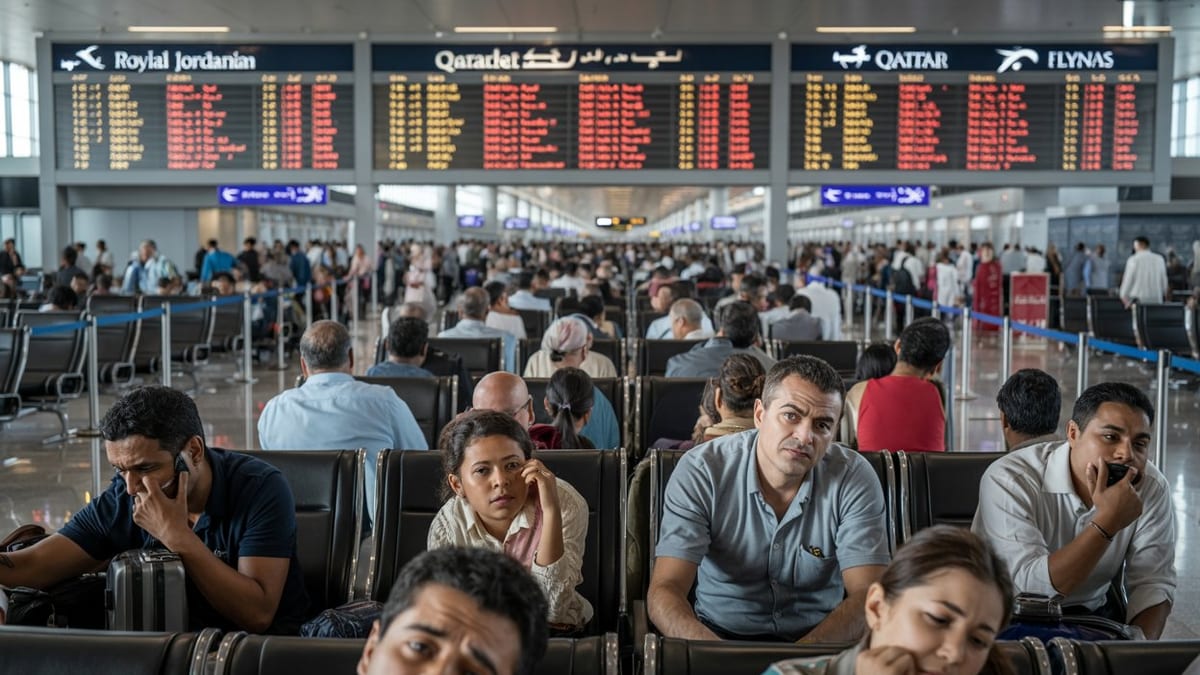
For passengers on the ground at Minneapolis–St Paul, today’s operational strain is most visible in extended waits at departure gates, crowded seating areas and a steady stream of revised departure times on information screens. Travelers on Endeavor-operated regional flights face particular uncertainty, as these smaller aircraft are more susceptible to cascading crew and aircraft-availability issues when delays accumulate.
Sun Country customers, many of whom are leisure travelers heading to warm-weather destinations, may encounter long delays on individual flights even when the overall number of disruptions for the airline is comparatively limited. Because the carrier operates a leaner fleet than larger network airlines, any single aircraft taken out of circulation by maintenance checks or weather-related rerouting can have an outsized impact on the day’s schedule.
Delta’s mainline operations at the airport, meanwhile, are balancing full weekend loads with the need to preserve connectivity at downline hubs. Passengers bound for New York or Chicago for same-day business or events are among those most affected when earlier segments run late, reducing options for rebooking on alternate services.
Inside the terminals, staff are working within the constraints of changing schedules and airport operating conditions. At busy times, security lines and boarding areas can grow crowded as delayed departures overlap with on-time flights, sharpening the sense of disruption even when only a portion of the day’s schedule is directly impacted.
Advice for Passengers Facing Delays and Cancellations
Publicly available guidance from consumer advocates and travel organizations consistently emphasizes the importance of monitoring flight status early and often when disruptions begin to spread across the U.S. network. For travelers using Minneapolis–St Paul today, that means checking airline apps and airport information boards throughout the day, rather than relying on the original schedule printed on boarding passes.
When delays or cancellations occur, same-day rebooking options are most plentiful in the first few hours, before later flights begin to fill with displaced passengers. Those traveling to major destinations such as Chicago, New York or Atlanta may have alternative routings through other hubs, even if the replacement itineraries involve additional connections.
Travel-rights organizations note that compensation rules for delays and cancellations vary depending on the airline, the cause of the disruption and the jurisdiction under which the ticket was sold. While U.S. regulations do not guarantee financial compensation for most weather-related delays, passengers may be eligible for meal vouchers, hotel stays or rebooking assistance when disruptions are within an airline’s control.
With spring and early-summer travel demand running high, today’s issues at Minneapolis–St Paul International illustrate how quickly a modest number of delays and cancellations can expand into a broader network challenge. For travelers, building extra time into itineraries, staying flexible about routings and using digital tools to track aircraft and gate changes remain some of the most effective strategies for coping with an increasingly complex air travel environment.