

More news on this day
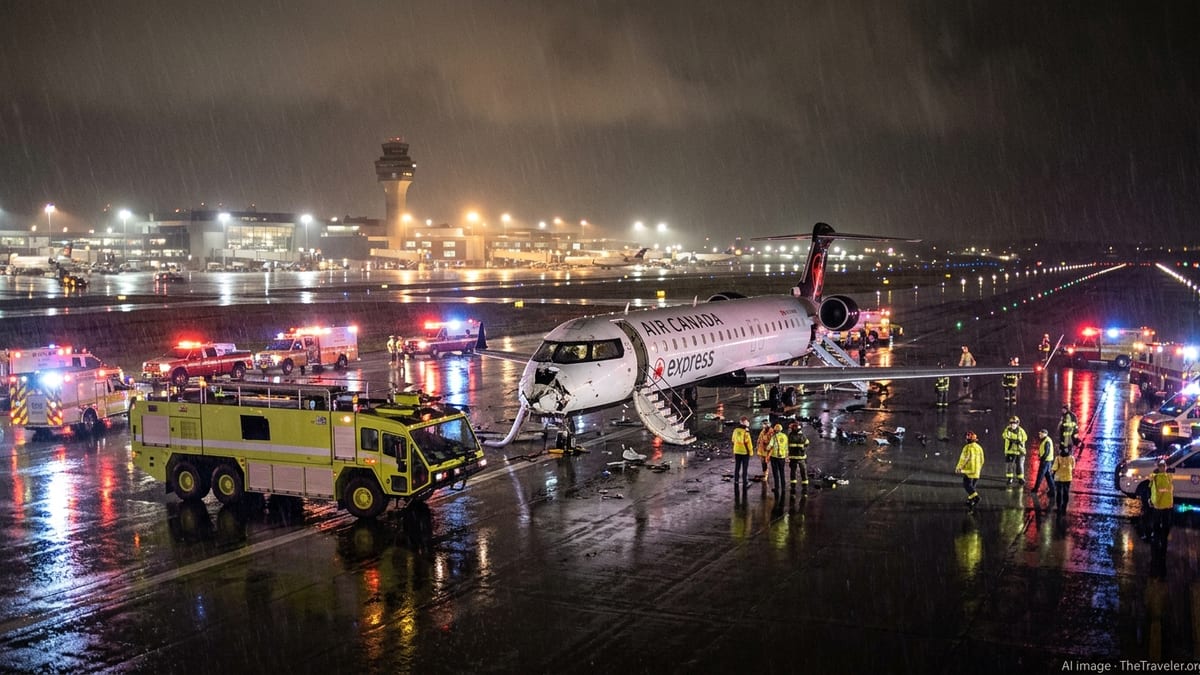
Spring travel plans for hundreds of passengers were thrown off course as Montréal–Trudeau International Airport recorded more than 60 delayed departures and five cancellations, disrupting flights operated by Jazz, Air Transat, Air Canada and other carriers across major routes including Toronto and New York.
Get the latest news straight to your inbox!
Busy Hub Sees Schedule Strain Across Key Short-Haul Routes
Publicly available flight-tracking data for Montréal–Trudeau International Airport shows a concentrated cluster of delays affecting short-haul services to major business and leisure markets. Routes linking Montreal with Toronto, New York and other high-frequency destinations bore the brunt of the disruption as departure times slipped well beyond scheduled slots.
Regional operations flown by Jazz under the Air Canada Express banner were particularly exposed, given their dense schedules and reliance on quick aircraft turnarounds between cities such as Montreal and Toronto. When an early rotation departed late, subsequent departures often pushed back in a cascading pattern, leaving passengers facing rolling delays throughout the day.
Medium‑haul leisure routes, including services by Air Transat, also experienced knock-on impacts. Even when individual flights were not cancelled outright, extended ground holds and revised departure times eroded connection windows for travelers continuing on to other cities, forcing many to rebook itineraries or face unexpected overnight stays.
Published coverage of the disruptions characterizes the event as delay-heavy rather than cancellation-led, with airlines largely maintaining their schedules but struggling to keep to advertised times. For travelers, however, the distinction offered little comfort as waits stretched from minutes into hours at already crowded departure gates.
Five Cancellations Add To The Turbulence For Travelers
Alongside the 60-plus delays, five flights were cancelled at Montréal–Trudeau, according to operational summaries compiled from airport and aviation data sources. While modest compared with large-scale shutdowns seen during severe weather or nationwide system outages, the targeted nature of these cancellations created significant disruption on the specific routes affected.
Air Canada and its regional partner Jazz were among the carriers impacted, alongside other operators serving domestic and transborder markets. Cancellations on high-demand corridors such as Montreal–Toronto and Montreal–New York meant that the remaining services were quickly oversubscribed, limiting same-day rebooking options for stranded passengers.
Travel industry analysts note that selective cancellations have increasingly become a strategy for airlines aiming to stabilize their operations on challenging days. By cutting a small number of frequencies, carriers attempt to recover punctuality on the remainder of the schedule. For those booked on the cancelled flights, however, the result can be lengthy delays in reaching their destination, particularly when alternative services are already near capacity.
The cancellations also created ripple effects beyond Montreal. Passengers due to connect in Toronto or New York for onward flights to other Canadian, U.S. or international destinations faced missed connections and, in some cases, the need to be rerouted via entirely different hubs.
Operational Factors And Spring Travel Demand Under Scrutiny
The disruption at Montreal comes against a backdrop of elevated pressure on airline and airport operations across North America this spring. Other major airports have recently reported heavy delay volumes tied to staffing constraints, busy holiday travel and localized weather challenges, highlighting the fragility of tightly timed flight schedules.
Reports on the Montreal situation indicate that a mix of factors likely contributed, including late-arriving aircraft from earlier legs, crew scheduling constraints and congested departure banks during peak periods. When multiple flights are scheduled to leave within a narrow window, even minor holdups at the gate, on taxiways or during boarding can lead to a queue of aircraft waiting for departure clearance.
Industry data from recent months shows that late-arriving aircraft and air-carrier-related causes remain major drivers of delays in Canada and the wider region. When planes and crews arrive behind schedule from another airport, the knock-on effect can be difficult to absorb without built-in slack time in the timetable, especially for carriers running intensive daily rotations through a hub like Montreal.
At the same time, sustained demand for both business and leisure travel has kept load factors high on many Canadian and cross-border routes. With fewer empty seats available, airlines have less flexibility to accommodate displaced travelers quickly when disruptions do occur, increasing the likelihood of longer waits and extended itineraries.
Impact Felt From Check-In Counters To Arrival Halls
For passengers on the ground at Montréal–Trudeau, the operational challenges translated into crowded check-in lines, busy security lanes and full departure lounges. Visuals shared across public platforms from previous disruption days at the airport show travelers queued through terminal corridors and seated on floors near departure gates as they waited for revised boarding times.
Reports indicate that some travelers attempting to depart Montreal for Toronto, New York and other major cities were notified of rolling delays, with departure times updated repeatedly in airport information systems. This type of gradual shift can be particularly frustrating for passengers, who may initially expect a short wait only to find their delay extending incrementally over several hours.
The arrival side of the operation was not immune. Late departures from Montreal translated into late arrivals at downline airports, affecting baggage delivery times and ground transport plans. Travelers landing in Toronto or New York later than expected faced reduced options for onward rail or bus services and, in some cases, the need to rearrange hotel stays at short notice.
The cumulative impact of the disruption extended beyond immediate travel inconveniences. Missed business meetings, shortened vacations and additional out-of-pocket costs for food, accommodation and ground transportation added to passenger frustration, even when airlines provided rebooking support.
What Travelers Can Do During Ongoing Schedule Volatility
With Montreal featuring repeatedly in recent reports on Canadian flight disruption, travel experts are encouraging passengers to build more resilience into their plans. Booking earlier departures, allowing wider connection windows and avoiding tight same-day commitments at the destination can help reduce the risk that a delay turns into a major interruption.
Passenger-rights organizations emphasize that travelers should familiarize themselves with airline policies and applicable compensation regimes before departure. While many North American disruptions are classified as outside carrier control, such as those linked to weather or broader air traffic constraints, passengers may still be entitled to assistance, meal vouchers or accommodation in certain circumstances, depending on the carrier and route.
Checking flight status directly with the airline’s digital channels before leaving for the airport can also provide early warning of schedule changes. On days when Montréal–Trudeau shows an elevated number of delays, same-day rebooking through mobile apps or call centers may offer better options than waiting to seek assistance at the airport service desk.
As airlines such as Air Canada, Jazz and Air Transat continue to navigate a busy spring travel period, operational performance at Montréal–Trudeau will remain under close watch. For now, the latest wave of delays and cancellations serves as a reminder that even when outright shutdowns are avoided, relatively small numbers of disrupted flights can have an outsized impact on passengers across the Canadian and transborder network.