

More news on this day
Travelers at Philadelphia International Airport experienced widespread disruption today as flight-tracking data showed 129 delayed departures and arrivals and three cancellations across major carriers including American Airlines, Southwest Airlines, Delta Air Lines, United Airlines, and several smaller operators, leaving many passengers stranded in terminals and facing missed connections.
Get the latest news straight to your inbox!
Flight Disruptions Ripple Across Major Carriers
Publicly available flight-status boards for Philadelphia International Airport today indicated an unusual buildup of delayed services throughout the morning and early afternoon, affecting both domestic and limited international routes. The 129 delays recorded included short timetable slippages of 30 to 45 minutes as well as multi-hour disruptions, complicating travel for passengers with onward connections.
American Airlines, which operates a large hub at Philadelphia, appeared to have the greatest number of impacted flights, with knock-on effects reported on routes along the East Coast and into the Midwest. Southwest Airlines, Delta Air Lines, United Airlines, and other carriers also showed clusters of late departures and arrivals, contributing to a general slowing of activity across several terminals.
According to national aviation dashboards, the three cancellations at Philadelphia were part of a broader pattern of scattered schedule cuts across the United States, but the volume of delays at this airport placed it among the more disrupted mid-Atlantic hubs today. While the majority of services remained scheduled to operate, the accumulated delays significantly extended time spent in the airport for many travelers.
By early evening, some flights were returning to more typical departure intervals, but residual congestion in the system meant that itineraries later in the day were still vulnerable to further slippage. Passengers with evening connections were particularly exposed to missed onward flights where minimum connection times were already tight.
Contributing Factors: Weather, Congestion, and Staffing Strains
Regional weather across the Northeast and mid-Atlantic appeared unsettled today, with forecasts calling for periods of low clouds, gusty winds, and passing showers in portions of the corridor that links Philadelphia with other high-traffic airports. Aviation planning reports note that relatively modest weather disturbances can still produce significant schedule ripple effects when airspace and airports are already operating near capacity.
In addition to weather-related spacing requirements imposed on air traffic, airlines have been operating within a tightly stretched staffing environment for flight crews and ground personnel. Industry analyses over recent months have highlighted that even routine schedule disruptions can quickly escalate into wider operational challenges when reserve crews and spare aircraft are limited.
At Philadelphia, congestion compounded difficulties once delays began to stack up. Aircraft arriving late from other parts of the country often had quick turnarounds scheduled, meaning that a delay on an inbound leg could easily transfer to one or more subsequent departures. As more aircraft and crews fell behind schedule, airport operations faced mounting pressure to reassign gates and ramp space.
Reports from prior weeks have also pointed to ongoing staffing and checkpoint adjustments affecting security screening at Philadelphia, which can lengthen the time needed for passengers to reach departure gates during peak periods. While today’s disruptions were primarily visible on the flight operations side, such overlapping pressures can amplify the overall impact on the traveling public.
Scenes in the Terminals: Long Lines and Scrambled Plans
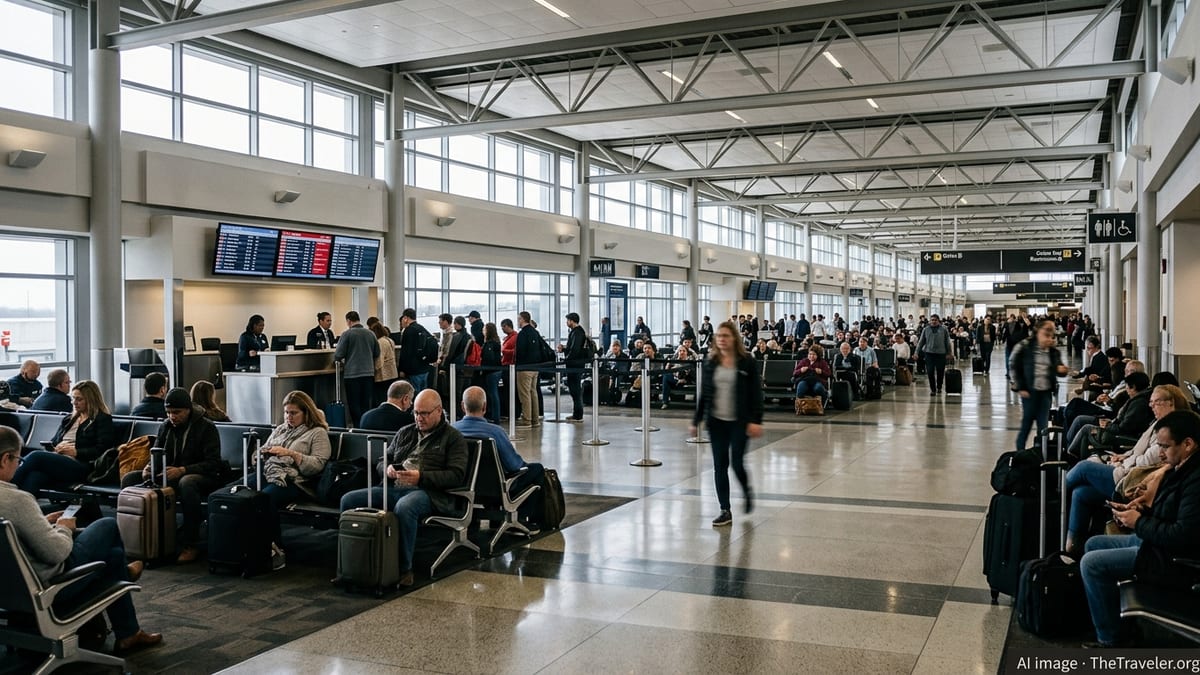
Inside the terminals, passengers encountered crowded gate areas, extended customer-service queues, and busy concessions as they waited for updated departure information. Social media posts and public message boards referenced travelers at Philadelphia spending several hours in the airport, including families with young children and international passengers attempting to protect onward connections to Europe and other destinations.
Some travelers reportedly attempted to rebook to alternate routings via other East Coast hubs, particularly when facing the risk of misconnecting on transatlantic services. However, peak-season load factors on many routes limited the number of available seats, leaving some passengers with only next-day options or extended layovers far from their original plans.
Airport operations updates encouraged travelers to monitor their airline’s mobile applications and flight-status tools for real-time information. Publicly accessible guidance emphasized the importance of checking flight status before leaving for the airport, especially for evening departures that could be affected by aircraft and crew arriving late from earlier disrupted segments.
Ground transportation services around the airport also experienced intermittent surges in demand, as some passengers chose to abandon their trips, seek rail alternatives for shorter regional journeys, or secure last-minute hotel rooms when connections became impossible. Nearby accommodation options were reported to be busier than usual as delays stretched into the later hours of the day.
What Today’s Disruptions Mean for Upcoming Travel
Today’s wave of delays at Philadelphia International Airport underscores the fragility of airline schedules during a period of persistent weather variability and tight staffing margins across the aviation sector. Industry observers note that even when the total number of cancellations is relatively low, concentrated delays at a key hub can cascade through the national network for many hours.
For travelers with flights scheduled over the coming days, publicly available travel advisories and airline guidance point to several practical steps. These include allowing extra time at the airport, especially at hubs that have recently experienced security or staffing adjustments, and using airline apps to receive early notice of gate changes or revised departure times.
Travel-industry analysts also highlight the value of building longer connection windows wherever possible, particularly when itineraries rely on late-afternoon or evening departures from delay-prone airports. Flexible ticket options, including same-day confirmed changes or standby lists, can sometimes provide added resilience when weather or congestion affects a particular city.
While operations at Philadelphia were expected to gradually stabilize as the day progressed, the mix of 129 delays and three cancellations illustrates how quickly conditions can shift for air travelers. As airlines and airport operators continue to adjust schedules and resources for the spring travel period, passengers using Philadelphia International Airport are likely to keep a close eye on flight-status updates before heading to the terminal.