

More news on this day
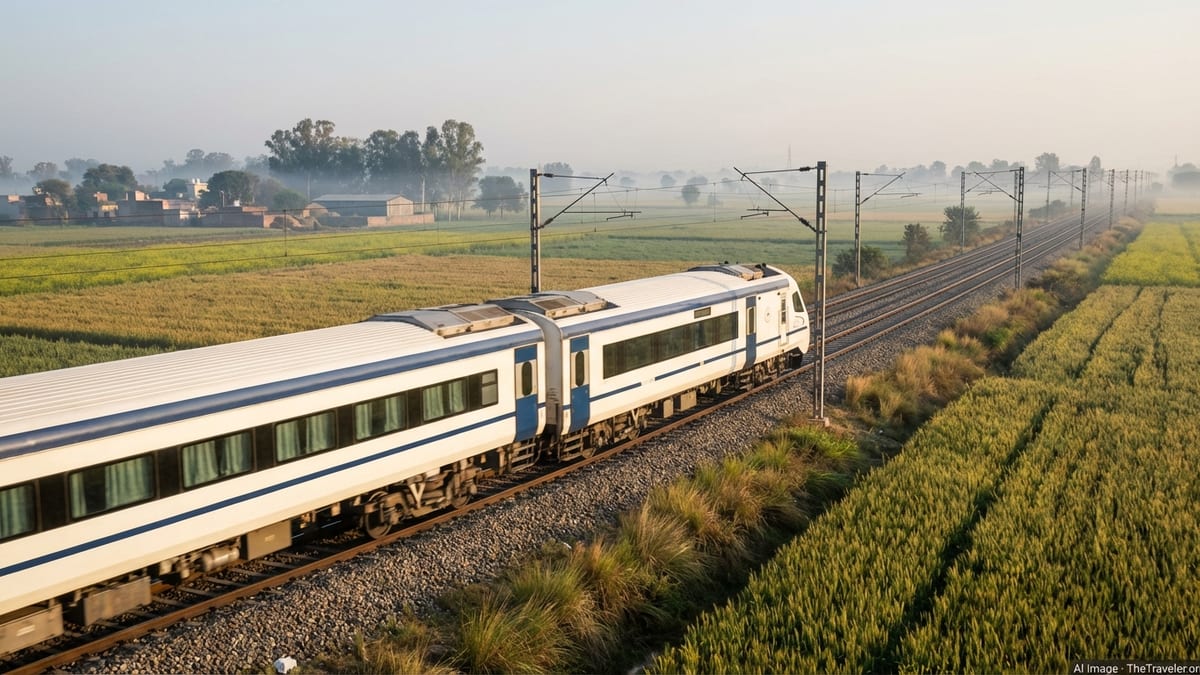
Indian Railways is preparing to introduce a dedicated Delhi–Amritsar Vande Bharat Sleeper Express by next winter, promising faster overnight journeys, upgraded comfort and a major boost to tourism and business travel between the national capital and Punjab’s spiritual heartland.
A Dedicated Overnight Link Between Capital and Holy City
The planned Delhi–Amritsar Vande Bharat Sleeper Express, announced by Union Minister of State for Railways Ravneet Singh Bittu, is slated to begin operations in the winter season of 2026. The service will operate as a fully air conditioned sleeper train, offering an overnight connection tailored to both pilgrims and regular business travellers who prefer to sleep through the journey and arrive early in the morning.
The new train will run via Chandigarh, Ludhiana and Jalandhar, interlinking some of North India’s most important economic and educational hubs along the way. This alignment is expected to offer a high quality alternative to overnight buses and existing express trains, which are often crowded and lack the modern amenities travellers increasingly expect on long distance routes.
For Amritsar, home to the Golden Temple and Jallianwala Bagh, the service is expected to strengthen its position on the country’s religious and cultural tourism map. For Delhi, the route deepens its role as a gateway for both domestic and international visitors who want to combine the capital with a quick, comfortable journey to Punjab.
Cutting Travel Time While You Sleep
The Vande Bharat Sleeper is built to operate as a semi high speed service, with a design speed of up to 160 kilometres per hour on suitable stretches. While actual commercial speeds depend on track conditions and signalling, the new train is expected to trim journey times between Delhi and Amritsar compared with most existing overnight services, many of which take eight hours or more to cover the distance.
Railway planners are working to optimise schedules so that travellers can board in the late evening and wake up near their destination in the early morning. The goal is to make the journey time competitive with road travel, while adding the advantage of uninterrupted sleep, greater safety and the ability to make productive use of time on board.
Once detailed timings are finalised closer to launch, the service is likely to become especially attractive to business travellers heading to industrial centres such as Ludhiana and Jalandhar. By arriving rested rather than fatigued from an overnight bus journey, travellers stand to gain both comfort and productivity, a key selling point in a busy economic corridor.
Next Generation Sleeper Comfort and Safety
The Delhi–Amritsar service will use the new Vande Bharat Sleeper trainsets, the latest evolution of Indian Railways’ flagship semi high speed platform. Unlike the earlier chair car versions, the sleeper variant is configured with First AC, Second AC and Third AC coaches, all featuring cushioned berths, improved ladders for upper berths and redesigned interiors intended for longer overnight journeys.
The coaches are being equipped with soft night lighting, individual reading lamps, power outlets and wide panoramic windows that turn daytime segments of the route into a more scenic experience. Onboard infotainment screens and integrated announcement systems are designed to keep passengers informed without disturbing those who prefer a quiet cabin environment.
Modern bio vacuum toilets similar to those used on aircraft, sensor based water taps and dedicated facilities for passengers with reduced mobility are central to the design. First AC passengers are expected to benefit from shower facilities with hot water, a premium feature that can be particularly appealing for overnight business travellers arriving early for meetings.
On the safety front, the trainsets are being fitted with the indigenous Kavach automatic train protection system, which monitors speed and signals to reduce the risk of human error. Continuous CCTV coverage in public areas and automatic inter coach doors add another layer of security and comfort for overnight travellers.
Infrastructure Push Across Punjab and Haryana
The introduction of the sleeper Vande Bharat between Delhi and Amritsar is closely tied to a broader programme of railway upgrades across Punjab and neighbouring states. Officials have highlighted that projects worth tens of thousands of crores of rupees are in progress, ranging from new lines and track doubling to modern signalling and bridge upgrades.
In Punjab alone, work is underway on a large number of road overbridges, road underbridges and low height subways designed to replace level crossings and ease road congestion near railway lines. One such project at Doraha in Ludhiana district, where a long pending overbridge is finally moving ahead, is expected to significantly reduce delays for both road users and trains along the corridor.
Additional third and fourth lines on key stretches between Delhi, Haryana and Punjab are being built to increase capacity and reduce bottlenecks for both passenger and freight services. These capacity enhancements are critical to allowing premium services such as the Vande Bharat Sleeper to maintain higher average speeds without being slowed by congestion on mixed traffic routes.
At Ladhowal near Ludhiana, land has been identified for a new maintenance facility and loco shed that will support the new service. Locating maintenance infrastructure close to the route’s midpoint should help improve reliability, turnaround times and overall punctuality once operations begin.
Economic and Tourism Boost for Delhi, Amritsar and the Corridor
Tourism stakeholders in both Delhi and Amritsar are already eyeing the planned sleeper service as a potential game changer. For international visitors landing in the capital, the ability to board a clean, modern overnight train directly to Amritsar offers an appealing alternative to a domestic flight or long road journey, particularly for those eager to experience India’s evolving rail network.
Travel agents expect that the new train will be packaged into multi city itineraries combining Delhi, Amritsar and the Himalayan foothills around Chandigarh and Shimla. The presence of key intermediate stops such as Chandigarh, Ludhiana and Jalandhar should also encourage more flexible, open jaw routes, with travellers able to disembark in one city and reconnect from another.
On the business side, faster and more predictable overnight rail connectivity can make it easier for buyers, suppliers and investors to reach industrial clusters in Punjab without losing a working day to travel. Improved freight capacity on upgraded lines, operating in parallel with new passenger services, is expected to lower logistics costs and strengthen supply chains for textiles, bicycle manufacturing, agro processing and other regional industries.
For Amritsar itself, better rail access often translates directly into higher footfall at hotels, restaurants and local attractions. Industry representatives anticipate that the Vande Bharat Sleeper will support efforts to promote the city not only as a pilgrimage destination, but also as a base for heritage, culinary and border tourism.
Production Timeline and Fleet Expansion
The Delhi–Amritsar overnight link is being made possible by the gradual ramp up of Vande Bharat Sleeper production. Bharat Earth Movers Limited in Bengaluru and the Integral Coach Factory in Chennai are jointly responsible for rolling out the new rakes, which incorporate complex electrical, braking and comfort systems that require extensive testing before entering service.
The first sleeper service, operated between Kamakhya and Howrah, began commercial operations in January 2026, giving Indian Railways its first real world test bed for the new design over a long distance route. Feedback from that corridor, including passenger response to berth layouts, lighting, catering modules and maintenance requirements, is expected to inform refinements before additional routes such as Delhi–Amritsar go live.
Railway officials have indicated that the initial tranche of sleeper rakes will be followed by a significantly larger fleet buildout through 2026 and beyond. Once manufacturing lines reach steady state, planners intend to gradually replace select conventional overnight expresses on high demand routes with more energy efficient, faster accelerating sleeper trainsets.
For travellers in the Delhi–Amritsar sector, this means that the winter 2026 service is likely to be just the first of several new generation overnight options as production scales up and more routes across the country receive similar upgrades.
A New Benchmark for Overnight Rail in India
With its blend of semi high speed capability, hotel like amenities and emphasis on safety, the Vande Bharat Sleeper platform is being positioned as the successor to many of India’s traditional premium overnight trains. While the iconic Rajdhani Express services will continue to operate on key national routes, railway planners see the new sleeper trainsets as a logical evolution for corridors that can support higher speeds and demand higher levels of onboard comfort.
The Delhi–Amritsar corridor is a natural candidate for this upgrade. It combines a high density of passengers, significant religious and leisure travel, and growing business traffic linking the capital with Punjab’s industrial and agricultural base. As track, signalling and bridge works are completed in the run up to 2026, the stage is being set for the route to serve as a showcase of what the next generation of Indian overnight rail travel can look like.
For passengers, the most tangible change will be the experience on board: cleaner, brighter coaches, quieter cabins, more reliable climate control and modern toilets that reflect international standards. For the broader economy, however, the benefits will be felt in the form of shorter effective travel times, better connectivity between key cities and the gradual decongestion of highways as some travellers shift from road to rail.
If the Delhi–Amritsar Sleeper Vande Bharat succeeds in attracting strong ridership, it is likely to accelerate the rollout of similar overnight services on other busy routes radiating from Delhi and major metros. In that sense, the train is more than just a new timetable entry: it is a test of how far India’s rail modernisation drive can reshape the country’s overnight travel habits by 2026 and beyond.