

More news on this day
After years of anticipation and multiple revised deadlines, the Delhi–Dehradun Expressway is now widely expected to open to regular traffic in April 2026, ushering in a new era of fast intercity travel and reshaping tourism flows into Uttarakhand’s popular hill destinations.
Get the latest news straight to your inbox!
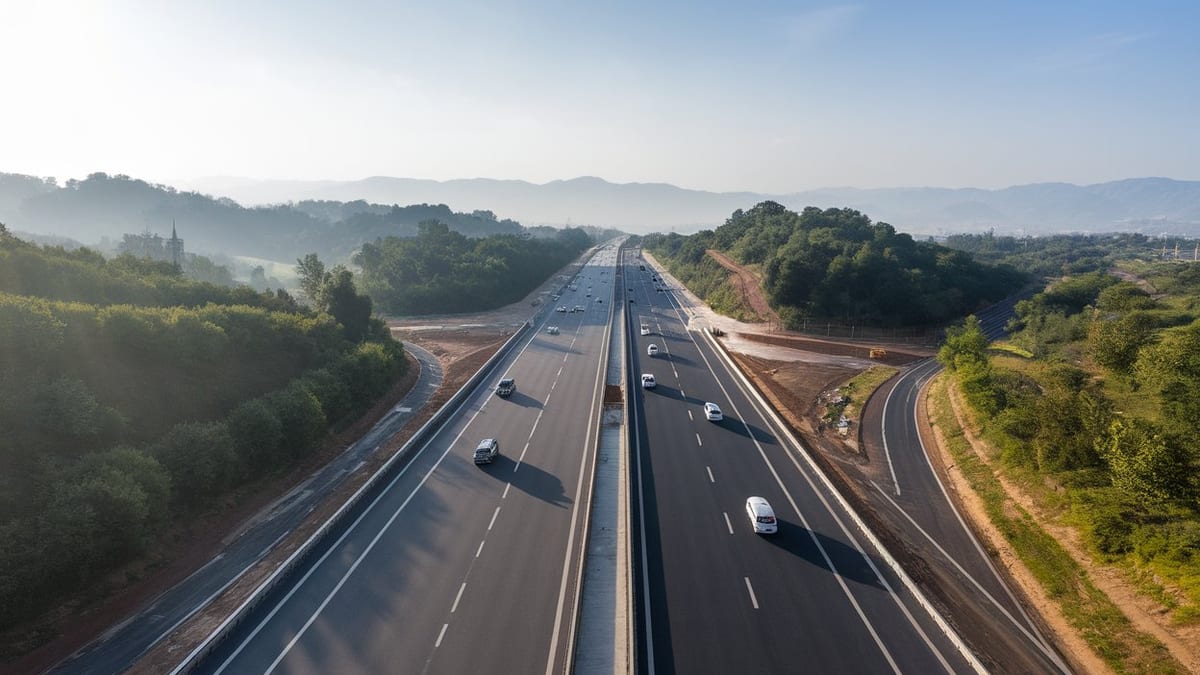
Image by Latest International / Global Travel News, Breaking World Travel News
A Long-Awaited Expressway Nears the Finish Line
The 210–212 kilometre Delhi–Dehradun Greenfield Access Controlled Expressway has been one of North India’s most closely watched infrastructure projects. Conceived to cut the road journey between the national capital and Uttarakhand’s capital from around five to six hours to roughly two to two-and-a-half hours, the corridor has been under construction in multiple phases across Delhi, Uttar Pradesh and Uttarakhand.
Publicly available information from parliamentary replies and project trackers shows that key construction packages, particularly between the Eastern Peripheral Expressway junction and the Saharanpur bypass, have targeted completion dates around early 2026. Earlier timelines that mentioned openings in late 2024 or early 2025 were pushed back as land issues, design refinements and safety clearances slowed progress on some stretches.
By early 2026, trial runs on completed sections near Delhi and Dehradun, along with finishing works on remaining segments, have positioned the project for a phased operationalisation. Industry and government-facing reports now broadly align around a full public opening in the first half of 2026, with April emerging as a realistic window for regular traffic to begin using the complete corridor.
The expressway has been built at an estimated cost in the range of 11,800 to 12,000 crore rupees. It features a six-lane, access-controlled design that can be widened to eight lanes in future to accommodate rising traffic between the National Capital Region and Uttarakhand’s growing urban and tourism centres.
Travel Time Slashed From Hours to Just Over Two
The most immediate impact for travellers will be on journey times. Current road trips between Delhi and Dehradun typically take five to six hours, depending on congestion around Ghaziabad, Meerut, Muzaffarnagar and Saharanpur, as well as bottlenecks closer to the hills. The new expressway is designed to bypass many of these choke points with high-speed, signal-free movement.
Alignment details shared in earlier public briefings describe a largely greenfield route branching out from the Akshardham area of Delhi, linking to the Eastern Peripheral Expressway near Baghpat, and then running via Saharanpur towards Ganeshpur and Dehradun. Long, straight stretches, grade-separated interchanges and limited, controlled entry and exit points are expected to support sustained higher speeds compared to the existing highway network.
Once the full corridor is operational, travel time projections of about two to two-and-a-half hours between Delhi and Dehradun are considered achievable under normal traffic conditions. For many regular commuters, that effectively converts what used to be a full-day return drive into a manageable short trip, making weekend and even same-day visits significantly more feasible.
The controlled-access design is also intended to improve safety by separating through-traffic from local movements. Multiple vehicular underpasses, service roads and dedicated entry points have been included to reduce the kind of mixed, at-grade traffic that contributes to accidents on conventional highways.
A Game Changer for Tourism in Uttarakhand
The expressway’s opening is likely to have a profound effect on tourism patterns in Uttarakhand. Dehradun, Mussoorie, Rishikesh and Haridwar already rank among the most popular getaways for residents of Delhi and western Uttar Pradesh. Shorter journey times and a more predictable driving experience are expected to attract a new wave of weekend travellers and short-stay visitors.
Travel and hospitality analysts anticipate that easier access will encourage more spontaneous trips, particularly during peak summer months when families seek to escape the heat in the plains. Tour operators are expected to recalibrate itineraries, offering tighter, two- or three-day packages that rely on faster turnarounds made possible by the expressway.
The project also includes a planned greenfield connector towards Haridwar, which, once fully completed, is set to improve access to religious tourism circuits along the Ganga. This is likely to benefit pilgrimage traffic for events and festivals, as well as year-round visits to ashrams and wellness retreats that have multiplied around Rishikesh and Haridwar over the past decade.
Local businesses in the Doon valley and surrounding hill regions are already preparing for higher footfall. Industry bodies expect new investments in hotels, homestays, adventure-tourism outfits and food and beverage ventures along the route, particularly near interchanges that offer convenient exits towards established and emerging tourist spots.
Economic And Regional Connectivity Benefits
Beyond tourism, the Delhi–Dehradun Expressway is poised to deliver significant economic gains. Faster connectivity between the National Capital Region and Uttarakhand is expected to reduce logistics costs for goods moving in and out of the hill state, including pharmaceuticals, horticultural produce and packaged consumer products.
Dehradun’s growing role as an education and services hub could be strengthened as the city becomes easier to reach for students, professionals and visiting executives. Improved road connectivity also dovetails with broader plans to enhance regional links between Uttarakhand, western Uttar Pradesh and Haryana, integrating the expressway into a wider web of high-speed corridors.
The expressway’s junctions with existing and planned highways are likely to create new economic clusters in peri-urban belts of Uttar Pradesh, particularly around Saharanpur and Baghpat. These areas may see increased interest in warehousing, logistics parks and light manufacturing as improved access to Delhi and Dehradun lowers transport times and makes just-in-time deliveries more viable.
Real estate observers are tracking early signs of land-use change along the route, with expectations that roadside amenities, fuel stations, food plazas and rest facilities will emerge around key exits. While such development can generate jobs and services, it also raises questions around planning, zoning and environmental safeguards that local authorities will need to manage carefully.
Environmental Features and Future Outlook
The Delhi–Dehradun corridor has drawn attention for its environmental components, particularly where it passes near forested and wildlife-rich areas approaching Dehradun. Earlier route descriptions highlighted the inclusion of elevated stretches and wildlife-friendly design features aimed at reducing habitat fragmentation and mitigating the impact on fauna.
In Uttarakhand, the expressway’s integration with existing hilly sections near the Daat Kali area has involved widening and strengthening work, including additional safety barriers and improved gradients. These upgrades are expected to make the final approach into Dehradun smoother and safer, especially during the monsoon season when older roads have been prone to damage and delays.
As the project moves into its final stage before full opening, travel industry stakeholders are focusing on how quickly complementary infrastructure will follow. Adequate signage, clear information on entry and exit rules, robust enforcement of speed and lane discipline, and well-designed rest areas will be critical to delivering the level of experience that early projections have promised.
For now, the anticipated April 2026 opening is being viewed as a pivotal moment for mobility in northern India. If the expressway lives up to its projected performance, the Delhi–Dehradun drive could soon join the ranks of the country’s most transformative intercity corridors, redefining how residents, tourists and businesses move between the plains and the foothills of the Himalayas.