

More news on this day
A Delta Air Lines Airbus A330 departing São Paulo reportedly suffered a dramatic engine failure shortly after takeoff, sending flaming debris toward the airport area and forcing the jet to return for an emergency landing.
Get the latest news straight to your inbox!
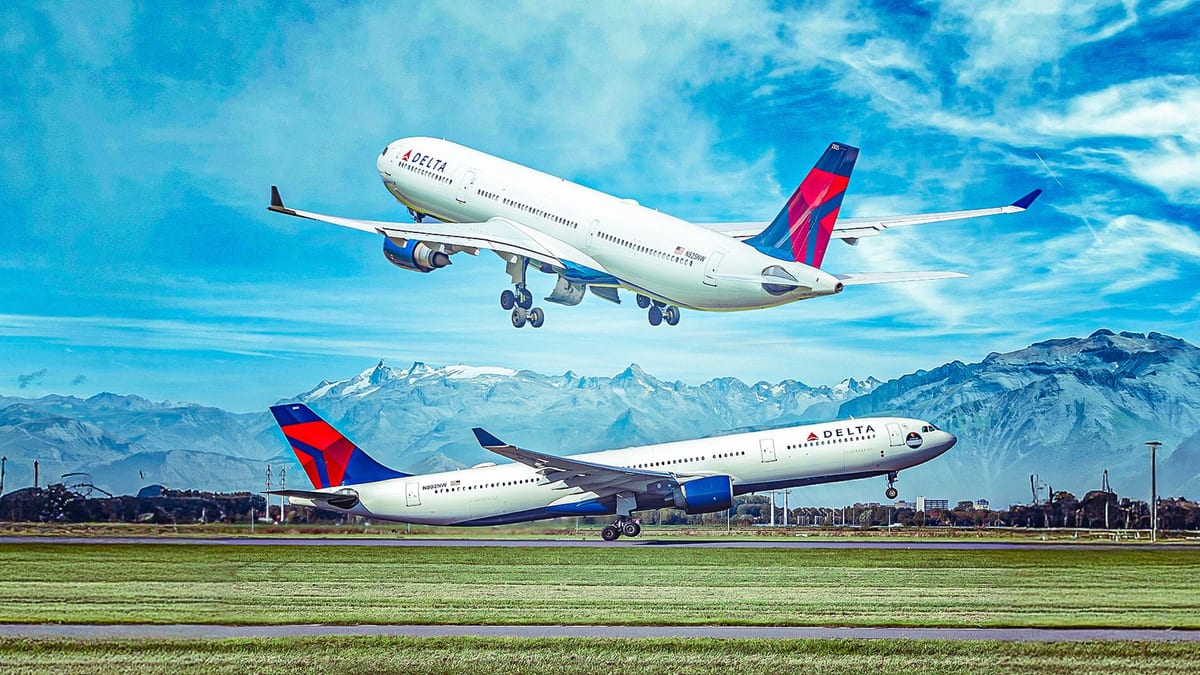
Image by Simple Flying - Aviation News
Incident Shortly After Nighttime Departure
Publicly available flight tracking data and eyewitness accounts indicate the widebody twinjet was operating a scheduled service from São Paulo/Guarulhos International Airport to the United States when the incident occurred late Sunday, March 29, local time. The aircraft had just lifted off from the runway and begun its initial climb when one of its engines experienced an apparent explosive failure.
Video clips shared on social media and aviation forums show the left-side engine of an Airbus A330 engulfed in flames as the aircraft climbs away from Guarulhos. In several recordings, bright sparks and what appears to be structural debris can be seen trailing the aircraft, suggesting parts of the engine or nacelle separated during the event.
Flight tracking plots suggest the crew leveled off at a relatively low altitude compared with a standard climb, entered a holding pattern close to the airport and then set up for a return. The aircraft later landed back at São Paulo, where emergency services were positioned along the runway as a precaution.
Reports circulating among passengers and local observers indicate that, despite the dramatic visuals of the fire, the landing itself appeared controlled, with the jet remaining on the runway and coming to a stop under its own braking before being met by fire and rescue vehicles.
Debris Reported Near Runway and Airport Perimeter
Accounts posted by individuals who identified themselves as witnesses near the airport describe seeing burning fragments fall from the aircraft as it climbed away. Some reports refer to metal pieces and insulation-like material landing near the runway environs and in areas just beyond the immediate airport perimeter.
Initial descriptions from aviation enthusiasts monitoring the event suggest the failure involved a violent uncontainment within the engine, with fragments exiting the nacelle rather than remaining inside the engine casing. Such events have the potential to create a debris field along the departure path, raising concerns about ground safety in densely populated urban areas like metropolitan São Paulo.
There were no immediate reports of injuries on the ground connected to falling debris, and early information circulating among passengers suggests no serious injuries on board. However, the extent of any damage on the runway surface, airport infrastructure, or nearby property was not immediately clear from the publicly available material.
Airport operations at Guarulhos appeared to continue with some disruption, as flight tracking data showed departure and arrival sequences adjusting around the time of the emergency. Some aircraft were briefly placed in holding patterns, while others experienced delays on the ground as the runway inspection and aircraft recovery took place.
Passenger Accounts Highlight Tense Moments On Board
Posts from travelers who said they were on the flight describe a loud bang shortly after liftoff, followed by strong vibrations and a visible glow from the affected engine side. Several reports mention a smell of smoke in the cabin and cabin lights being turned on as the crew prepared the aircraft for an unscheduled landing back at São Paulo.
According to these accounts, the flight crew made announcements advising passengers that the aircraft had experienced an engine problem and would return to the airport. Passengers reported that the cabin crew conducted calm but firm safety briefings, reviewing brace positions and emergency procedures while the aircraft circled to burn or jettison fuel and set up for approach.
Some passengers described seeing emergency vehicles lining the runway as the A330 made its final approach. After landing, the aircraft was reported to have been inspected by fire crews as a precaution while passengers remained on board before disembarking either by air stairs or via jet bridge after the situation was secured.
Travelers subsequently shared images from inside the cabin and from the terminal showing the aircraft parked with visible damage to the engine area. Several noted that they were rebooked on later flights or accommodated overnight in São Paulo while Delta reviewed aircraft availability and onward connections.
Focus on Engine Type and Maintenance History
Publicly accessible fleet information shows that Delta operates multiple variants of the Airbus A330, including aircraft powered by different engine types from major manufacturers. Aviation analysts following the São Paulo incident are watching for confirmation of the exact engine model involved, as any pattern of failures linked to a particular engine family can prompt swift regulatory and technical responses.
Similar events in recent years involving other airlines have led to targeted inspections, temporary groundings of specific engine batches, and detailed metallurgical analysis of fan blades and turbine components. In those cases, investigators focused on fatigue cracking, manufacturing anomalies, and maintenance procedures to determine why certain parts failed under stress.
In this latest event, imagery circulating online appears to show significant structural compromise to the affected engine, including possible separation of core components. Aviation safety specialists note that the A330 is designed to fly safely on one engine, and that crews train repeatedly in simulators for precisely this kind of failure during takeoff, one of the most demanding phases of flight.
While it is too early for any definitive technical explanation, the characteristics of the fire and debris trail are likely to direct investigators toward scenarios involving uncontained engine damage or separation, which typically receive close scrutiny because of the risk to both the aircraft and people on the ground.
Safety Record and Next Steps for the Investigation
The incident near São Paulo comes against a backdrop of heightened public attention to engine failures after several widely publicized cases in which aircraft safely returned to their departure airports with visibly damaged engines. Despite the dramatic images such events often produce, commercial aviation statistics continue to show that serious engine incidents remain rare compared with the enormous number of flights operated worldwide.
Brazilian air accident investigators are expected to lead the formal inquiry, working alongside international partners from the country of the airline and the aircraft and engine manufacturers. According to standard practice, the investigation will examine flight data and cockpit voice recordings, physical evidence from the damaged engine and any recovered debris, as well as maintenance records and prior history for the airframe and engines.
Preliminary findings typically focus on factual information such as the sequence of events, system indications in the cockpit, and the condition of critical components. More detailed causal analysis, including whether any design, manufacturing, inspection or operational factors contributed to the failure, is usually reserved for later stages of the investigation.
For passengers and airports, the São Paulo event underscores both the vulnerability of densely populated airport environments to high-energy engine failures and the robustness of modern emergency procedures. Even as investigators begin the methodical work of understanding exactly what went wrong with the Delta A330’s engine, airlines and regulators worldwide are likely to review the case closely for any early lessons that could further reduce the already low risk of such dramatic incidents.