

More news on this day
Delta Air Lines is set to strengthen its fast-growing Austin network with new nonstop service to Phoenix and seasonal winter flights to Bozeman, creating smoother connections for Central Texas travelers bound for the desert Southwest and the Rocky Mountain West.
Get the latest news straight to your inbox!
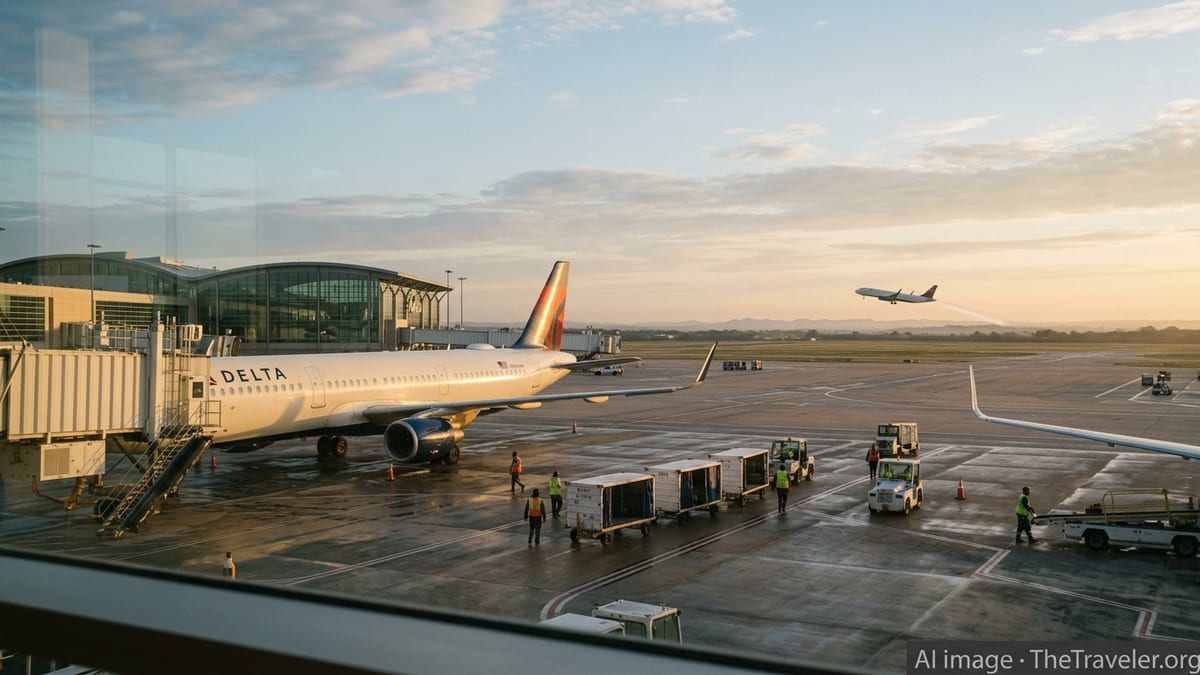
Austin’s Network Gets a Strategic Boost
The latest additions from Austin-Bergstrom International Airport underscore Delta’s broader strategy to turn Austin into a high-connectivity focus city. Publicly available airport and airline schedules indicate that the carrier has steadily expanded its map from the Texas capital in recent years, adding domestic business markets, leisure destinations and limited international links.
The introduction of nonstop service to Phoenix positions Delta more competitively on one of Austin’s busiest western corridors, where other major carriers already operate frequent flights. Phoenix Sky Harbor International Airport serves as a key gateway for the broader Southwest, giving Central Texas travelers a new one-stop path to smaller communities across Arizona and the neighboring region.
At the same time, the seasonal winter connection between Austin and Bozeman taps into strong demand for outdoor recreation and ski travel. Bozeman Yellowstone International Airport has seen rapid growth as a launch point for visits to Yellowstone National Park, Big Sky and other Rocky Mountain destinations, making it a logical fit for Delta’s expanding leisure portfolio from Austin.
Together, the Phoenix and Bozeman routes reinforce Austin’s role as an emerging connecting point within Delta’s domestic network, offering both local residents and connecting passengers more choices without backtracking through the airline’s traditional hubs.
Details of the New Phoenix Nonstop
Published schedule data shows that Delta’s new Austin to Phoenix service is designed to provide a straightforward link between two high-growth metro areas. Phoenix is already one of Austin’s top domestic destinations by passenger volume, and additional competition on the route is expected to create more options on timing and fares for travelers.
The Phoenix flights are set to operate with narrowbody aircraft commonly used across Delta’s domestic network, providing a mix of seating classes that typically includes First Class, extra-legroom economy and standard Main Cabin. This configuration allows both business and leisure travelers to choose cabin products that match their budget and comfort preferences on the roughly two-hour journey.
Scheduling patterns published by industry outlets indicate that Delta is positioning the Phoenix flight to support same-day connections onward across the western United States. Early-in-the-day departures from Austin and return options later in the afternoon or evening are expected to make it easier for Central Texas travelers to complete roundtrips with minimal time lost in transit.
For Austin-Bergstrom, increased service to Phoenix also contributes to network resilience. With multiple airlines now linking the two cities, passengers gain more flexibility when disruptions arise, whether due to weather in the desert Southwest or operational challenges elsewhere in the national air system.
Winter-Ready Access to Bozeman and Yellowstone
The new seasonal Austin to Bozeman service is tailored to the winter peak, when demand is strongest for ski trips and cold-weather mountain escapes. Flight schedules released by Bozeman Yellowstone International Airport and Delta’s own public timetables indicate that the route will operate during the heart of the snow season, connecting Central Texans directly to Montana’s slopes and national parks.
Bozeman has evolved into a major air gateway for outdoor tourism, with a growing portfolio of nonstop flights from large U.S. cities. By linking Austin and Bozeman in winter, Delta taps into two powerful travel trends at once: Central Texans seeking easy access to mountain recreation and visitors from the Northern Rockies looking for a warmer city break in a rapidly expanding tech and cultural hub.
The route also adds another spoke in Delta’s broader Bozeman strategy. Existing service from larger hubs already supports year-round connectivity for Montana residents and visitors, and the additional seasonal link from Austin effectively shortens the distance between Texas and Yellowstone Country for many travelers who previously had to connect through more northerly airports.
For ski resorts and tourism operators in southwest Montana, this nonstop connection from Austin represents another potential source of visitors. Likewise, Austin’s hotels, restaurants and event venues stand to benefit from inbound traffic during shoulder periods when leisure demand can be more variable.
Competitive Landscape and Traveler Impact
The move into Phoenix and seasonal Bozeman service comes as airlines continue to compete aggressively for share in Austin’s growing market. Other carriers already serve Phoenix from Austin, and Bozeman has attracted a mix of full-service and low-cost airlines in recent years. Delta’s decision to add its own nonstops reflects confidence in the durability of demand at both ends of the routes.
For travelers, the most visible effect is increased choice. Additional nonstop options tend to create more flexibility for departure times, connections and pricing, especially on popular leisure and business corridors. The presence of multiple airlines flying between the same city pairs can encourage schedule improvements and promotional fares, which can be particularly attractive to budget-conscious families planning winter vacations or long weekend escapes.
These new routes also integrate with Delta’s continuing investments in onboard connectivity and customer experience. The airline has been rolling out high-speed Wi-Fi and enhancing in-cabin amenities across much of its domestic fleet, so passengers flying from Austin to Phoenix or Bozeman are likely to see a similar standard of service as on Delta’s other mainline and regional routes.
As Austin-Bergstrom pursues its own long-term expansion plans, additional nonstop destinations like Phoenix and Bozeman help diversify the airport’s network, reduce reliance on any single carrier and widen the range of one-stop options available to Central Texas travelers heading across the United States and beyond.
What the Changes Mean for Austin’s Growth
Delta’s latest service announcement reinforces a broader pattern of air service development in Central Texas. Publicly available information from the airport and industry coverage highlights that Austin has attracted new routes from multiple airlines in recent years, reflecting strong population growth, a deepening technology sector and heightened tourism interest in the region.
The addition of Phoenix and Bozeman aligns with that trajectory. Phoenix enhances connections between two Sun Belt economies built around technology, creativity and outdoor lifestyles, while Bozeman ties Austin into a rapidly growing tourism corridor anchored by national parks and mountain recreation.
For residents, the practical outcome is a shorter path from idea to itinerary. A winter ski weekend in Montana or a quick business trip to the Valley of the Sun increasingly begins with a nonstop flight from a local airport, rather than a multi-stop journey through distant hubs. For visitors, the same flights make it easier to explore Austin’s music, food and cultural scene, even on shorter trips.
As airlines continue to refine their networks in response to demand, travelers in Austin can expect more experimentation with seasonal and leisure-focused routes. The launch of nonstop service to Phoenix and winter Bozeman from Austin illustrates how one carrier is using targeted additions to offer a level of convenience that would have been harder to imagine in the region only a few years ago.