

More news on this day
Delta Air Lines is set to expand its presence in Austin with new nonstop service to Phoenix and seasonal flights to Bozeman, linking Central Texas travelers more directly with both desert and mountain getaways as airlines continue to chase leisure demand across the Sun Belt and Rocky Mountain West.
Get the latest news straight to your inbox!
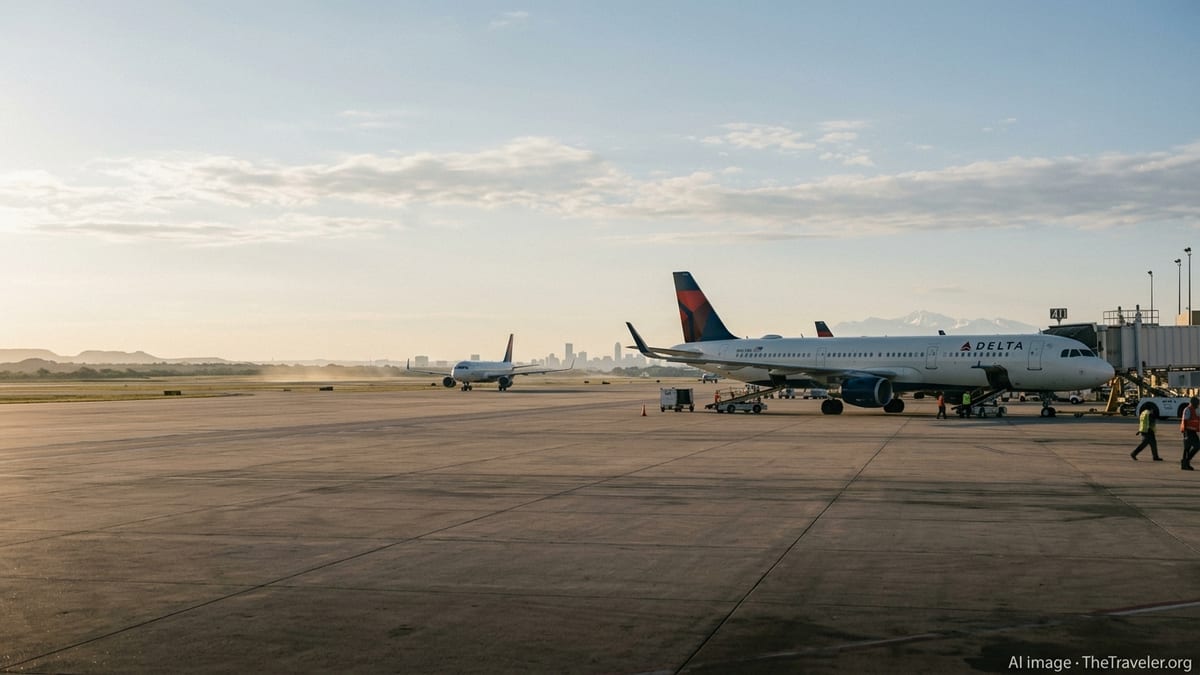
New Links From Austin to Desert and Mountain Escapes
Publicly available schedules and airport planning documents indicate that Delta is preparing new nonstop service between Austin and Phoenix, adding another competitor on one of the Texas capital’s busiest westbound corridors. Published coverage and industry discussion also point to new seasonal links between Austin and Bozeman, Montana, a fast-growing gateway to Yellowstone National Park and the Northern Rockies.
The move fits a broader pattern in which Austin–Bergstrom International Airport has attracted new point-to-point routes as the region’s technology sector and population have expanded. Airport statistics show that Phoenix is already among Austin’s highest-volume domestic markets, historically served by American, Frontier, and Southwest, making additional capacity from Delta a notable competitive shift.
Bozeman, by contrast, is a much smaller market but one that has seen sustained growth in seasonal service as travelers seek easy access to hiking, skiing, and national parks. Delta and its regional partners have used airports such as Bozeman to tap strong demand for outdoor-focused leisure trips, and an Austin link would align with that strategy by connecting Central Texas travelers directly to Montana’s resort communities.
For Austin, the additions highlight the city’s evolution from a primarily spoke market into a growing mid-continent connecting point, even as Delta continues to describe its operation there as a “focus city” rather than a traditional hub.
Details of the Austin to Phoenix Nonstop
While full schedule data continues to be refined, publicly viewable timetable information and route trackers suggest that Delta plans to operate the Austin–Phoenix route with multiple daily frequencies, positioning it to compete head-to-head with existing carriers that already provide substantial capacity on the city pair. The service is expected to connect Austin–Bergstrom with Phoenix Sky Harbor International, the primary commercial airport for the Phoenix metropolitan area.
The route sits squarely in the high-demand Sun Belt corridor, where both cities have posted strong population and employment growth in recent years. Phoenix offers onward connections throughout the western United States, while Austin’s expanding portfolio of domestic routes allows the flight to function both as an origin-and-destination service and as part of wider Delta itineraries.
From a scheduling perspective, multiple daily departures typically allow airlines to capture both business and leisure demand by offering morning and evening options. Even though the Austin–Phoenix market is heavily leisure oriented, schedule visibility suggests that Delta is seeking to attract travelers who value timing flexibility and the ability to connect to transcontinental or mountain destinations.
Industry analysts often point to Austin’s rapid development and its role as a technology and creative hub as factors that support additional westbound flying. The Phoenix addition follows earlier expansions from Austin to other domestic cities, signaling that Delta continues to see room to grow in central Texas despite intense competition from American and Southwest.
Seasonal Austin to Bozeman Flights Target Outdoor Travelers
According to seasonal schedules published by Bozeman Yellowstone International Airport, Delta intends to operate nonstop Austin–Bozeman flights on a limited, mostly summer pattern. The flights appear as Saturday-only service over the peak warm-weather period, reflecting a strategy that concentrates capacity when demand for outdoor vacations is highest.
Bozeman has become a focal point for airlines building out their networks of national park and mountain-town gateways. The airport has reported steady increases in passenger numbers and has publicized an array of new and seasonal services connecting the region with major population centers. An Austin nonstop would plug Central Texas directly into this network, allowing travelers to bypass traditional connections through larger hubs such as Salt Lake City, Denver, or Minneapolis.
The seasonal timing aligns with popular travel windows for hiking, fly-fishing, and road trips into Yellowstone and Big Sky Country. Travel industry coverage has noted that passengers increasingly prioritize nonstop options to smaller leisure markets, preferring to avoid the risk of missed connections and delays that can accompany peak-season travel through large hubs.
On the operational side, the route is expected to be flown by a regional partner under the Delta Connection brand, consistent with the carrier’s broader approach to serving smaller and seasonal markets with right-sized aircraft while maintaining brand consistency and frequent flyer benefits.
What the Expansion Means for Austin’s Growing Role
The addition of Phoenix and Bozeman from Austin underscores how airlines are reshaping their domestic networks around high-growth metro areas and lifestyle destinations. Austin has already seen a wave of new services in recent years, with carriers adding routes to both major business centers and vacation markets, and Delta’s latest moves add further momentum.
Airport data and capacity analyses suggest that Austin is trending toward a more prominent role within multiple carriers’ networks. While no airline has formally designated the airport as a full-scale hub, the layering of additional nonstops, including the new Delta flights, is pushing the market closer to that status in practical terms, particularly for travelers who prefer or are loyal to a specific carrier.
For passengers, the new routes translate to more choice and, potentially, more competitive fares. Multiple airlines on the Austin–Phoenix corridor could encourage price-sensitive leisure travelers to consider spontaneous weekend trips, while a nonstop Austin–Bozeman option may make once-aspirational mountain vacations more accessible to families and remote workers based in Central Texas.
Travel planning experts note that route expansions such as these can also support tourism economies at the destination end. In Bozeman and surrounding communities, additional nonstop capacity tends to correlate with higher seasonal visitation, increased hotel occupancy, and greater demand for outdoor guides, rental cars, and local services. Phoenix, already a major metro area and tourism draw, stands to benefit from deeper ties to one of the country’s fastest-growing cities.
Competitive Pressures and Next Steps for Travelers
Delta’s decision to step more firmly into the Austin–Phoenix market also reshapes the competitive landscape among U.S. carriers. Historically, American and Southwest have maintained strong positions in Austin–Phoenix traffic, leveraging their respective networks and customer bases. Additional capacity from Delta adds another branded option, which market observers often associate with greater fare dispersion and promotional pricing, especially around launch periods.
In the case of Bozeman, Delta’s seasonal presence competes with other airlines that have invested heavily in mountain gateways as demand for national park and ski travel has surged over the past decade. The Austin link positions Delta to capture travelers who might otherwise have connected through rival hubs or considered alternative airports in Colorado or Utah.
For would-be passengers, industry guidance is to monitor official airline channels and booking platforms for final schedules, introductory fares, and potential schedule refinements. Seasonal services, in particular, can see adjustments based on early sales performance and broader demand trends, and travelers planning peak-summer or shoulder-season trips are often advised to secure tickets early while remaining attentive to any subsequent timetable changes.
As Delta’s latest additions from Austin take shape, the city’s role as a launchpad for both desert city breaks and mountain adventures looks set to strengthen, illustrating how shifting travel patterns continue to redraw the domestic airline route map.