

More news on this day
Delta Air Lines and American Airlines have cancelled three long haul flights across South Korea affecting services between Seoul, Los Angeles and Dallas, creating fresh disruption for transpacific travelers and raising new questions about the reliability of key routes linking Northeast Asia with the United States.
Get the latest news straight to your inbox!
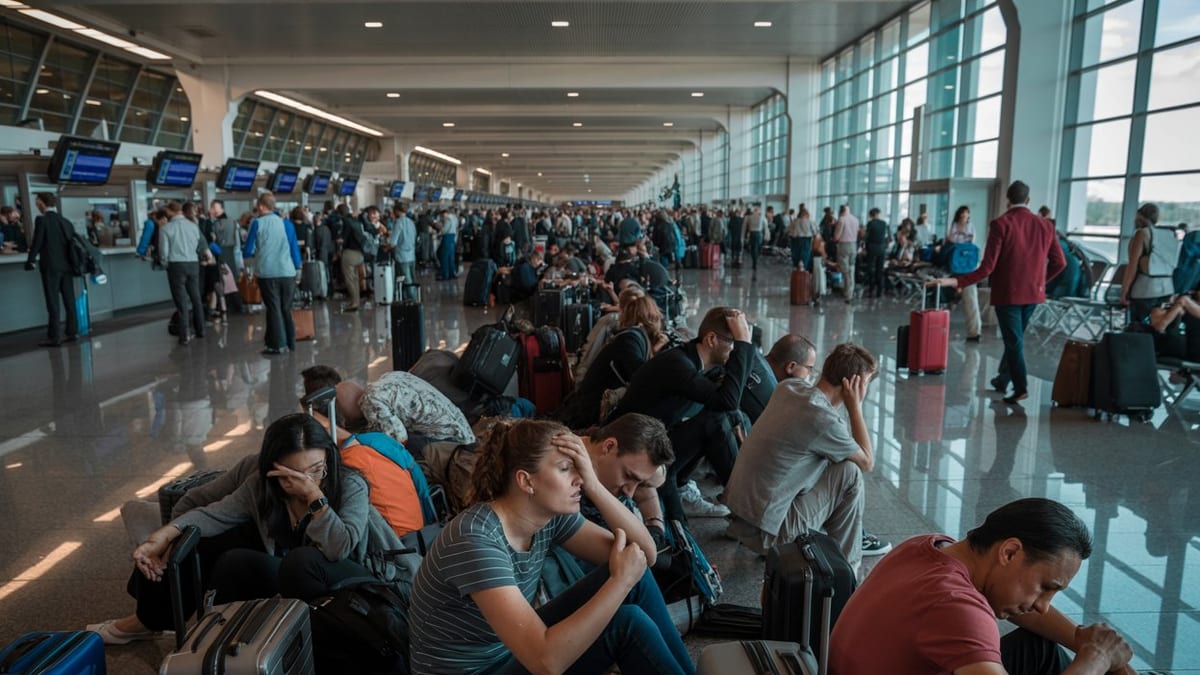
Image by Travel And Tour World
What Is Known About the Latest Cancellations
Publicly available flight tracking data and schedule information indicate that a cluster of cancellations has affected services operating between Seoul and major US hubs, including Los Angeles and Dallas Fort Worth. The incidents involve aircraft scheduled by Delta Air Lines and American Airlines on routes that normally serve as important links for business and leisure travel between South Korea and the United States.
Reports from passengers and airport operations logs show that at least three flights tied to these routes were cancelled within a short window, disrupting itineraries across multiple days. The affected services include departures from Seoul’s Incheon hub heading to Los Angeles and Dallas, as well as knock-on cancellations impacting onward connections within the United States.
While individual airlines typically list “operational reasons,” “crew availability” or “maintenance” as broad explanations, detailed causes for each cancelled sector have not been fully itemized in publicly accessible statements. However, patterns in the data suggest a combination of aircraft rotation challenges, tight crew scheduling and weather related ripple effects elsewhere in the network.
The cancellations arrive at a time when demand on transpacific routes has been recovering, with carriers steadily rebuilding capacity between South Korea and US gateways. Any sudden loss of long haul seats on such routes can quickly cascade into missed connections and extended delays for travelers attempting to cross the Pacific.
Impact on Travelers Moving Between Seoul, Los Angeles and Dallas
Travelers scheduled to fly between Seoul and Los Angeles or Dallas have faced extended layovers, unexpected overnights and last minute rerouting as a result of the latest cancellations. Information shared on public travel forums and social media platforms describes passengers being rebooked through alternative hubs in Japan or other US cities when nonstop services from South Korea were pulled from the schedule.
Because Seoul to Los Angeles and Seoul to Dallas are long haul sectors that often operate once daily, the cancellation of even a single flight can leave limited short term alternatives. When multiple departures are cancelled within a short period, seat availability drops sharply and some travelers report waiting 24 to 48 hours or more for a workable replacement itinerary.
The disruptions are particularly challenging for passengers with onward domestic connections in the United States. Missed links out of Los Angeles or Dallas force airlines to rebuild entire journeys, sometimes sending travelers via different hubs or placing them on partner carriers where interline agreements allow. Publicly available accounts describe complex reroutes that add considerable travel time and increase the risk of baggage delays.
Families, business travelers and those on tight schedules face the most acute impact, especially when hotel stays, visas or important appointments hinge on timely arrival. For some travelers, the uncertainty surrounding repeated schedule changes has prompted consideration of alternative routings that avoid specific transpacific legs perceived as vulnerable to disruption.
Why These Routes Are Vulnerable to Disruption
Industry data and historical coverage show that long haul routes connecting South Korea with US hubs are sensitive to several overlapping pressures. These include aircraft utilization patterns, crew duty time limits, weather developments in North America and broader operational strains within airline networks.
Large carriers such as Delta Air Lines and American Airlines typically operate packed long haul schedules that leave limited slack in aircraft and crew rotations. When a single long haul flight is delayed or grounded for maintenance, the aircraft and crew intended for subsequent segments may no longer be available within legal duty time, resulting in cancellations further down the line. Publicly shared passenger reports from previous months describe exactly this kind of cascading disruption on services linking Seoul with Dallas.
Weather events elsewhere in the United States can also indirectly affect transpacific flights. Recent coverage of major winter storms and large scale disruption at central hubs has highlighted how aircraft and crew can be left out of position, forcing cancellations far from the original weather system. In these situations, flights to and from Asia sometimes become collateral damage when airlines prioritize restoring domestic connectivity.
Finally, transpacific routes require careful balancing of demand, yields and operational costs. When airlines operate near capacity, there is little room to absorb sudden spikes in demand after cancellations. The result is a fragile equilibrium in which a short burst of operational problems can translate quickly into multi day disruptions for travelers.
How Delta and American Are Handling Rebookings
According to publicly available customer guidance and recent company advisories, both Delta Air Lines and American Airlines generally respond to significant operational disruptions by activating flexible rebooking policies. These measures often include waiving change fees, allowing itinerary adjustments within a defined travel window and offering rebooking on alternative routings when original nonstop services are not available.
For affected Seoul bound or US bound passengers, this can mean being shifted to flights that connect through other Asian hubs or alternative US gateways. In some documented cases, travelers originally booked on American Airlines between Seoul and Dallas have been rerouted through Los Angeles or Tokyo when the direct service was unavailable. Similar patterns have been observed for Delta customers, who may be moved to different departure times or connecting itineraries depending on seat availability.
Accommodation and meal support vary depending on the cause of the disruption and local regulations. In many publicly reported situations, travelers on significant delays or overnight cancellations in Seoul have been provided with hotel vouchers and basic meal support, while in other instances, assistance has been more limited, prompting criticism from stranded passengers. The level of support often hinges on whether the airline classifies the issue as controllable, such as maintenance or crew scheduling, or as outside its control, such as severe weather.
Travel insurance and credit card coverage can also play a role in easing the financial impact. Policy documents available online indicate that some plans reimburse additional accommodation, meals or replacement flights after substantial delays or cancellations, though travelers are typically required to document expenses carefully and meet stated eligibility thresholds.
What Travelers Should Watch for on Upcoming Trips
Publicly available information from airlines, airports and travel advisers points to several practical steps for travelers planning to use Seoul to Los Angeles or Seoul to Dallas routes in the coming weeks. The most consistent recommendation is to monitor flight status frequently, beginning at least 24 hours before departure and continuing until boarding. Airline apps, airport boards and third party flight trackers can provide early warning of schedule changes.
Passengers with tight connections in Los Angeles or Dallas may wish to build in longer layovers or select itineraries that offer additional daily frequencies to their final destination. Industry observers note that itineraries with multiple daily alternatives at key hubs can often be reworked more easily than those reliant on a single long haul departure.
Travel planners also suggest confirming contact details with airlines so that notifications about cancellations or rebookings are received quickly. When significant storms or large scale operational issues are reported in North America, travelers on transpacific routes may benefit from proactively exploring alternative routings rather than waiting for last minute cancellations to be processed.
While recent disruptions involving Delta Air Lines and American Airlines highlight the vulnerability of specific flights, analysts emphasize that Seoul remains a major, well served gateway between Asia and the United States. Multiple carriers continue to operate between South Korea and US cities, and travelers with flexible dates or routings can often find alternatives, even when high profile cancellations briefly unsettle these critical long haul corridors.