

More news on this day
Travelers at South Korea’s Incheon International Airport are facing fresh disruption after key long haul services operated by Delta Air Lines and American Airlines were canceled, stranding passengers and complicating transpacific links to Los Angeles and Dallas.
Get the latest news straight to your inbox!
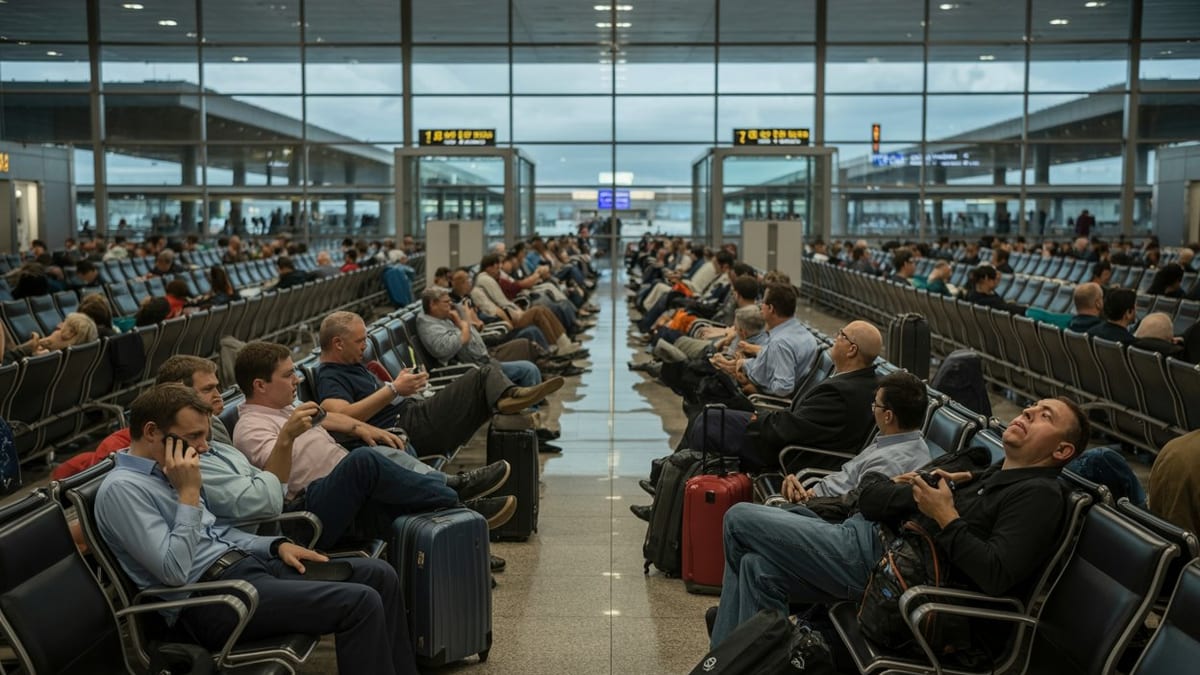
Image by Travel And Tour World
Key Long Haul Flights Axed at Incheon
Recent operational data and published industry coverage indicate that two major U.S. carriers have canceled important long haul departures from Incheon International Airport, one affecting a Delta Air Lines service to Los Angeles and another involving an American Airlines flight to Dallas Fort Worth. These cancellations come at a time of sustained demand on Korea United States routes and are creating a ripple effect across connecting networks on both sides of the Pacific.
Details emerging from public flight tracking feeds and aviation news reports show that American Airlines has withdrawn at least one departure of flight AAL280 from Incheon to Dallas Fort Worth, using a Boeing 777 200, after earlier multiple cancellations on the same route in recent days. Separate operational records and local media monitoring point to a Delta flight from Incheon to Los Angeles being canceled around the same period, impacting passengers heading to the busy West Coast hub.
The result at Incheon has been clusters of stranded travelers, many of them attempting to rebook on remaining services operated by U.S. and Korean partners, or seeking last minute itineraries via Tokyo, Taipei, or other regional hubs. Airport screens and public reports have highlighted extended queues at transfer and ticketing desks, as well as growing concern among passengers about missed connections to secondary cities in the United States.
Industry observers note that while single flight cancellations are not uncommon, the loss of two high demand departures on parallel U.S. routes on similar days magnifies the disruption, particularly for travelers who rely on Incheon as a key gateway for business and family travel between South Korea and North America.
Impact on Passengers Bound for Los Angeles and Dallas
The cancellation of Delta’s Incheon Los Angeles service is especially disruptive because of the role Los Angeles plays as a mega hub for onward connections throughout the western United States, Latin America, and the Pacific. Travelers who had planned same day onward flights to cities such as Las Vegas, San Diego, Phoenix, or Honolulu now face unplanned overnight stays and, in some cases, multi day rebookings.
For passengers booked on American Airlines flight AAL280 to Dallas Fort Worth, the disruption is similarly far reaching. Dallas Fort Worth is a central connecting point for routes across the U.S. South, Midwest, and parts of Latin America. With published coverage indicating repeated cancellations of AAL280 on consecutive days, travelers have reported altered itineraries, re routings across alternative hubs, and uncertainty over when regular service levels will be restored.
Public accounts from affected travelers describe long waits at customer service counters in Incheon’s terminal, with some passengers seeking refunds and others attempting to preserve complex long haul itineraries that include domestic U.S. legs or codeshare connections on partner airlines. The strain is particularly acute for families and business travelers who must adjust hotel stays, ground transport plans, and work schedules on short notice.
Consumer advocates monitoring the situation stress that cancellations on long haul sectors often have higher financial and logistical consequences for passengers, because alternative options are limited and seats on competitor flights may already be heavily booked. As a result, some travelers have resorted to piecing together separate tickets on different carriers or accepting longer routings that add hours to their overall journey time.
Operational Pressures Behind the Disruptions
While neither airline has publicly detailed the specific cause for these individual flight cancellations beyond standard operational messaging, the broader context for recent disruptions is complex. Over the past year, carriers globally have contended with lingering technical vulnerabilities, tight aircraft utilization, crew scheduling constraints, and periods of extreme weather that can cascade through schedules.
Analysts point out that Delta was among the carriers most heavily affected by the worldwide technology outage in July 2024, which disrupted airport and airline systems and resulted in thousands of cancellations across its network. According to widely cited operational reviews, the airline has since worked to harden its IT infrastructure and scheduling resilience, but any major irregularity on long haul routes can still reverberate through hubs such as Los Angeles and Atlanta.
American Airlines has likewise faced episodic disruption related to weather at Dallas Fort Worth and system interruptions that have periodically slowed check in and departure operations. Publicly available policy documents for the carrier emphasize rebooking and refund mechanisms when flights are canceled or significantly delayed, but passenger forums and travel industry coverage continue to highlight the challenge of securing timely alternatives on high demand international legs like Incheon to Dallas Fort Worth.
Capacity management on transpacific routes also remains delicate. Airlines must balance aircraft availability, maintenance requirements, and crew rest rules while operating ultra long haul services that leave little room for short notice equipment swaps. When one aircraft becomes unavailable or a crew rotation is disrupted, carriers sometimes have no practical option but to cancel a flight, which appears to be the scenario unfolding in the current Incheon disruptions.
What Stranded Travelers at Incheon Are Facing
Inside Incheon International Airport, the immediate reality for affected passengers is a blend of uncertainty and logistical juggling. Travelers whose flights have been canceled are being directed to ticket counters and service desks for rebooking, often alongside others dealing with unrelated delays or missed connections. This convergence can result in lengthy queues and limited availability on the most desirable alternative flights.
Reports from the terminal describe passengers attempting to secure accommodation near the airport while awaiting rebooked departures. Depending on the timing of the cancellation and the reason provided by the airline, assistance with hotels and meals may vary, prompting some travelers to pay out of pocket while documenting expenses in case of later reimbursement claims.
Families traveling with children and older passengers may experience the greatest strain, as overnight stays in unfamiliar surroundings and complex re routings can be physically and emotionally taxing. Travel insurers and credit card benefits can sometimes help offset costs or provide concierge style assistance in rearranging plans, but not all passengers have access to such coverage.
For South Korea based travelers, the disruptions can also derail tightly scheduled business trips, graduation visits, or medical appointments in the United States. For visitors returning home from Korea, the cancellations can extend trips unexpectedly, complicating work commitments, caregiving responsibilities, and school schedules that hinge on specific arrival dates in Los Angeles or Dallas.
Guidance for Travelers on the Incheon U.S. Routes
In light of the recent cancellations, travel experts and consumer advocates recommend that passengers booked on Delta or American services between Incheon and the United States closely monitor their reservations. This typically includes checking airline apps or online booking pages for schedule changes, enabling alerts for gate and time updates, and confirming that contact details in reservations are current so that notifications are not missed.
For those whose flights are canceled, publicly available airline policies generally provide several options: accepting automatic rebooking on the next available flight, requesting a change to a different date or routing, or pursuing a refund if the journey no longer makes sense. Travelers are encouraged to document all communications, keep receipts for unexpected expenses, and carefully review fare rules as well as any additional protections that may apply under Korean or U.S. aviation regulations.
Passengers with critical time sensitive travel, such as fixed event dates or tight connection windows, may benefit from proactively identifying backup routings through alternative hubs like Tokyo, Honolulu, or Seattle, especially during peak seasons when transpacific flights operate near full capacity. Some travelers may also consider using frequent flyer miles or companion award seats on partner carriers as a fallback when revenue seats are scarce.
Looking ahead, operational trends in 2026 suggest that airlines will continue to refine their contingency planning for long haul disruptions, including investments in more robust IT systems, enhanced crew scheduling tools, and clearer passenger communication. For now, the cancellations at Incheon serve as a reminder that even well established routes between major global hubs can be vulnerable to sudden disruption, and that informed, flexible planning remains one of the best tools available to long haul travelers.