

More news on this day
Fresh allegations of in-flight assaults on recent Delta Air Lines and Etihad Airways services are again drawing attention to the stubborn problem of unruly passengers, just as aviation regulators in the United States and United Arab Emirates warn that disruptive behavior in the skies remains a serious safety threat.
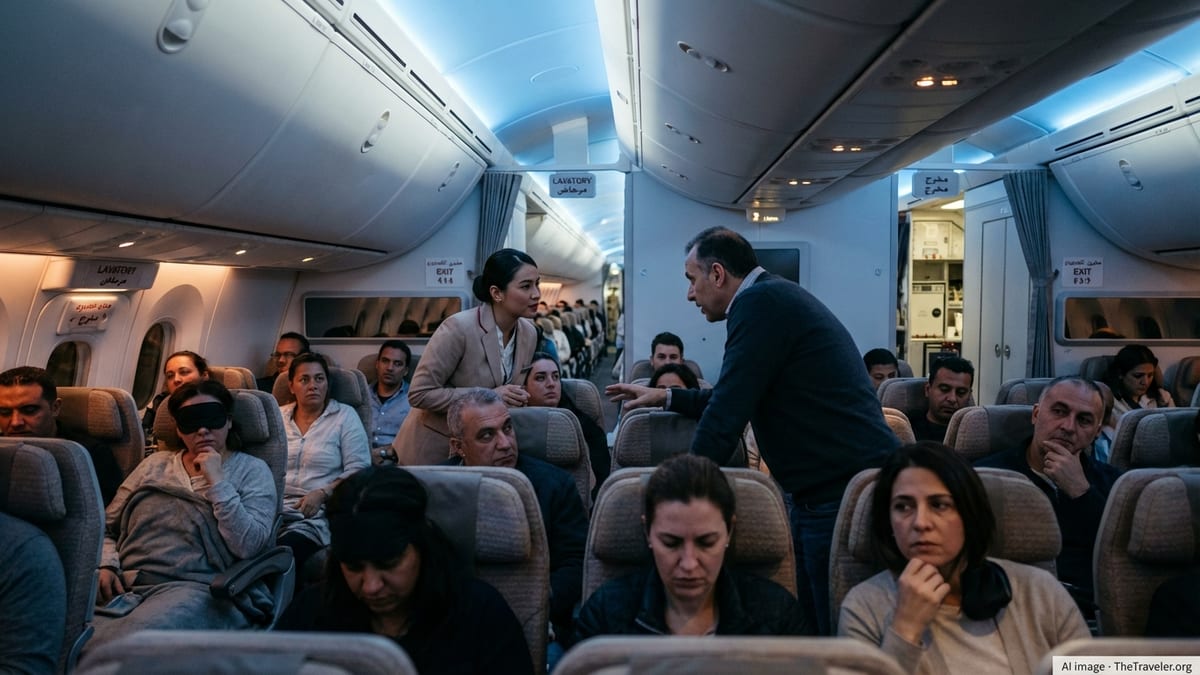
Latest Delta and Etihad Incidents Jolt Crews and Travelers
In the United States, Delta Air Lines has faced a string of highly publicized disturbances in recent weeks, including an incident on February 18 in which a Houston to Atlanta flight was forced to return to William P. Hobby Airport after a passenger allegedly punched a fellow traveler multiple times and had to be restrained by crew and other passengers. Separate reports from Memphis detail a February 17 altercation at a Delta boarding gate in which a flight attendant was allegedly struck and a responding police officer bitten, resulting in multiple assault charges.
Across the Atlantic, Etihad Airways is contending with its own headline-grabbing case. On a February 13 Abu Dhabi to Washington Dulles service, a passenger was accused in an FBI complaint of kicking a flight attendant, pushing a flight manager and slapping the manager’s hand during a prolonged outburst roughly seven hours into the 15-hour journey. The passenger now faces federal charges of assault and interference with a flight crew, offenses that can carry prison terms stretching up to two decades.
Though the individual circumstances vary, both episodes feature allegations of physical aggression toward cabin crew and nearby passengers, abrupt changes to flight plans and law enforcement waiting at the gate. Together they underscore how a relatively small number of disruptive travelers can create cascading operational, legal and reputational challenges for airlines.
Regulators Warn Unruly Behavior Remains Stubbornly High
The latest cases come as US regulators stress that unruly passenger events, while down from their pandemic-era peak, remain higher than before 2020. The Federal Aviation Administration has reported hundreds of such incidents in the first half of recent years and insists it will keep in place its zero-tolerance policy for interference with flight crews or threats to safety.
The agency’s data show that while the extraordinary surge in 2021 was driven largely by confrontations over mask mandates, serious disturbances have persisted even after health rules eased. Regulators say incidents now more commonly involve alcohol-fueled outbursts, refusal to follow basic instructions such as fastening seatbelts, and episodes of verbal or physical abuse directed at employees and other passengers.
Industry analysts note that the US is not alone. Aviation oversight bodies in Europe and elsewhere have reported hundreds to thousands of incidents each year, ranging from minor noncompliance to violent altercations and threats that force diversions. The recent Delta and Etihad cases are being viewed within that global context, as evidence that aggressive behavior on board remains a structural safety issue rather than a passing phase linked only to pandemic stress.
Legal Consequences Grow Harsher in the US and UAE
Authorities in both the United States and United Arab Emirates have moved in recent years to close legal gaps and ensure that disruptive flyers face meaningful penalties. In the US, the FAA’s zero-tolerance approach, made permanent in 2022, replaced earlier practices of issuing warning letters or counseling. Today, passengers accused of assaulting or threatening crew members can face civil fines that climb into tens of thousands of dollars per violation, in addition to potential federal criminal charges.
US prosecutors have increasingly brought interference-with-crew cases to court, especially when physical contact, credible threats or diversions are involved. Convictions can result in lengthy prison sentences, supervised release and orders to reimburse airlines for the substantial costs of turning back or diverting aircraft. The partnership between the FAA and the Federal Bureau of Investigation has been strengthened to streamline referrals of the most serious cases.
In the UAE, legal tools were bolstered when the country ratified an international treaty known as Montreal Protocol 2014, which expanded jurisdiction over unruly passengers. Effective from May 2023, the change allows UAE authorities to prosecute disruptive behavior on flights landing in the Emirates even if the aircraft is registered elsewhere. Aviation law specialists say this has helped address a longstanding enforcement gap that once allowed some offenders to escape charges simply because of complex flag-state rules.
For airlines like Etihad, that shift means that passengers accused of violent conduct on inbound flights can now be more reliably held to account under UAE law, complementing any US charges that may arise if the flight continues to American territory or if federal agents open a case based on events in the cabin.
Cabin Crews on the Front Line of In-Flight Confrontations
Behind the legal language and statistics are flight attendants, gate agents and pilots who increasingly find themselves managing high-stress confrontations at 35,000 feet. Reports from recent Delta flights describe attendants physically restraining disruptive passengers, sometimes with the help of zip ties or beverage carts, while simultaneously trying to calm frightened travelers and maintain control of the cabin.
Union representatives say that what begins as verbal abuse or refusal to comply with instructions can escalate quickly into physical danger. In narrow aisles and confined spaces, even a single aggressive passenger can injure crew, terrorize nearby families or interfere with access to safety equipment. Crews must make rapid judgments about whether a situation can be de-escalated or whether the aircraft must divert or return to its origin.
Training programs at major US carriers and Gulf airlines increasingly emphasize conflict management, early intervention and coordinated responses among crew members. Cabin staff are taught to document behavior carefully, notify the cockpit at the first sign of escalation and preserve evidence such as witness statements for potential legal proceedings. In parallel, some carriers have quietly adjusted their boarding procedures, becoming more cautious about admitting passengers who already appear heavily intoxicated or unstable at the gate.
Why Unruly Passenger Incidents Persist
Experts point to a mix of factors behind the stubborn persistence of unruly behavior despite tougher penalties and additional training. Alcohol continues to loom large, especially where travelers consume drinks purchased in terminals or bring their own liquor on board. Some incidents appear linked to mental health crises or substance use, complicating airlines’ efforts to screen and manage risk while avoiding discrimination.
At the same time, the intense crowds and tight schedules that characterize modern air travel can amplify tensions. Overbooked flights, long security lines, delayed departures and cramped cabins leave many travelers fatigued and frustrated even before boarding. In that environment, misunderstandings, perceived slights or simple requests from crew can rapidly spiral for passengers already on edge.
Social media is another factor, both documenting misbehavior and arguably encouraging it. Viral videos of cabin confrontations can glamorize acting out or feed a sense that the aircraft is a stage. Advocacy groups and regulators have responded with public-awareness campaigns that highlight the real-world consequences, but the lure of online notoriety remains.
Finally, some analysts suggest that broader societal polarization and declining civility are spilling into the skies. For airline employees, that means handling not only travel-related frustrations but also disputes over politics, identity and personal space that would once have been more rare in crowded public settings.
Policy Responses in the United States and UAE
In the United States, policymakers have floated additional measures to deter and manage unruly passengers. Proposals have included creating a national no-fly list specifically for those convicted of serious in-flight misconduct, tightening rules on to-go alcohol sales in terminals and enhancing data sharing between airlines so that a ban imposed by one carrier can be recognized by others.
So far, the most concrete actions have centered on enforcement and communication. US officials continue to publicize civil penalty cases, naming alleged offenders and detailing disruptive acts in public announcements meant to send a deterrent message. Aviation authorities also maintain dashboards that track incident patterns and share lessons across carriers.
In the UAE, the ratification of Montreal Protocol 2014 has been accompanied by heightened engagement with international bodies such as the International Civil Aviation Organization and the International Air Transport Association. The country’s General Civil Aviation Authority has worked with local carriers and airports to standardize reporting procedures, refine crew guidance on handling disruptive passengers and ensure that cases are escalated promptly to law enforcement upon landing.
Regional observers say that the UAE’s approach is particularly significant given its role as a global hub linking Europe, Asia, Africa and the Americas. With long-haul flights crossing multiple jurisdictions, a clearer legal path to prosecution in a major transfer hub can have a ripple effect across the wider network.
Impact on Passengers, Operations and Airline Reputations
For the vast majority of travelers, the immediate impact of an unruly passenger is measured in lost time and frayed nerves. Diversions or returns to origin can mean missed connections, overnight stays and disrupted business or holiday plans. Even when a flight ultimately continues, the experience of watching an altercation unfold in a confined space can leave passengers anxious about future trips.
Operationally, airlines shoulder significant costs. Turning an aircraft around or diverting to an unscheduled airport consumes fuel, requires complex rebooking efforts and ties up crew and equipment needed elsewhere in the network. Carriers also must manage internal investigations, crew support and, in some cases, litigation stemming from injuries or alleged failures to protect passengers.
Reputational risk is harder to quantify but no less real. Dramatic videos of confrontations can circulate widely, with the airline’s logo clearly visible, even if staff followed procedure and handled the situation professionally. For brands that compete on service and reliability, repeated headlines about brawls in the cabin or at the gate can undermine carefully cultivated images of calm and comfort.
Travel-industry analysts say this is especially sensitive for global connectors like Delta and Etihad, which pitch themselves as premium options for long-haul and connecting traffic. Both airlines have responded publicly to recent incidents by stressing their zero-tolerance policies and close cooperation with law enforcement.
What Airlines and Travelers Can Do Next
In the wake of the latest assaults and diversions, carriers are revisiting a familiar set of tools. Some are considering tighter limits on in-flight alcohol service, including pausing refills earlier in the journey or more closely coordinating with airport concessions. Others are investing in additional de-escalation training, role-playing scenarios and mental health support for front-line staff who routinely confront aggressive behavior.
Technology may play a growing role as well. Enhanced incident-reporting platforms, better cabin surveillance and real-time communication between crew, airline operations centers and law enforcement can help ensure that patterns of behavior are identified early and that consequences are applied consistently.
For travelers, the message from regulators in both the United States and UAE is blunt: misbehavior at altitude carries real stakes. Passengers found to have assaulted crew or interfered with a flight can expect arrest on landing, substantial fines, potential prison sentences and bans that may extend across multiple airlines. Those consequences apply regardless of whether behavior was fueled by alcohol, stress or personal issues.
As winter and spring travel flows give way to the busy summer season, the recent Delta and Etihad cases serve as a reminder that the right to fly comes with obligations. In cabins stretched across continents and cultures, shared norms of respect, patience and compliance with crew instructions remain essential to keeping the world’s air routes open and safe.